Working conditions
Identify temperature, contact fluids and repeated movement.

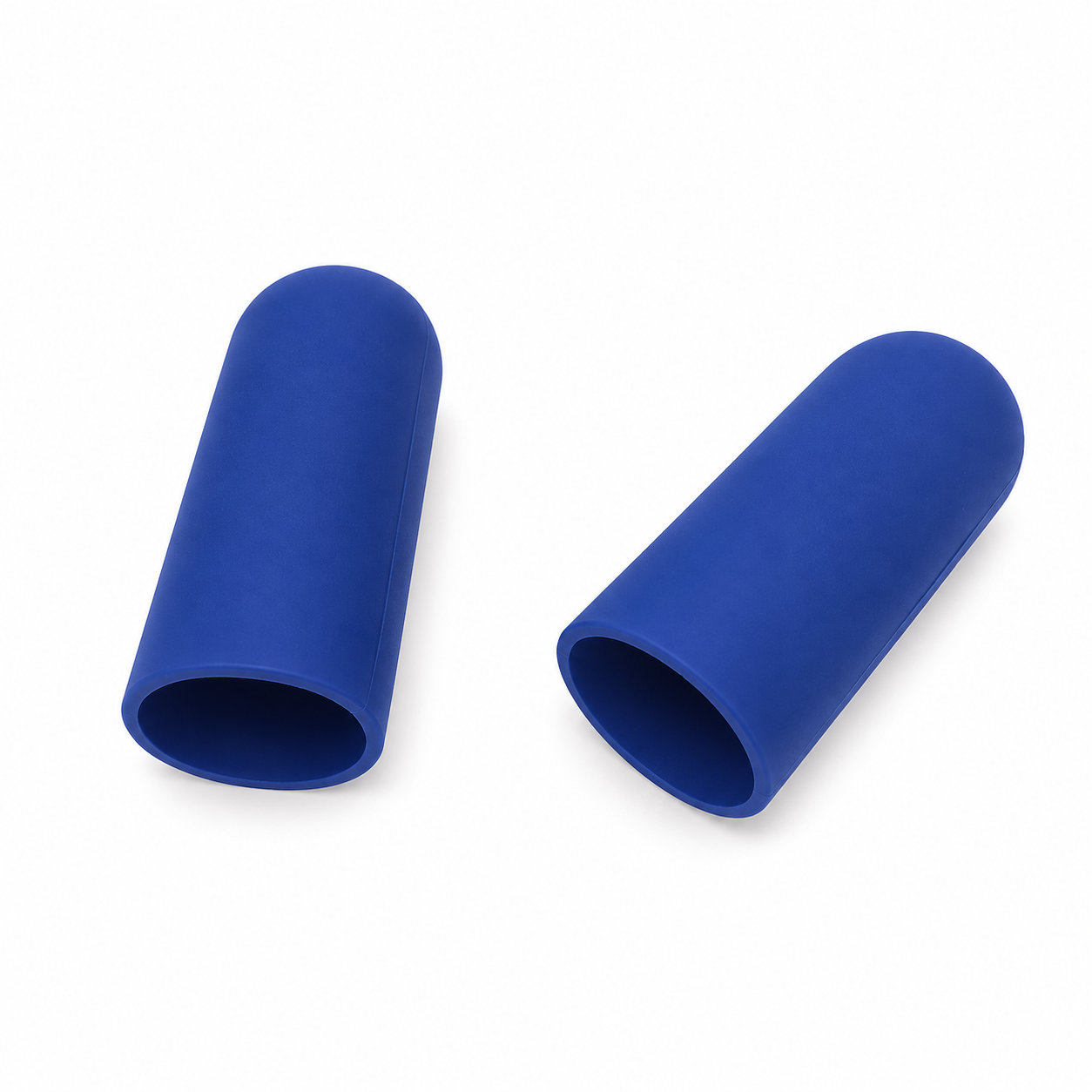
Custom manufacturing example · Rubber Handle Grips Sleeve and Silicone Cover
CUSTOM RUBBER & SILICONE MANUFACTURING
A custom component for your assembly.
Define the mating surfaces, dimensions and working conditions. ETOL manufactures the part to the agreed design and material.
Share the part, its application and your estimated quantity.
Selected for the contact, temperature and movement
Define the visible surfaces and intended color
Develop holes, lips and walls around the mating parts
Match the attachment and installation method
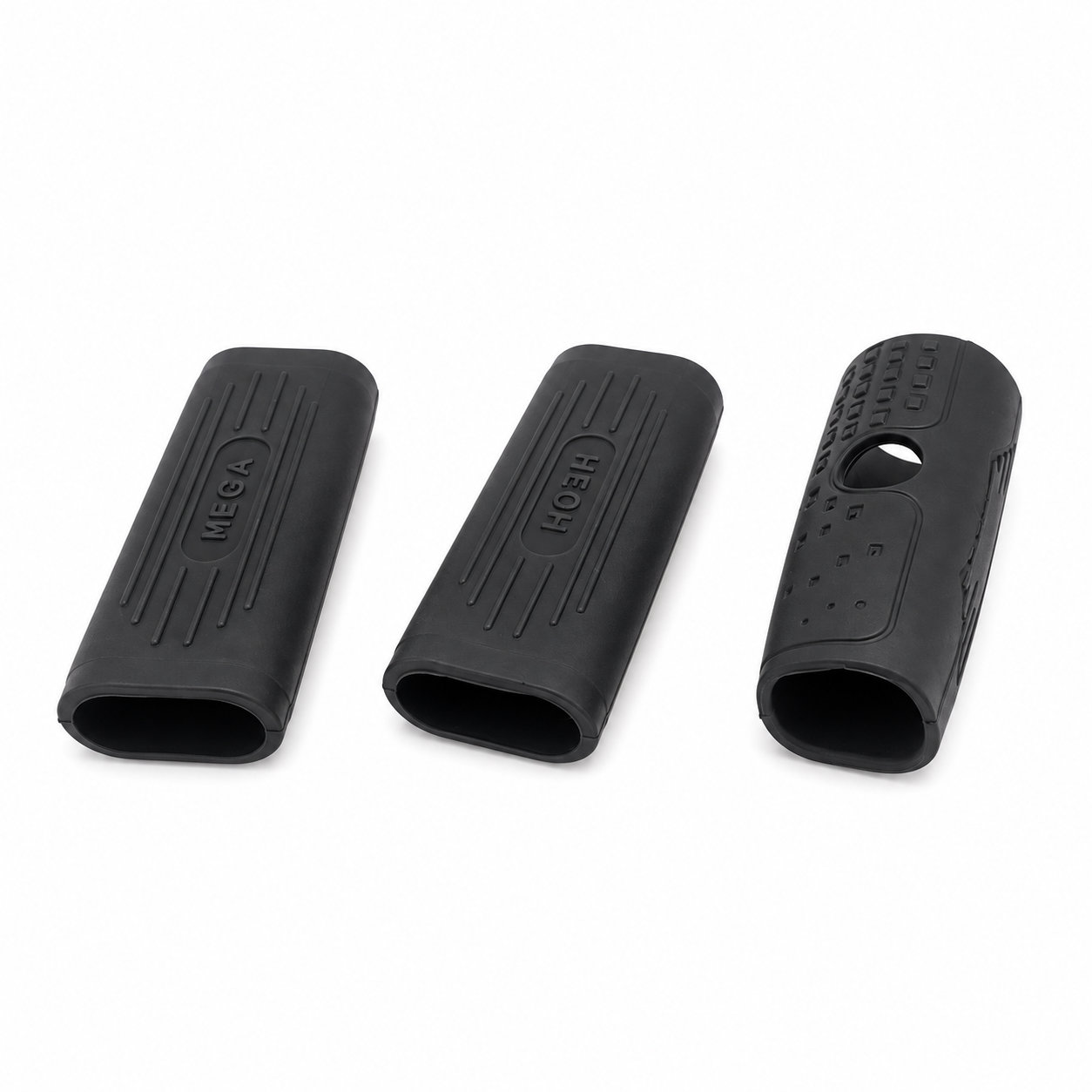
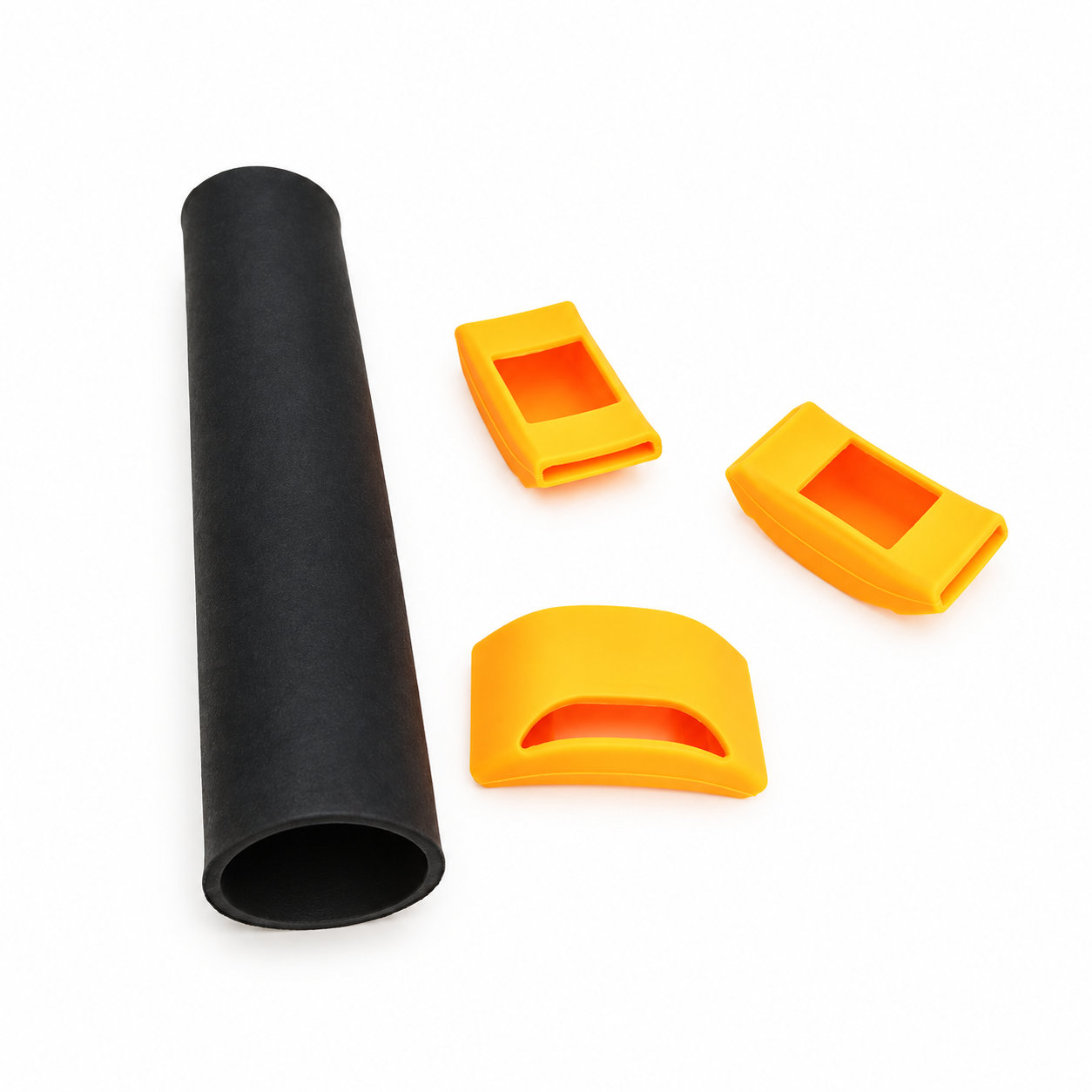
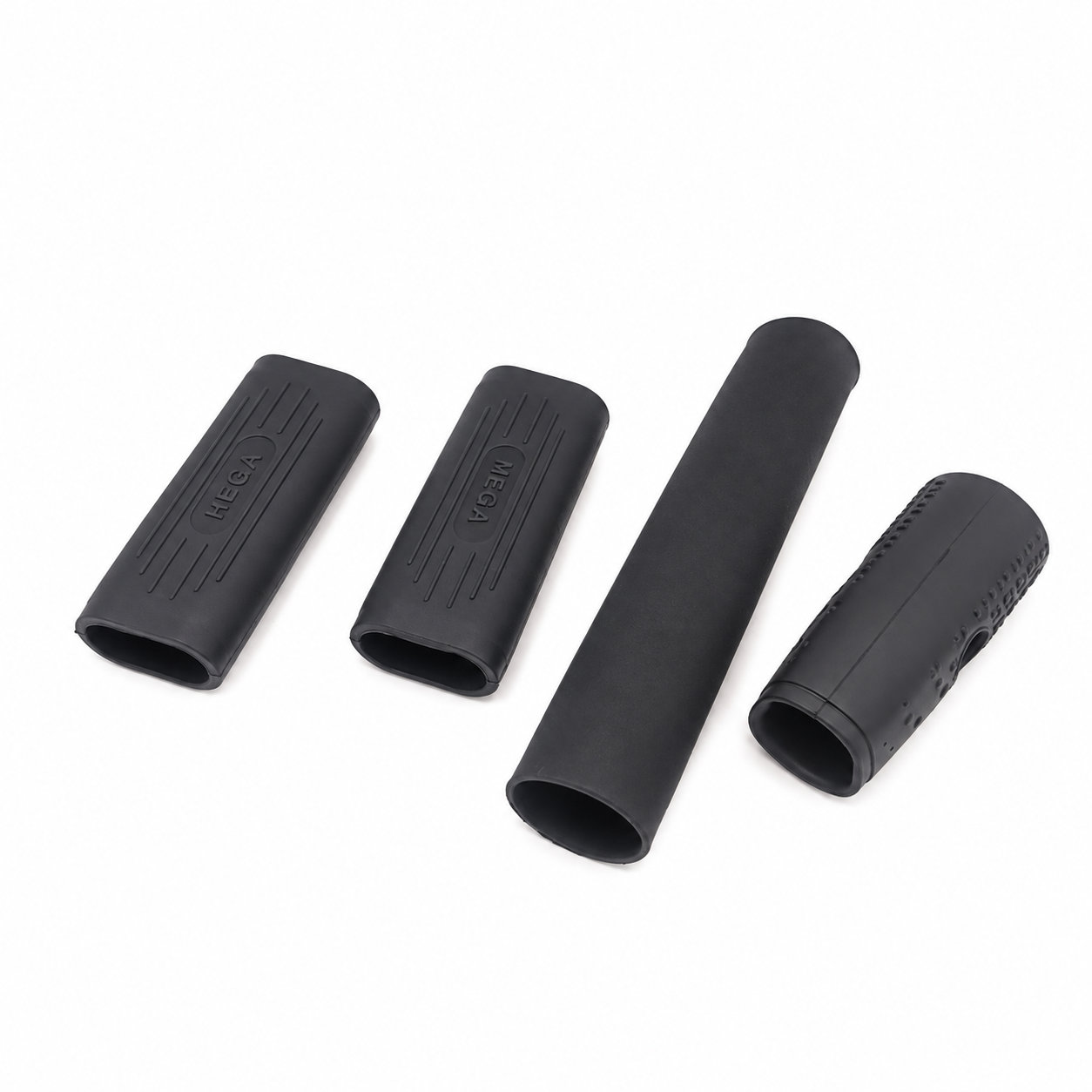
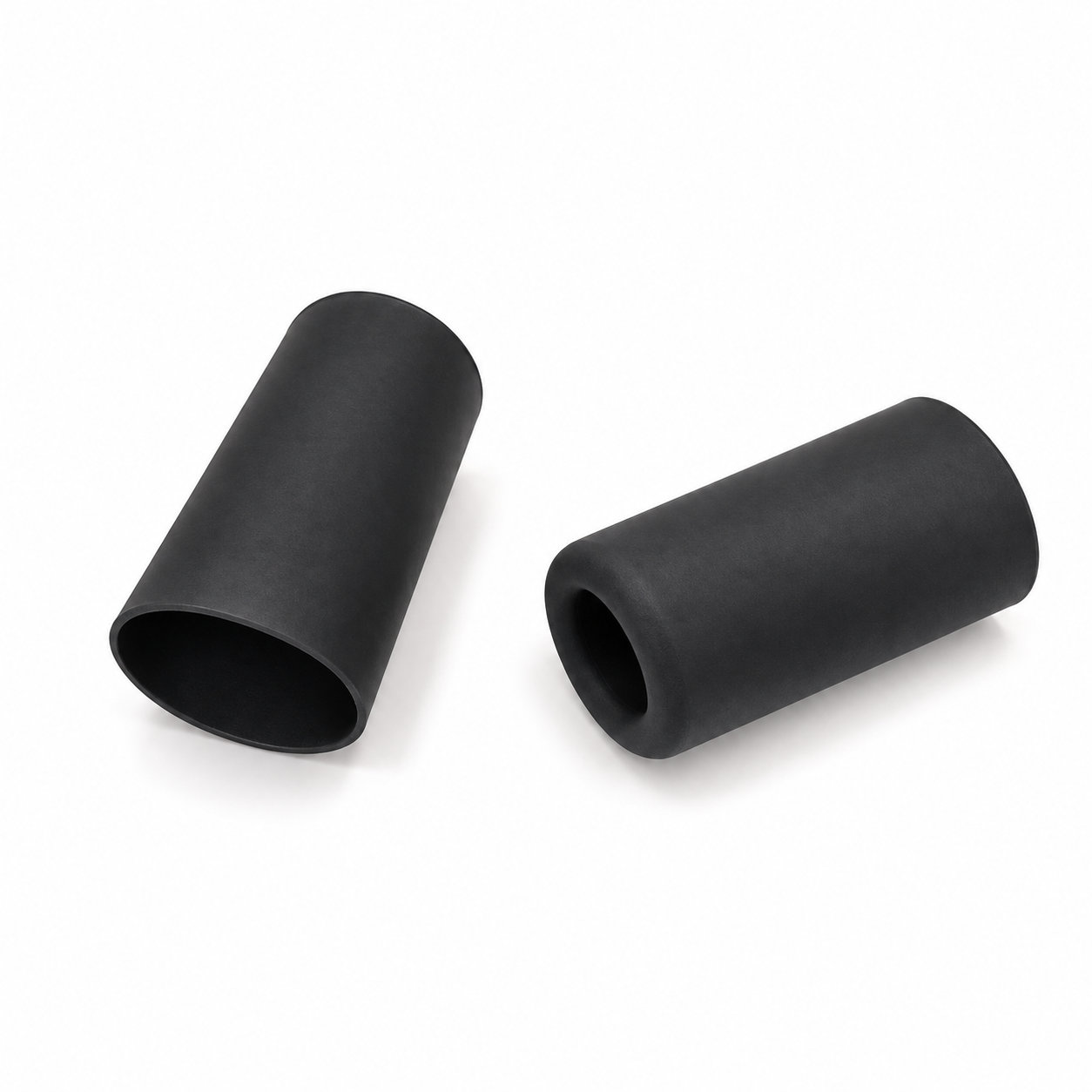
Rubber handle grips in sleeve form add an elastomer surface over a supporting metal or plastic handle. The range includes silicone sleeve constructions and designs in which rubber is molded over a supporting part. Applications include hand tools, sports grips and other handles, with the exact fit developed for the particular object.
Surface texture is a useful starting point. A textured pattern is intended to increase friction against the hand, while a matte smooth finish offers a different touch and appearance. Consider how the handle is held: fingers wrapped around a cylindrical bar place pressure differently from a palm pushing against a broad grip. Check comfort through the full movement rather than judging only the initial touch.
ETOL offers custom sizes, colors, engraved or embossed logos, and hardness choices from 20 to 80 Shore A for silicone and 30 to 90 Shore A for solid rubber. Hardness and wall thickness should be considered together because both affect the feel over a rigid core. Decorative features should remain clear of areas where they would create an uncomfortable ridge.
During installation, establish that the sleeve cannot turn or migrate under the intended hand force. Evaluate the fit again after exposure to the cleaning substances or moisture expected in use. Broad references to heat resistance or electrical insulation do not assign a protective equipment rating to the finished handle. Keep it away from uses requiring a verified safety function unless the complete design has been assessed for that purpose.
Photos illustrate structure or material only. The range includes silicone sleeve constructions and designs in which rubber is molded over a supporting part. ETOL directly manufactures custom-shaped silicone and rubber parts to your requirements.
Identify key dimensions, mating surfaces and quantity
Agree the compound and manufacturing approach
Review the fit and agreed requirements in the assembly
Manufacture and check against the approved requirements
Identify temperature, contact fluids and repeated movement.
Consider hardness together with wall thickness and support.
Check access, mating dimensions and the fitting sequence.
Yes. Show the receiving opening, contact surfaces and clearance limits. We can review the dimensions and retaining features around the intended fit.
Agree the critical dimensions, material, hardness, visible surfaces and sample requirements. Explain how the part is installed and which interfaces control its function.
A sample can help explain the structure. Compare it with the assembly because wear, swelling or compression may have changed its original dimensions.
The material, part geometry, tooling, quantity and finishing affect the quotation. Include the intended batch size and delivery destination when describing your requirements.
DISCUSS THIS COMPONENT
Share the fit, operating conditions and quantity with our manufacturing team.
EXPLORE RELATED DESIGNS
Explore similar part structures and applications for your next project.