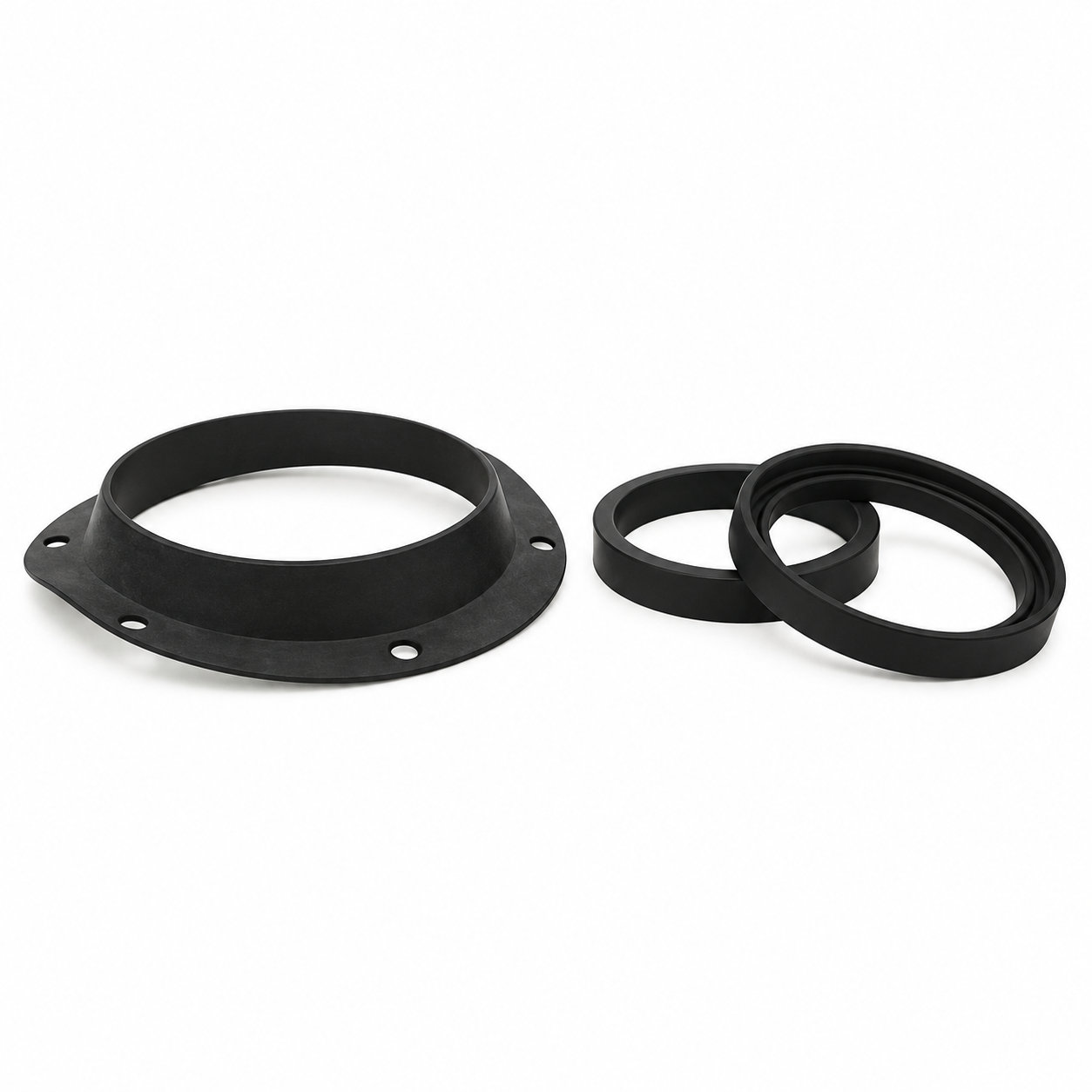
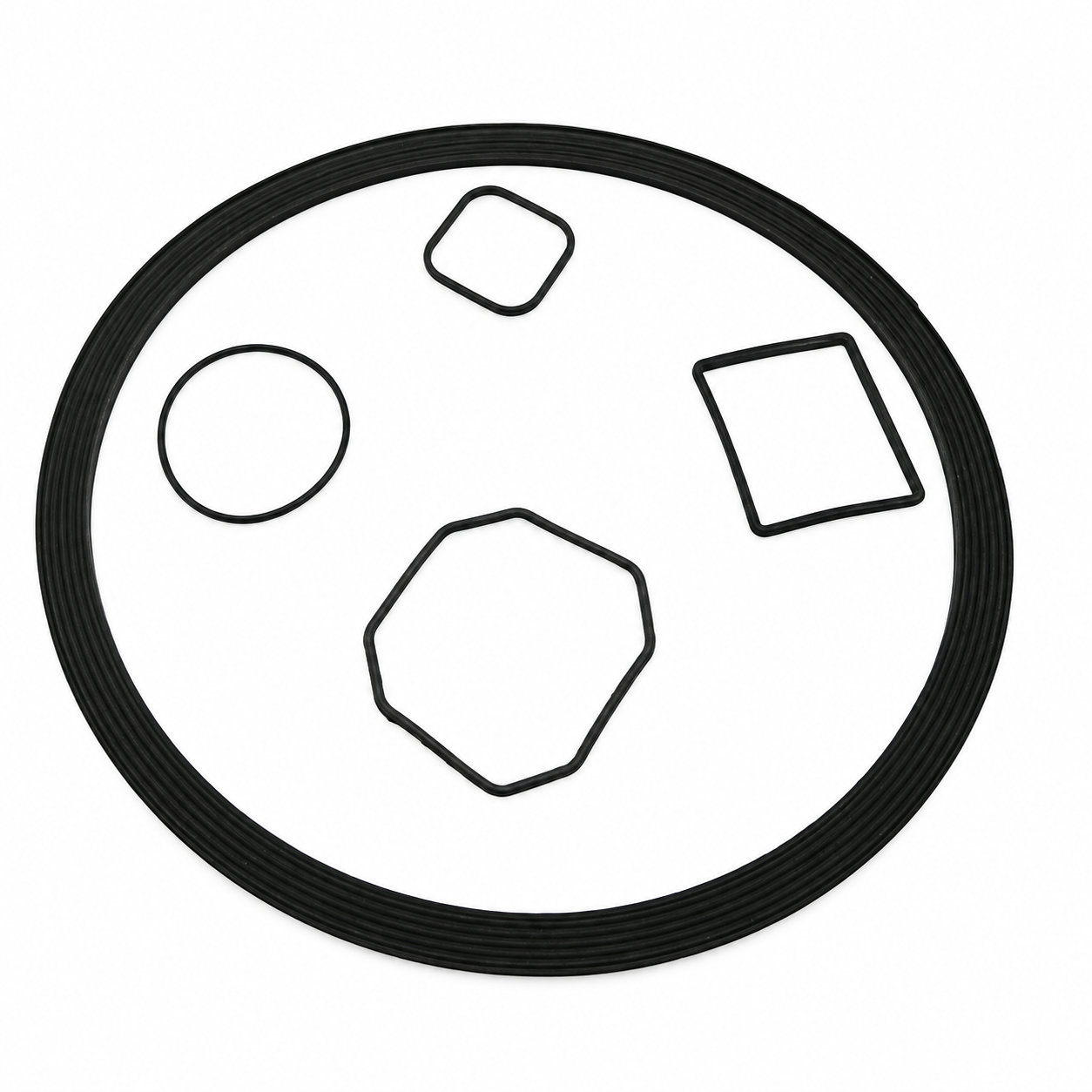
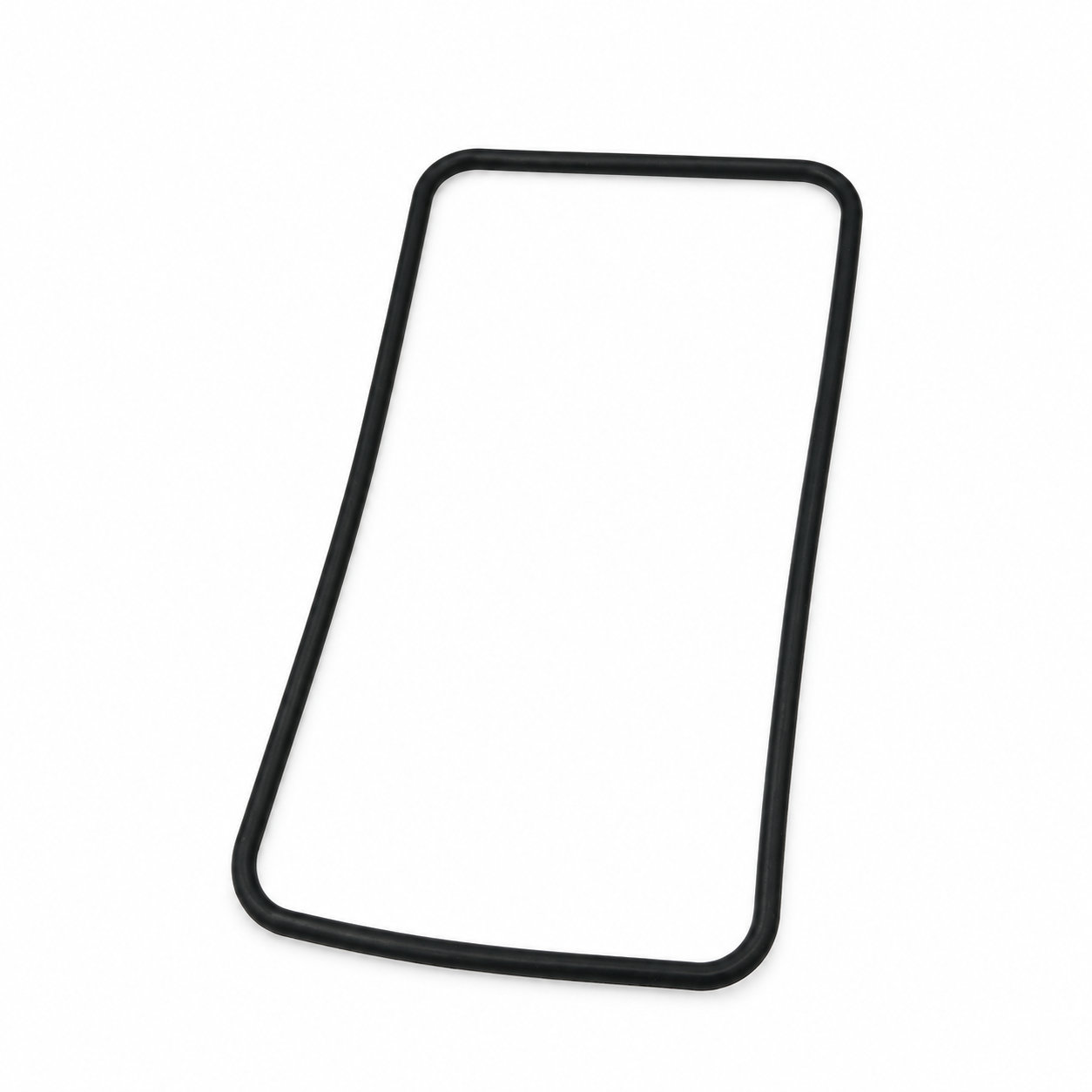
Working conditions
Identify temperature, contact fluids and repeated movement.

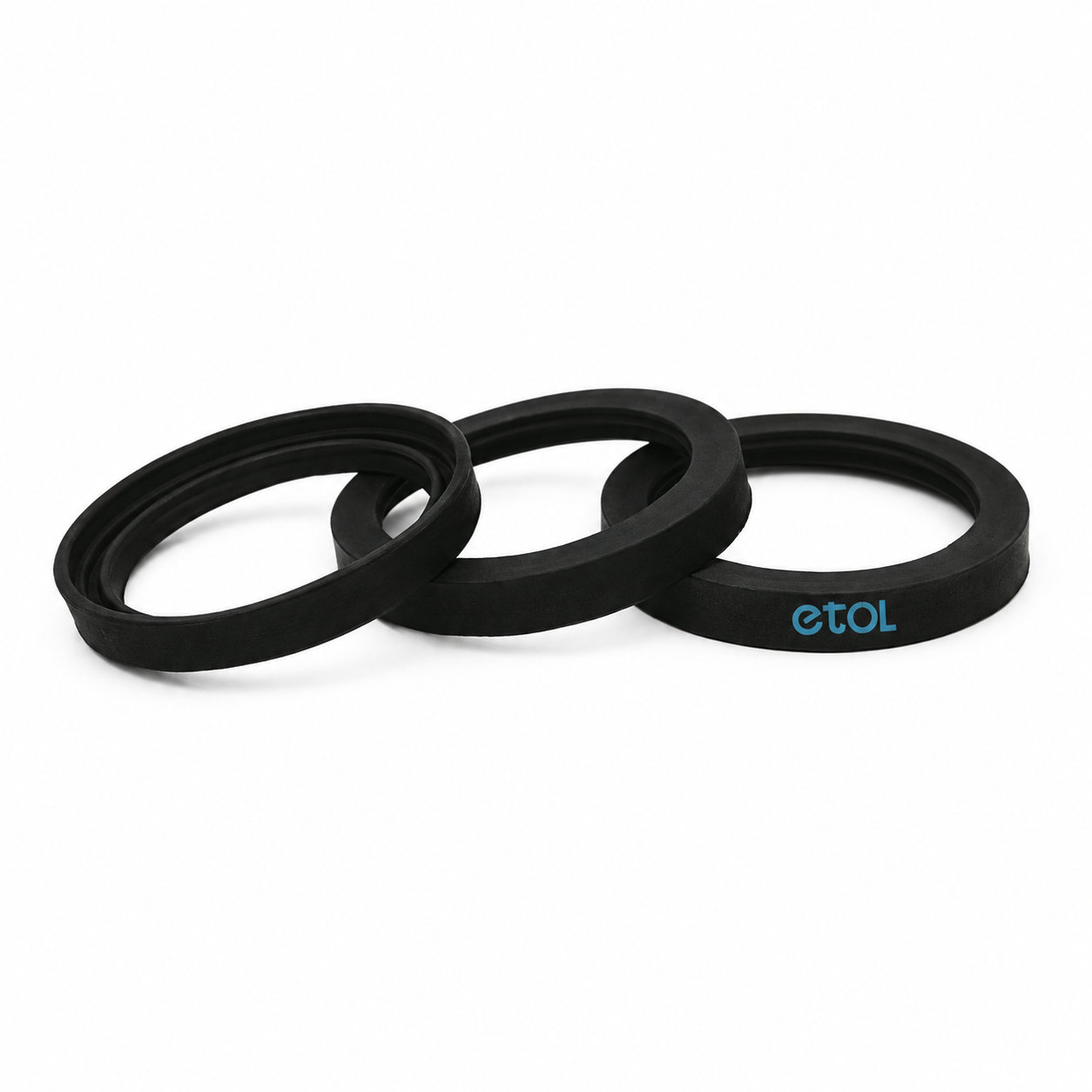
Custom manufacturing example · Customized dustproof flat round rubber gasket
CUSTOM RUBBER & SILICONE MANUFACTURING
A custom component for your assembly.
Define the mating surfaces, dimensions and working conditions. ETOL manufactures the part to the agreed design and material.
Share the part, its application and your estimated quantity.

Selected for the contact, temperature and movement
Define the visible surfaces and intended color
Develop holes, lips and walls around the mating parts
Match the attachment and installation method
A flat round rubber gasket provides an annular contact between mating parts in a circular joint. For a dust-exclusion application, the important feature is continuous contact around that path. A gasket with the correct overall diameter can still leave a gap if its faces are loaded unevenly or part of the ring is unsupported.
Match the inside opening to the passage that must remain clear and the outside edge to the available seating area. Consider how the joint is fastened: widely spaced fixing points or a flexible cover can produce more compression near screws than between them. The gasket thickness should be chosen with those assembly conditions in mind.
Before closing the joint, remove particles that could hold the faces apart and make sure the ring lies flat without twisting. Assess dust protection on the assembled product under its intended conditions rather than inferring a rating from the gasket alone. After opening for maintenance, inspect the ring for damage and an uneven compression pattern, which may show where the mating components need attention.
Photos illustrate structure or material only. A flat round rubber gasket provides an annular contact between mating parts in a circular joint. ETOL directly manufactures custom-shaped silicone and rubber parts to your requirements.
Identify key dimensions, mating surfaces and quantity
Agree the compound and manufacturing approach
Review the fit and agreed requirements in the assembly
Manufacture and check against the approved requirements
Identify temperature, contact fluids and repeated movement.
Consider hardness together with wall thickness and support.
Check access, mating dimensions and the fitting sequence.
Yes. Show the receiving opening, contact surfaces and clearance limits. We can review the dimensions and retaining features around the intended fit.
Agree the critical dimensions, material, hardness, visible surfaces and sample requirements. Explain how the part is installed and which interfaces control its function.
A sample can help explain the structure. Compare it with the assembly because wear, swelling or compression may have changed its original dimensions.
The material, part geometry, tooling, quantity and finishing affect the quotation. Include the intended batch size and delivery destination when describing your requirements.
DISCUSS THIS COMPONENT
Share the fit, operating conditions and quantity with our manufacturing team.
EXPLORE RELATED DESIGNS
Explore similar part structures and applications for your next project.