Working conditions
Identify temperature, contact fluids and repeated movement.

Custom manufacturing example · Automotive silicone rubber keypad customized
CUSTOM RUBBER & SILICONE MANUFACTURING
A custom component for your assembly.
Define the mating surfaces, dimensions and working conditions. ETOL manufactures the part to the agreed design and material.
Share the part, its application and your estimated quantity.
Selected for the contact, temperature and movement
Define the visible surfaces and intended color
Develop holes, lips and walls around the mating parts
Match the attachment and installation method
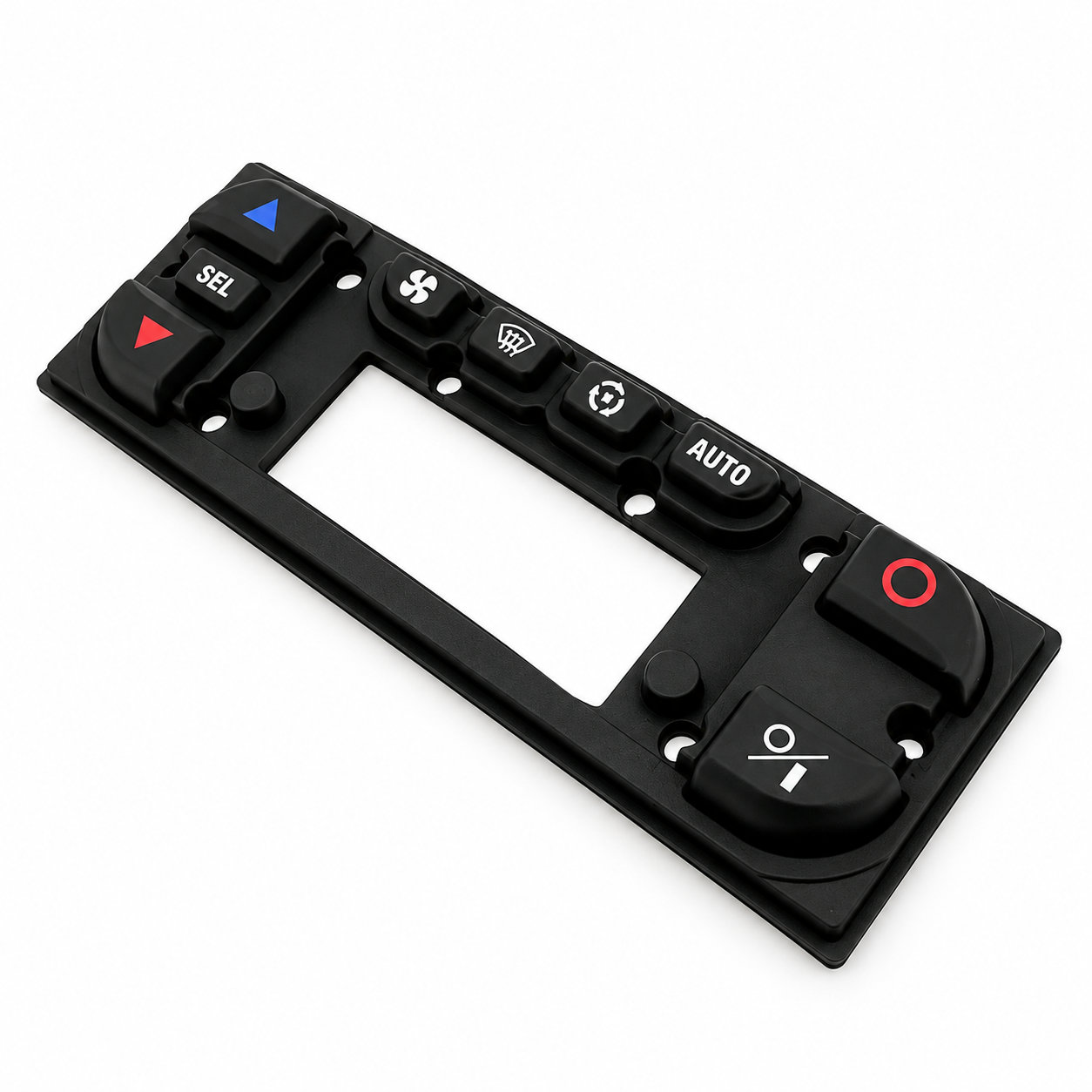
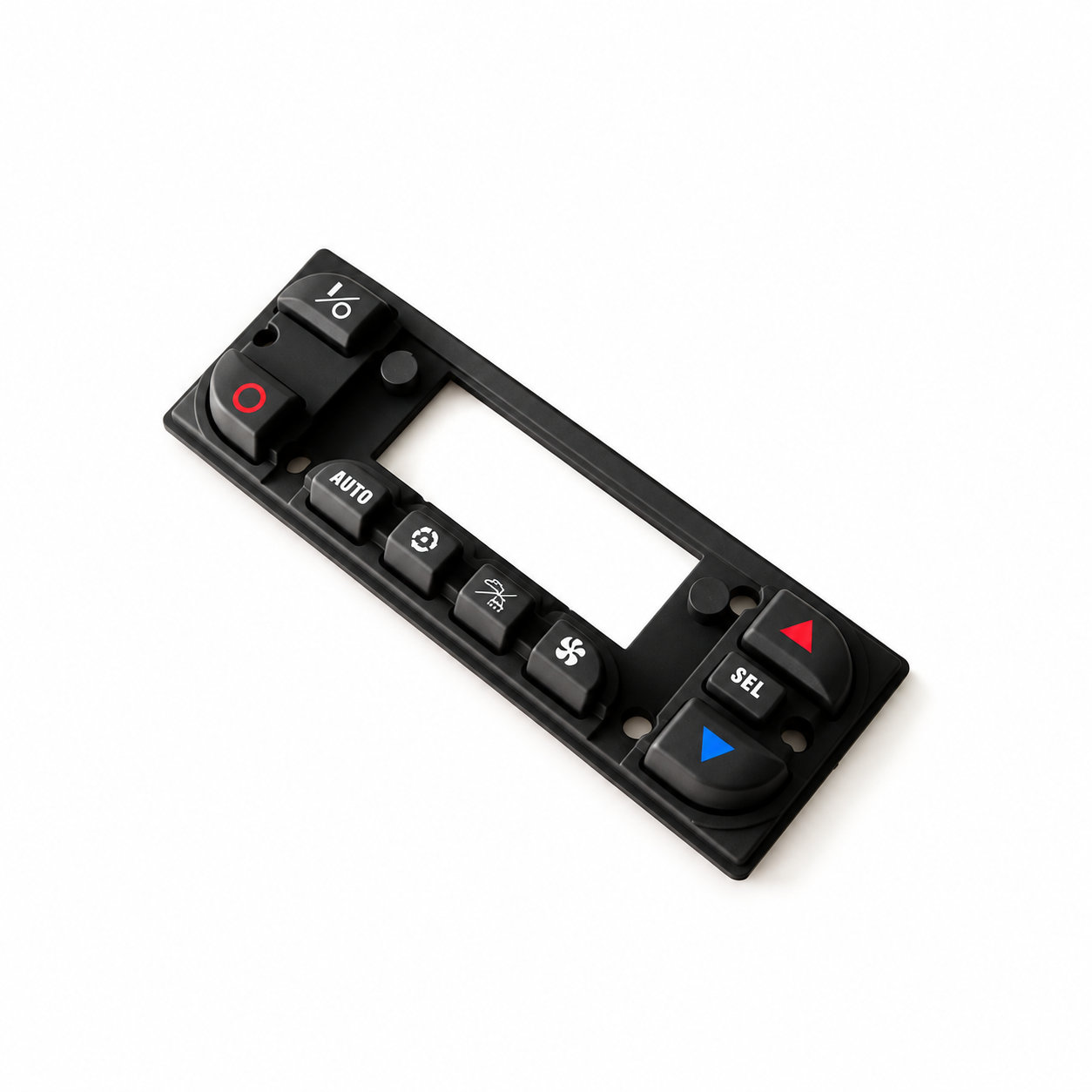
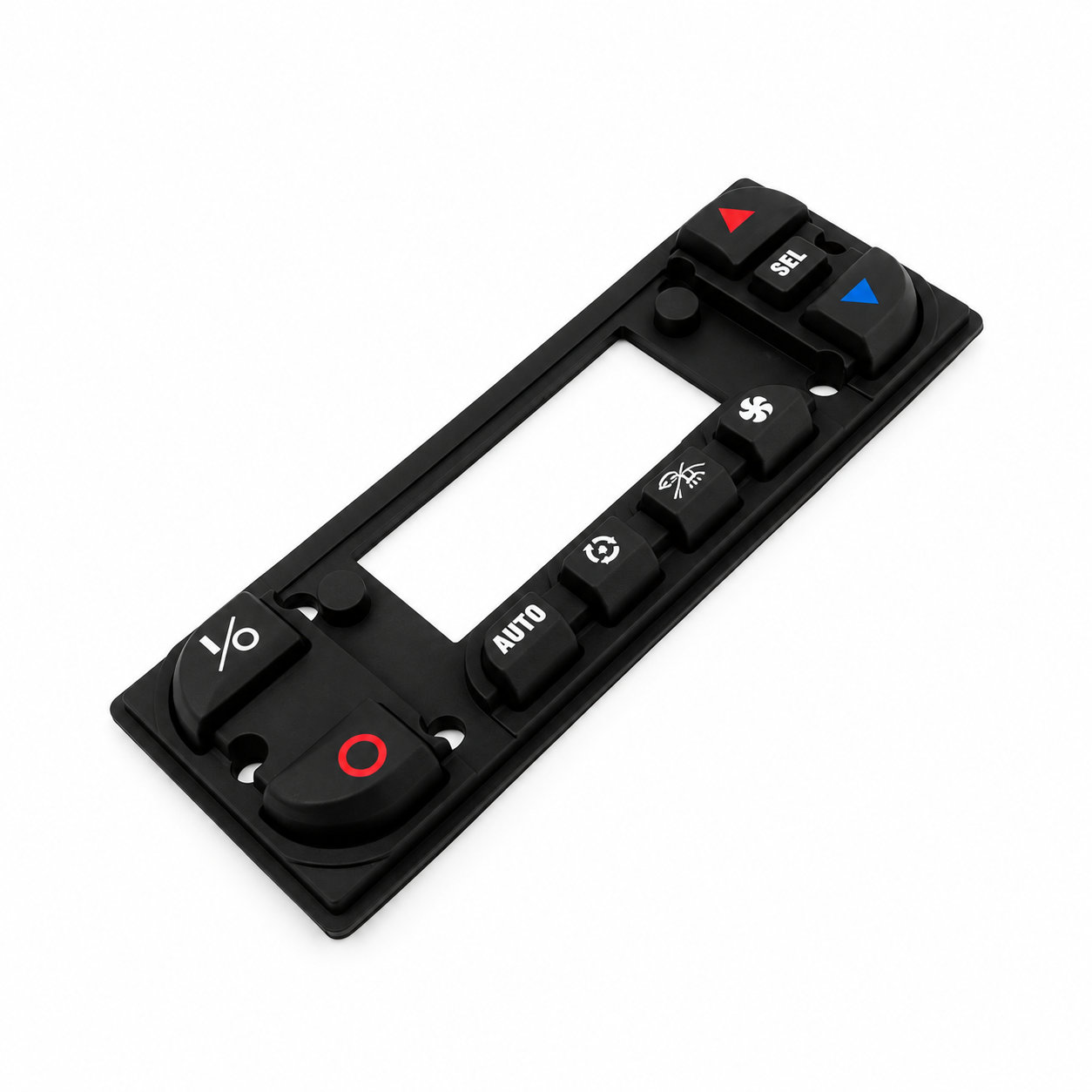
An automotive silicone rubber keypad provides a molded control surface for a compatible vehicle interface. The key layout can be tailored to the surrounding trim, with color and legends coordinated to the control functions. Its suitability depends on the particular installation; a control inside a protected cabin has different exposure from one placed in a less sheltered location.
Begin with the relationship between the keys and trim opening. Check whether the panel curvature changes the available clearance across the layout. Large differences in height or an edge pressing on the rubber can make neighboring keys feel inconsistent after assembly. Evaluate the part in the finished trim position, including the actual support behind the keypad.
The material and surface finish should suit the expected temperature conditions, hand contact and routine cleaning. ETOL offers customization of structure, dimensions, hardness and marking processes. Select the legend size and contrast for the intended viewing position rather than judging only a close-up sample. Any illumination requirement needs its own design review; printing alone does not define a backlit construction.
During fitting, make sure the perimeter remains seated as the trim is secured. Check for keys that rub after the fasteners are tightened, then operate the controls with their intended electronics. Cleaning should follow the finished equipment's instructions rather than assuming the loose rubber part can be immersed or treated with any solvent. Periodic inspection should include worn legends and changes in key return, both of which can affect the usability of the interface.
Photos illustrate structure or material only. The key layout can be tailored to the surrounding trim, with color and legends coordinated to the control functions. ETOL directly manufactures custom-shaped silicone and rubber parts to your requirements.
Identify key dimensions, mating surfaces and quantity
Agree the compound and manufacturing approach
Review the fit and agreed requirements in the assembly
Manufacture and check against the approved requirements
Identify temperature, contact fluids and repeated movement.
Consider hardness together with wall thickness and support.
Check access, mating dimensions and the fitting sequence.
Yes. Show the receiving opening, contact surfaces and clearance limits. We can review the dimensions and retaining features around the intended fit.
Agree the critical dimensions, material, hardness, visible surfaces and sample requirements. Explain how the part is installed and which interfaces control its function.
A sample can help explain the structure. Compare it with the assembly because wear, swelling or compression may have changed its original dimensions.
The material, part geometry, tooling, quantity and finishing affect the quotation. Include the intended batch size and delivery destination when describing your requirements.
DISCUSS THIS COMPONENT
Share the fit, operating conditions and quantity with our manufacturing team.
EXPLORE RELATED DESIGNS
Explore similar part structures and applications for your next project.