Working conditions
Identify temperature, contact fluids and repeated movement.

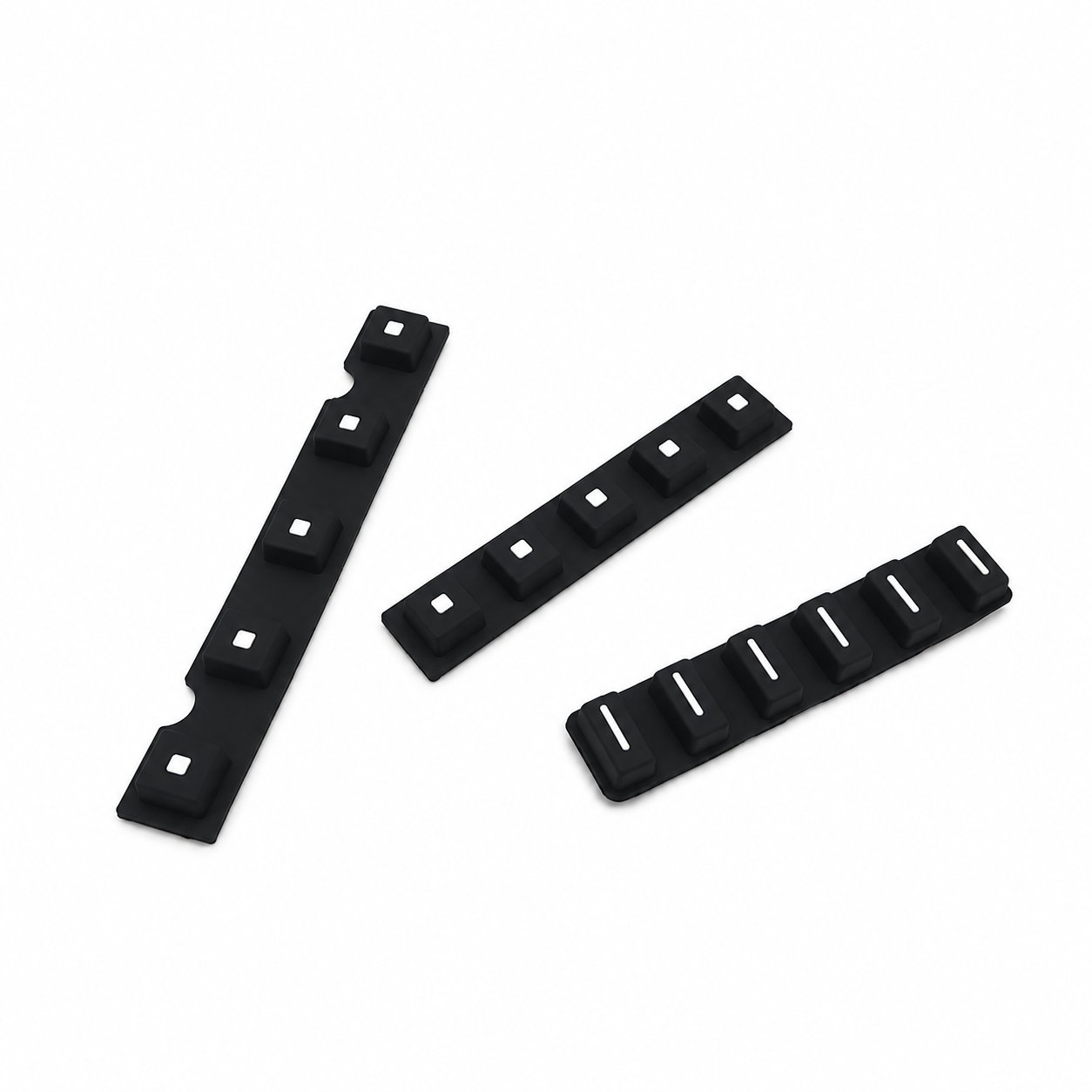
Custom manufacturing example · Custom silicone control button conductive keypad
CUSTOM RUBBER & SILICONE MANUFACTURING
A custom component for your assembly.
Define the mating surfaces, dimensions and working conditions. ETOL manufactures the part to the agreed design and material.
Share the part, its application and your estimated quantity.

Selected for the contact, temperature and movement
Define the visible surfaces and intended color
Develop holes, lips and walls around the mating parts
Match the attachment and installation method
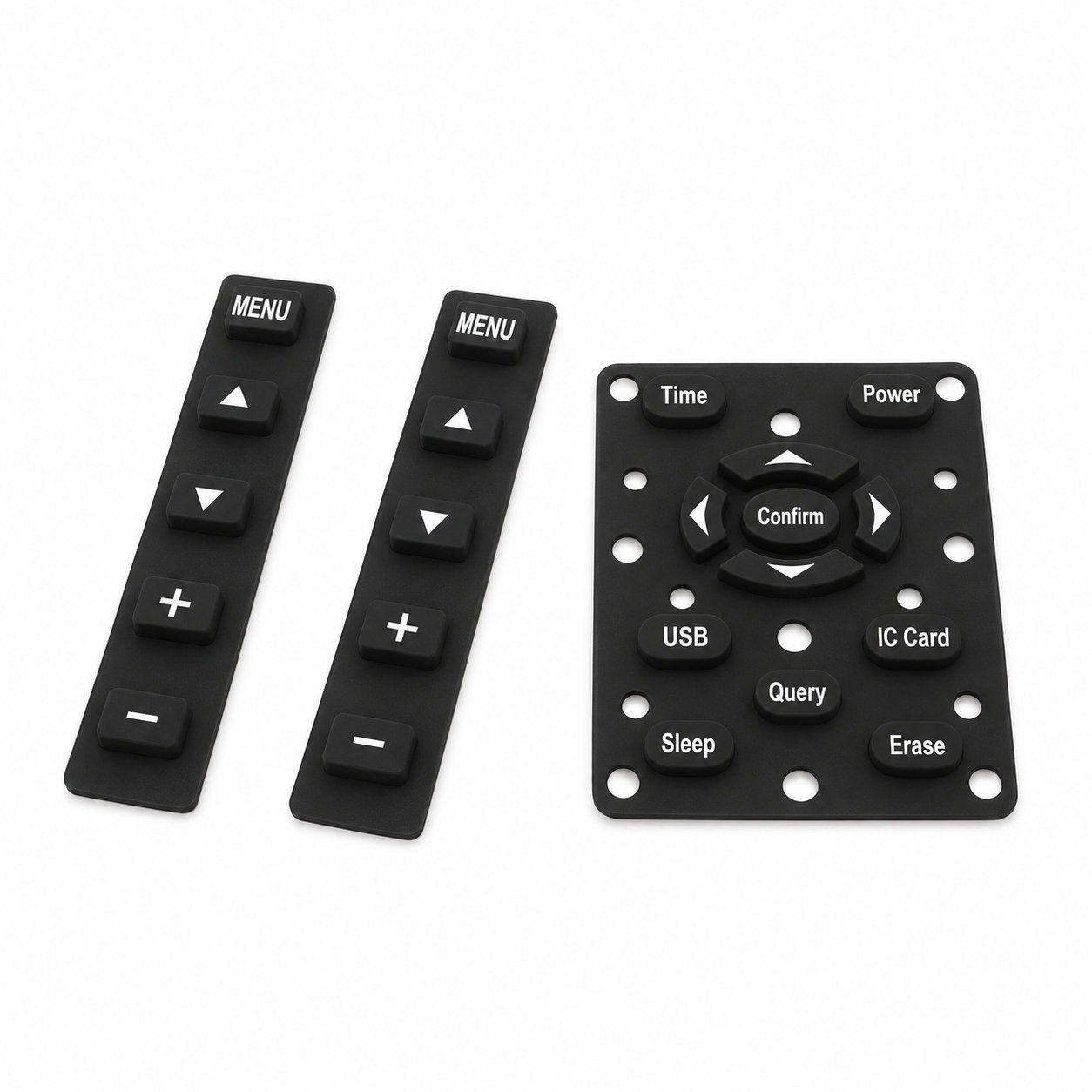
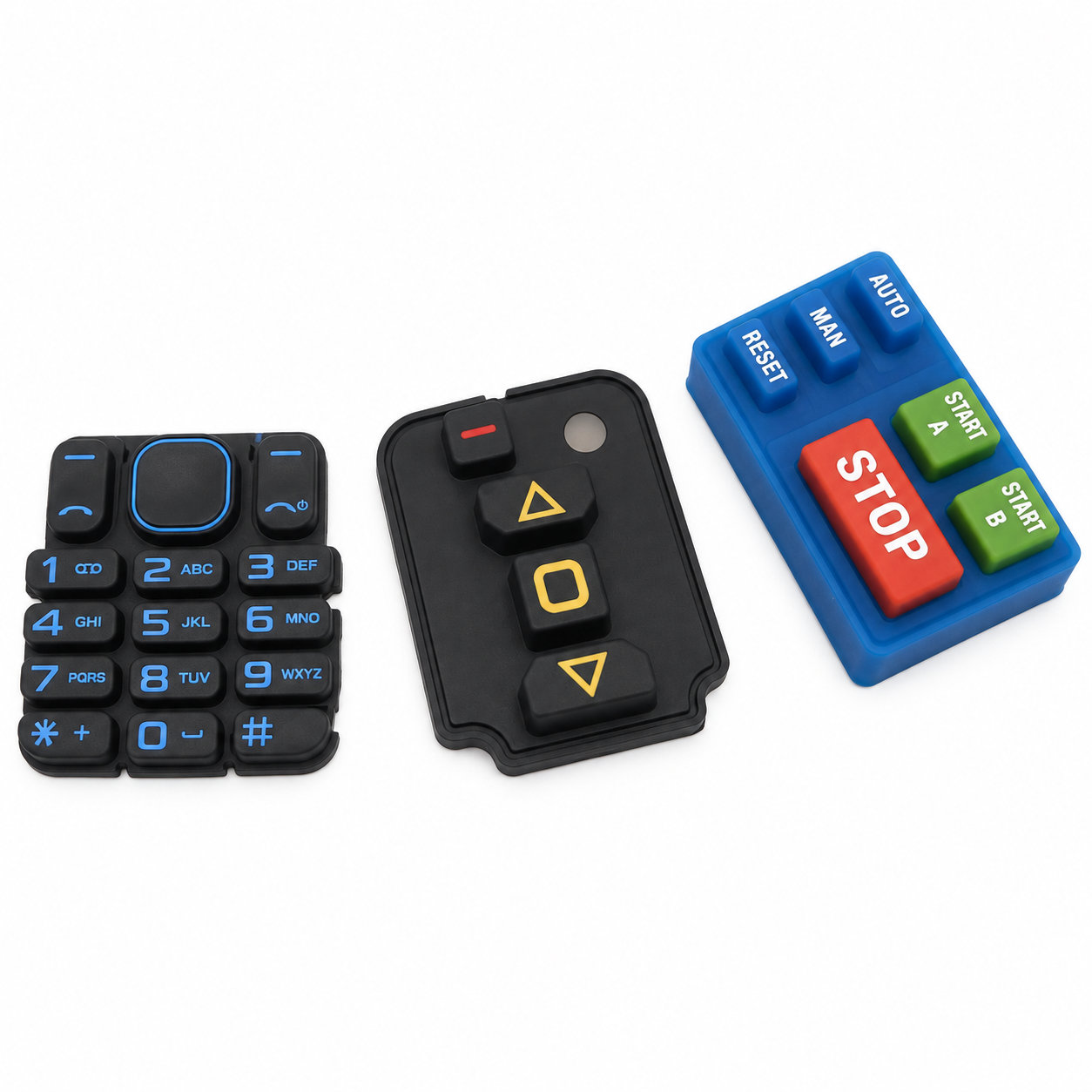
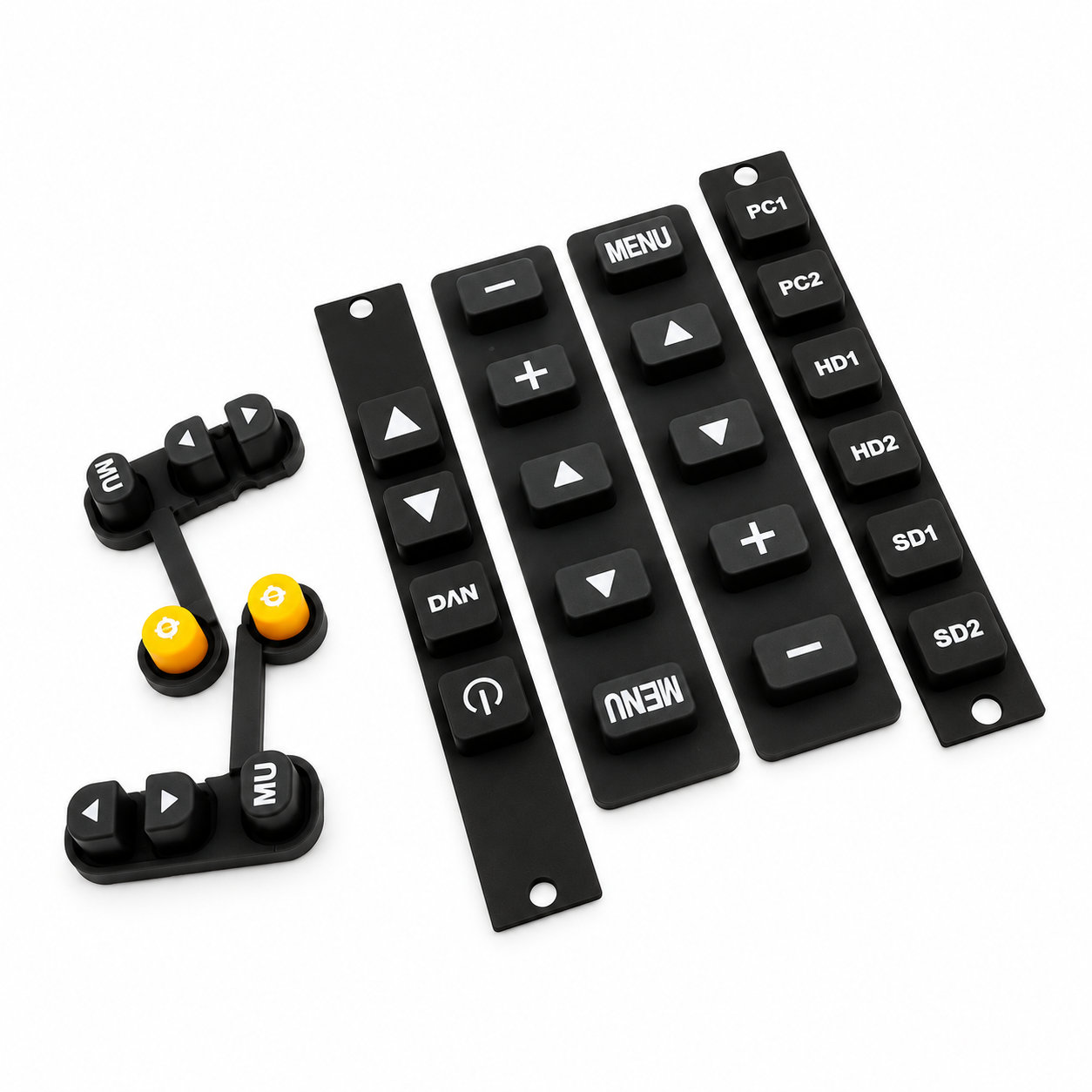
A silicone control button combines a molded user contact surface with a switching arrangement beneath it. This custom keypad offering includes conductive constructions, such as carbon pill contacts and conductive ink, alongside non-conductive designs used with a separate switching element. Selecting that interface early helps keep the mechanical layout consistent with the electronic circuit.
For a conductive design, the contact shape and location need to correspond to the board beneath each key. The flexible web must allow a press to reach the contact without making the key remain active after release. Where the rubber operates a separate switch, the underside instead needs to deliver movement to that switch at the intended position. These two constructions should be evaluated as different assemblies, even when their visible key tops look similar.
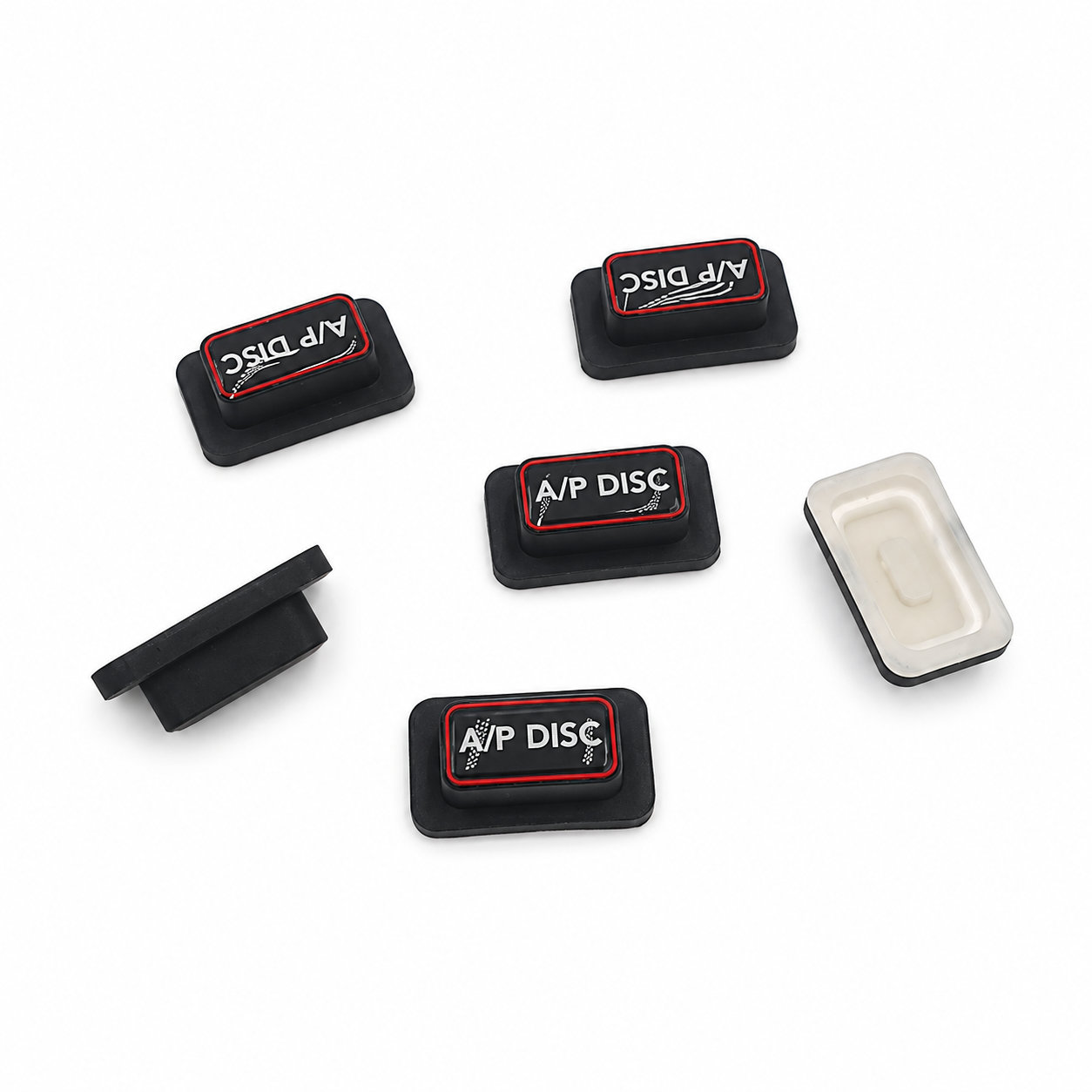
The silicone control button can carry symbols, numbers or text through screen printing or laser etching, depending on the chosen construction. Decide which functions need to be recognized first, then place the legends where the housing will leave them visible. A wide symbol on a narrow key may become difficult to read once the keypad is fitted.
Trial the complete control with its front panel and board secured. Check every key for release after an off-center press, and keep handling residues away from the conductive surfaces while assembling the unit.
Photos illustrate structure or material only. For a conductive design, the contact shape and location need to correspond to the board beneath each key. ETOL directly manufactures custom-shaped silicone and rubber parts to your requirements.
Identify key dimensions, mating surfaces and quantity
Agree the compound and manufacturing approach
Review the fit and agreed requirements in the assembly
Manufacture and check against the approved requirements
Identify temperature, contact fluids and repeated movement.
Consider hardness together with wall thickness and support.
Check access, mating dimensions and the fitting sequence.
Yes. Show the receiving opening, contact surfaces and clearance limits. We can review the dimensions and retaining features around the intended fit.
Agree the critical dimensions, material, hardness, visible surfaces and sample requirements. Explain how the part is installed and which interfaces control its function.
A sample can help explain the structure. Compare it with the assembly because wear, swelling or compression may have changed its original dimensions.
The material, part geometry, tooling, quantity and finishing affect the quotation. Include the intended batch size and delivery destination when describing your requirements.
DISCUSS THIS COMPONENT
Share the fit, operating conditions and quantity with our manufacturing team.
EXPLORE RELATED DESIGNS
Explore similar part structures and applications for your next project.