Working conditions
Identify temperature, contact fluids and repeated movement.

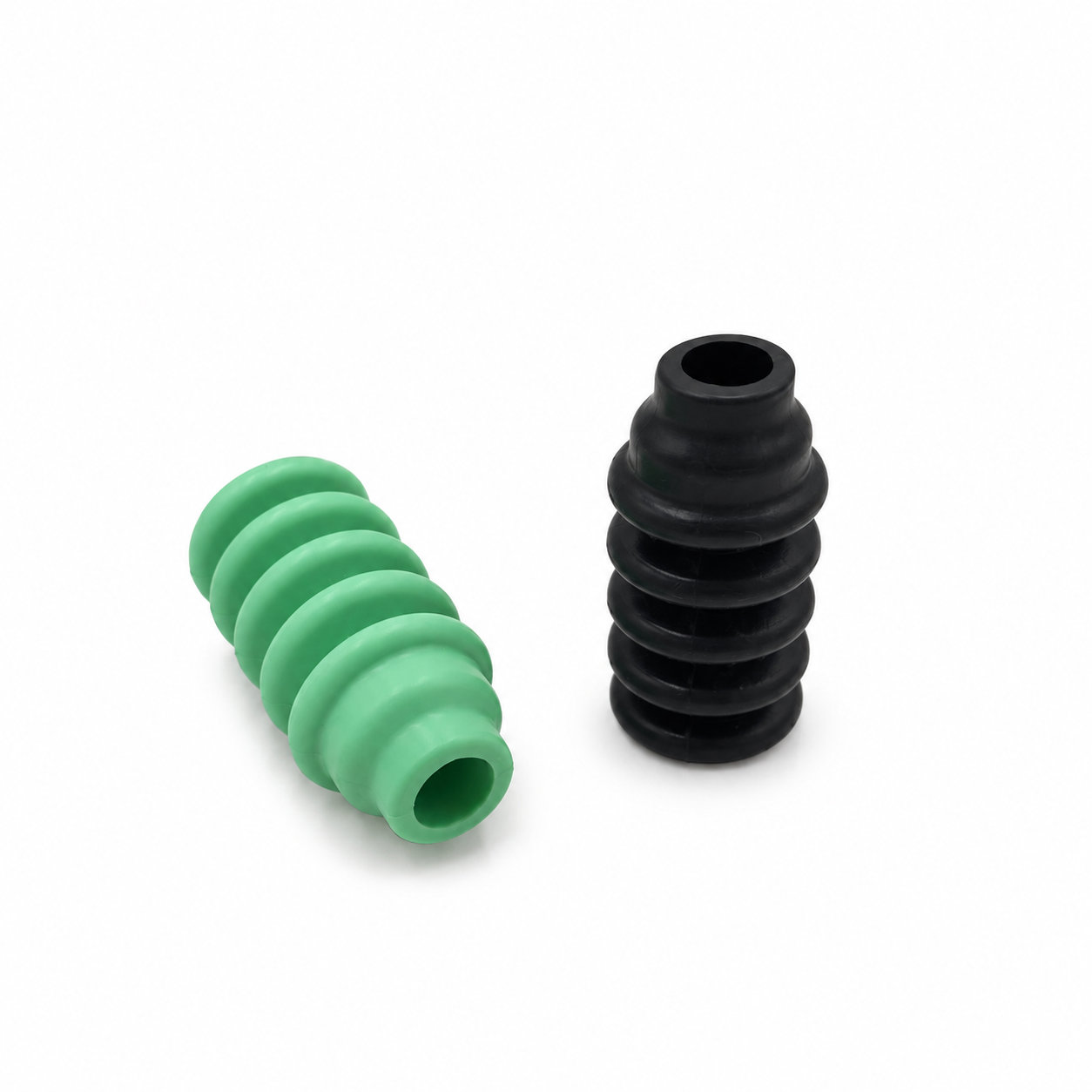
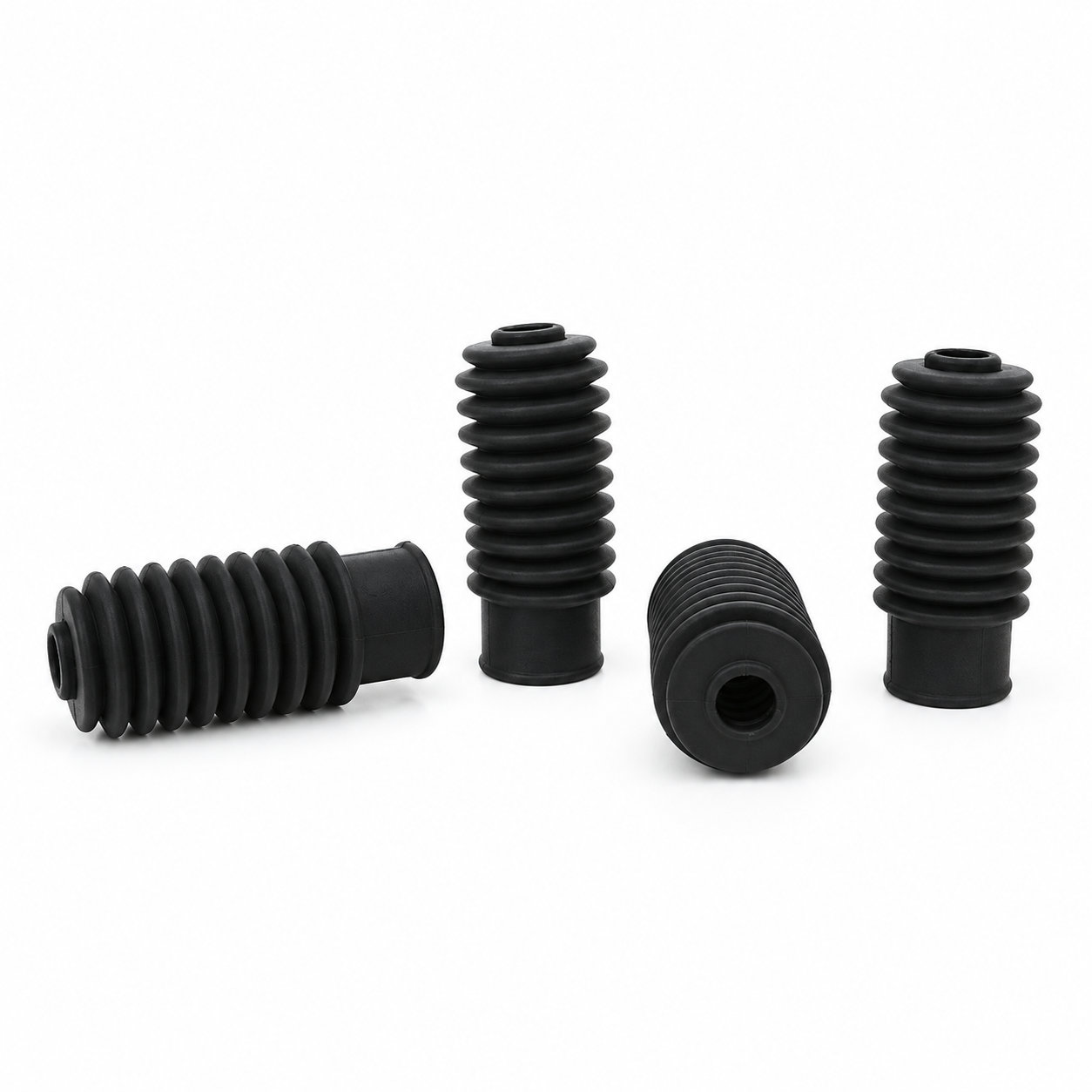
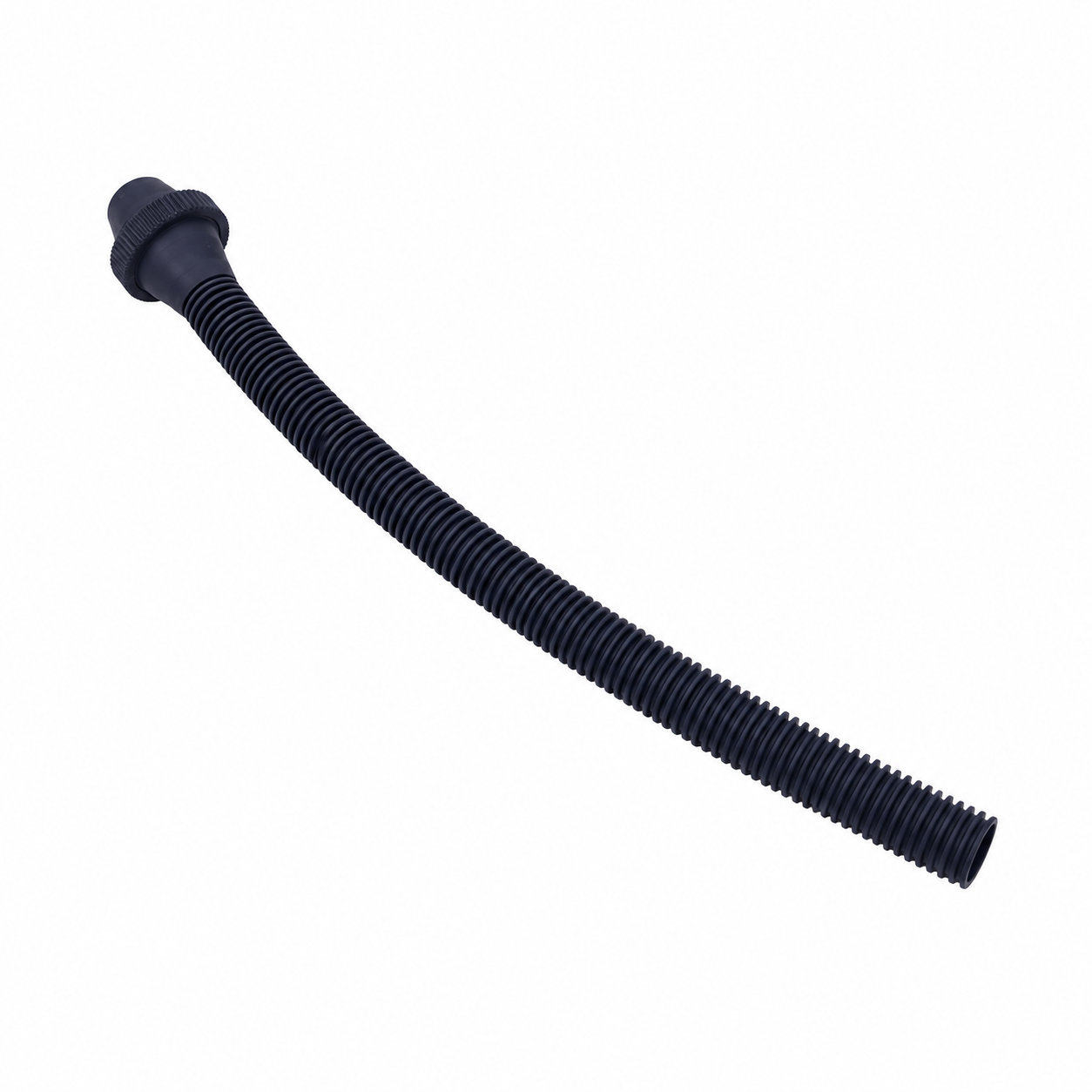
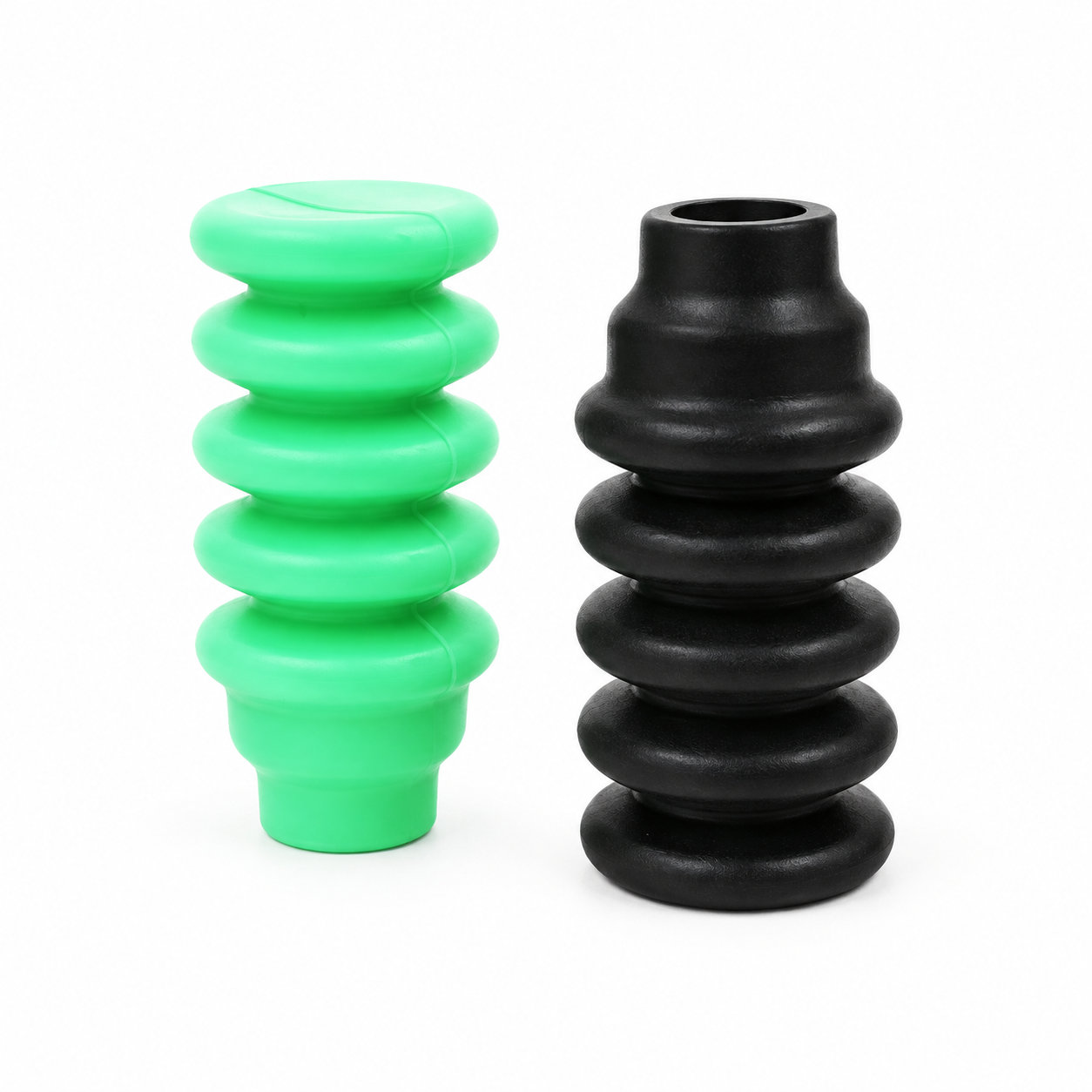
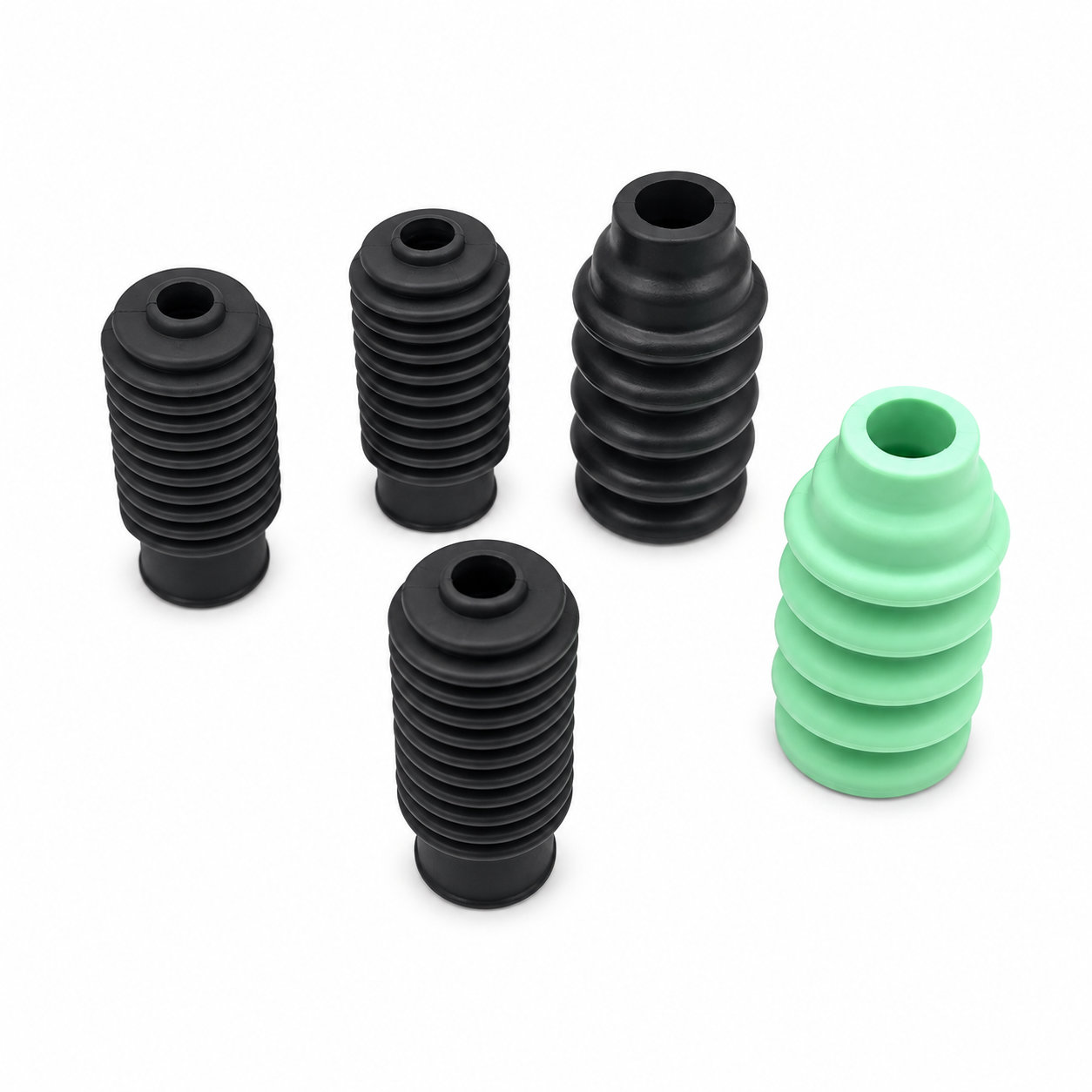
Custom manufacturing example · Moulded silicone bellows rubber compressible bellows
CUSTOM RUBBER & SILICONE MANUFACTURING
A custom component for your assembly.
Define the mating surfaces, dimensions and working conditions. ETOL manufactures the part to the agreed design and material.
Share the part, its application and your estimated quantity.
Selected for the contact, temperature and movement
Define the visible surfaces and intended color
Develop holes, lips and walls around the mating parts
Match the attachment and installation method
Moulded silicone bellows use a formed corrugated wall to accommodate movement within a compact protective shape. The fold geometry is part of the design, so the number and depth of folds should be chosen around the intended motion rather than judged only by the overall length of a loose part.
ETOL can customize dimensions, structure, hardness and color, with material alternatives available for different conditions. Identify the installed resting position and the two ends of the operating travel. The bellows should have room to change shape across that range without becoming the mechanical stop.
End connections also influence the fold behavior. If one end sits at an angle, the folds on one side may close earlier than those on the other. Align the attachments before evaluating compression, and leave surrounding clearance for any sideways change in the body.
During the first movement check, observe each section of the bellows instead of looking only at the total length. A single fold that inverts or rubs can concentrate wear. Remove trapped particles from the valleys and avoid using sharp tools to pry adjacent folds apart during cleaning or inspection.
Photos illustrate structure or material appearance only. Moulded silicone bellows use a formed corrugated wall to accommodate movement within a compact protective shape. ETOL directly manufactures custom-shaped silicone and rubber parts to your requirements.
Identify key dimensions, mating surfaces and quantity
Agree the compound and manufacturing approach
Review the fit and agreed requirements in the assembly
Manufacture and check against the approved requirements
Identify temperature, contact fluids and repeated movement.
Consider hardness together with wall thickness and support.
Check access, mating dimensions and the fitting sequence.
Yes. Show the receiving opening, contact surfaces and clearance limits. We can review the dimensions and retaining features around the intended fit.
Agree the critical dimensions, material, hardness, visible surfaces and sample requirements. Explain how the part is installed and which interfaces control its function.
A sample can help explain the structure. Compare it with the assembly because wear, swelling or compression may have changed its original dimensions.
The material, part geometry, tooling, quantity and finishing affect the quotation. Include the intended batch size and delivery destination when describing your requirements.
DISCUSS THIS COMPONENT
Share the fit, operating conditions and quantity with our manufacturing team.
EXPLORE RELATED DESIGNS
Explore similar part structures and applications for your next project.