Working conditions
Identify temperature, contact fluids and repeated movement.

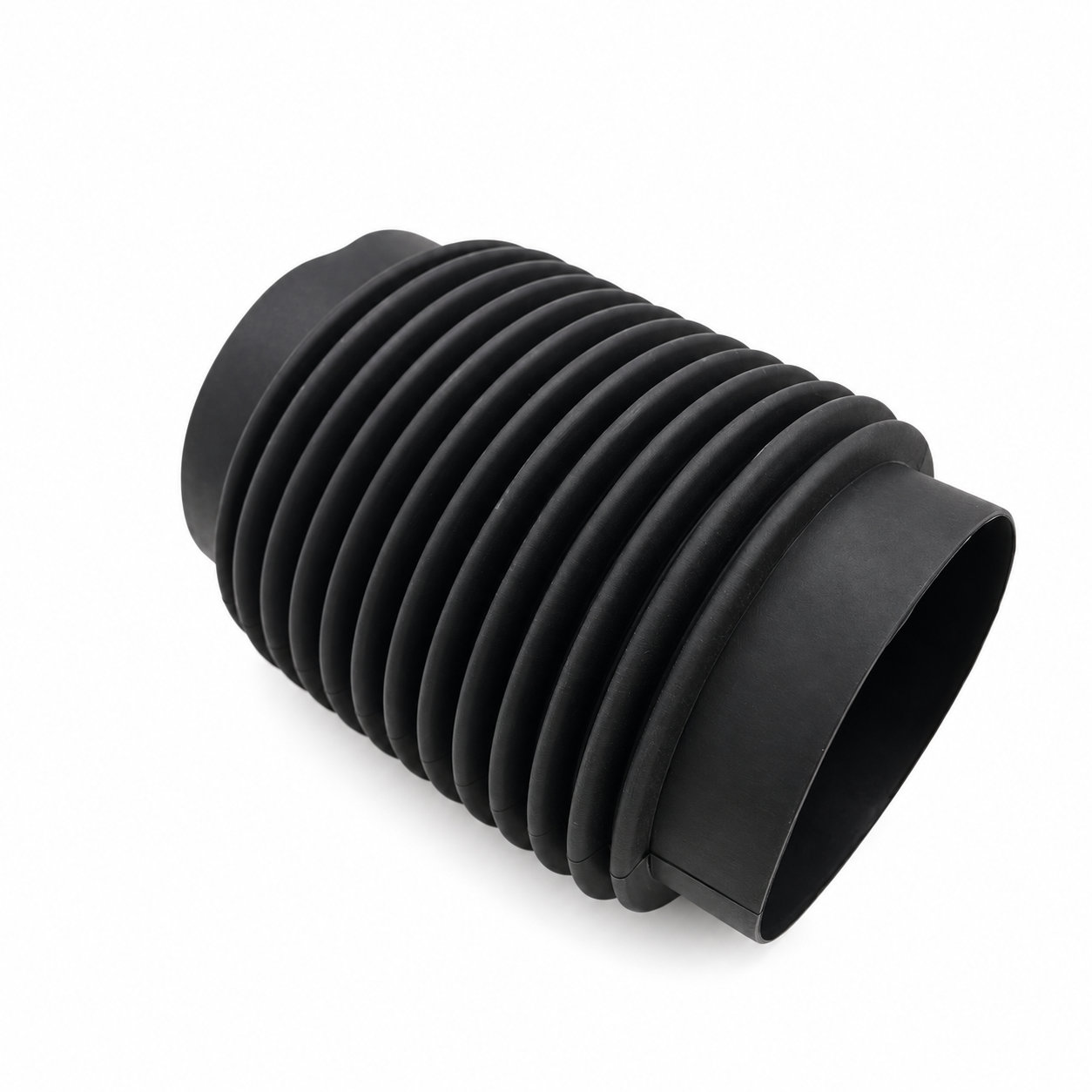
Custom manufacturing example · NBR rubber bellows EPDM FKM bellow manufacturer
CUSTOM RUBBER & SILICONE MANUFACTURING
A custom component for your assembly.
Define the mating surfaces, dimensions and working conditions. ETOL manufactures the part to the agreed design and material.
Share the part, its application and your estimated quantity.
Selected for the contact, temperature and movement
Define the visible surfaces and intended color
Develop holes, lips and walls around the mating parts
Match the attachment and installation method
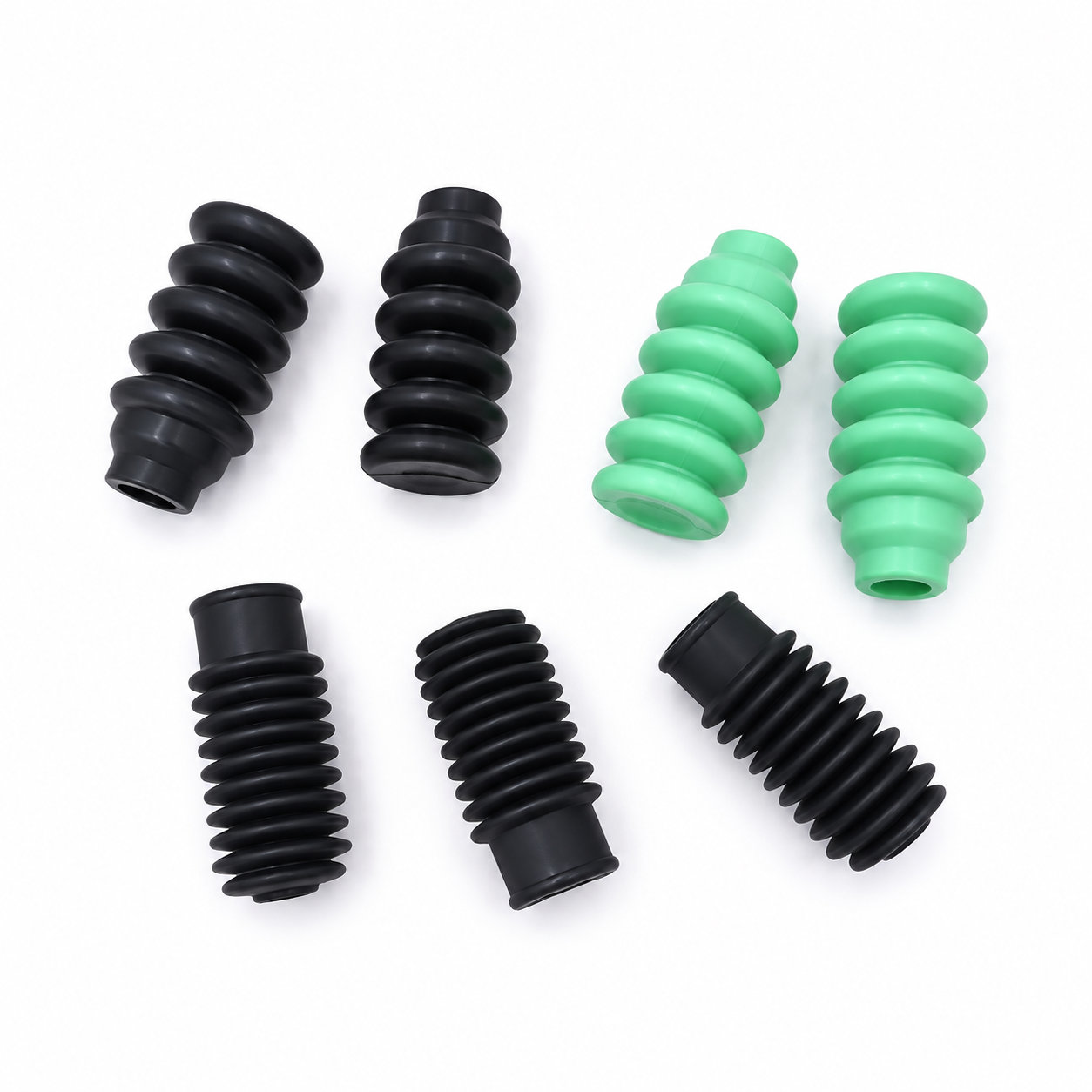
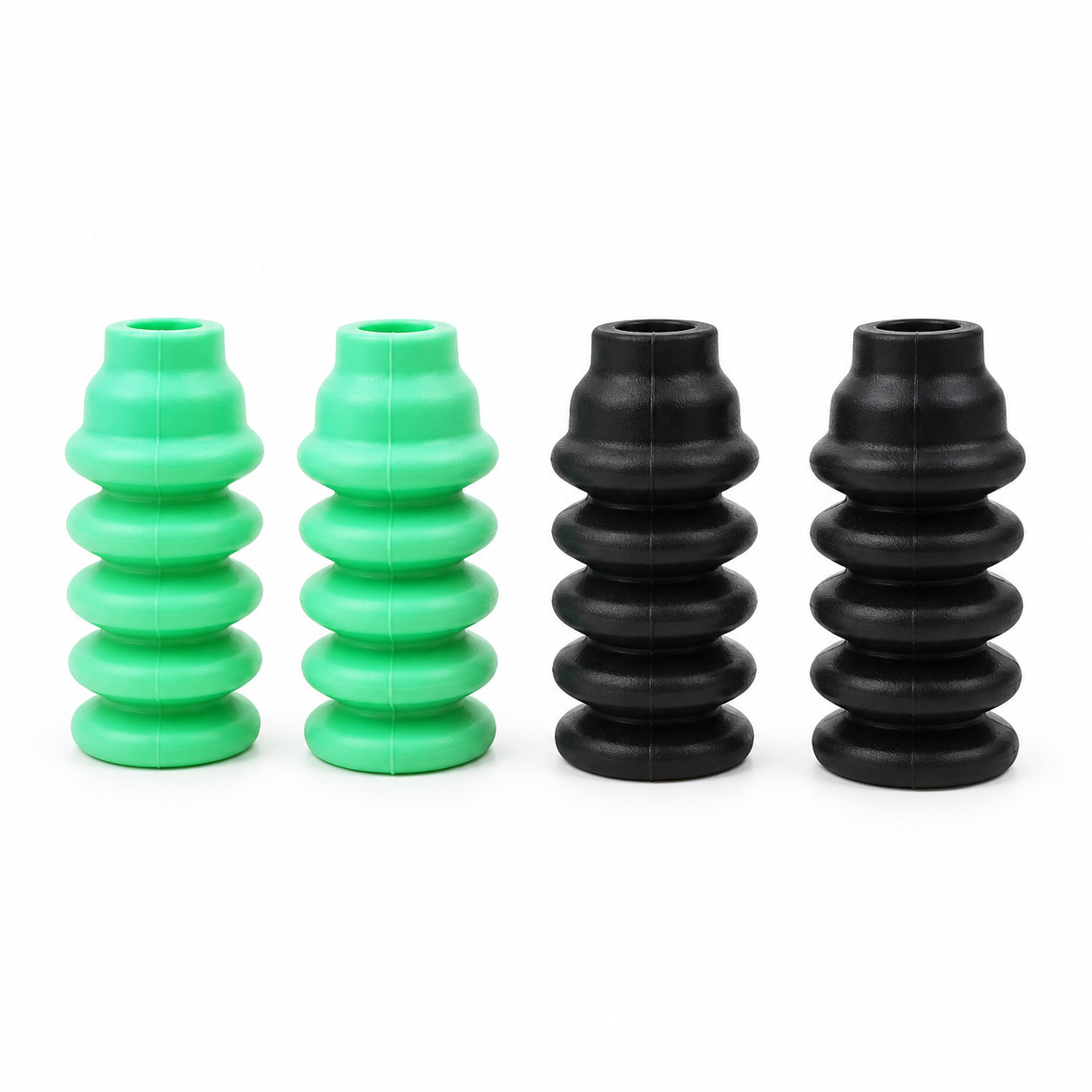
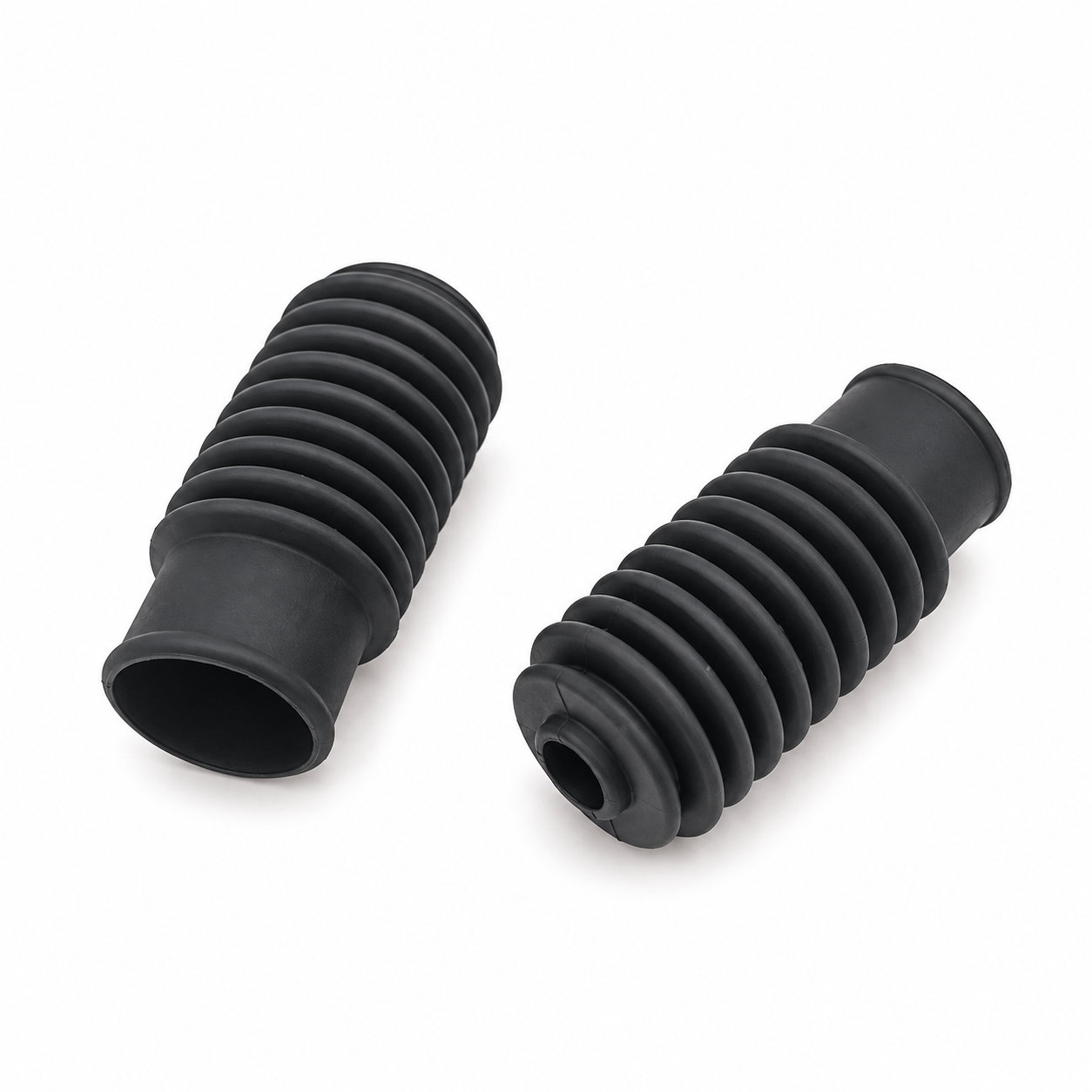
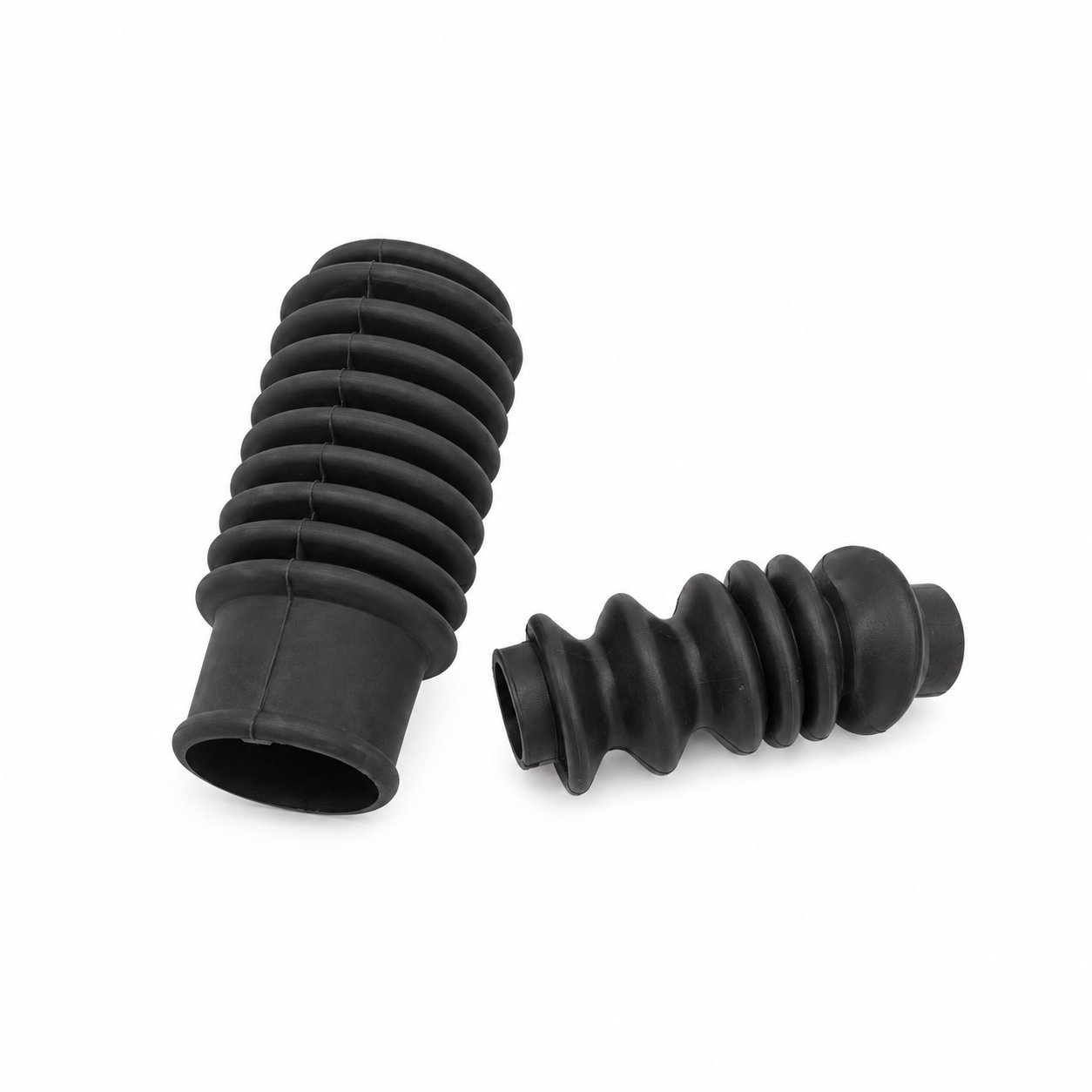
NBR rubber bellows use a folded tubular wall to accommodate movement within a defined installation space. The folds allow the body to shorten and extend along its axis, making this form relevant to a flexible connection or cover around a moving assembly. The required motion and the way both ends are attached determine the useful design.
Start with three lengths: the shortest installed position, the longest installed position and the normal resting position. A single overall measurement cannot describe the working travel. Show the space around the folds at each end of the movement, including anything inside the bellows. Check that the folded wall has clearance from neighboring brackets and does not become trapped when the mechanism reaches its shortest position.
The end connections also need dimensions. Identify the mating diameters, seating lengths and any specified retaining features. If one end moves sideways or changes angle, show that movement rather than describing the requirement only as extension. A bellows that fits between stationary points may be pulled unevenly when installed on the actual mechanism.
ETOL develops custom profiles from customer drawings and lists NBR, EPDM, FKM and other material choices. These are alternatives to review against the operating environment, not interchangeable names for the same compound. Provide details of fluid contact, temperature exposure and movement frequency with the geometry. Any sealing or pressure requirement must also be stated explicitly.
Trial the sample through the full intended movement with its actual end fittings. Watch for folds rubbing together excessively, local stretching and movement at either connection. Fit the part without twisting its body, and inspect the valleys between folds when checking for trapped dirt or damage. An approved drawing showing both travel limits is a useful reference for replacements, because a bellows that matches the resting length may still differ in the space needed during motion.
Photos illustrate structure or material appearance only. NBR rubber bellows use a folded tubular wall to accommodate movement within a defined installation space. ETOL directly manufactures custom-shaped silicone and rubber parts to your requirements.
Identify key dimensions, mating surfaces and quantity
Agree the compound and manufacturing approach
Review the fit and agreed requirements in the assembly
Manufacture and check against the approved requirements
Identify temperature, contact fluids and repeated movement.
Consider hardness together with wall thickness and support.
Check access, mating dimensions and the fitting sequence.
Yes. Show the receiving opening, contact surfaces and clearance limits. We can review the dimensions and retaining features around the intended fit.
Agree the critical dimensions, material, hardness, visible surfaces and sample requirements. Explain how the part is installed and which interfaces control its function.
A sample can help explain the structure. Compare it with the assembly because wear, swelling or compression may have changed its original dimensions.
The material, part geometry, tooling, quantity and finishing affect the quotation. Include the intended batch size and delivery destination when describing your requirements.
DISCUSS THIS COMPONENT
Share the fit, operating conditions and quantity with our manufacturing team.
EXPLORE RELATED DESIGNS
Explore similar part structures and applications for your next project.