Working conditions
Identify temperature, contact fluids and repeated movement.

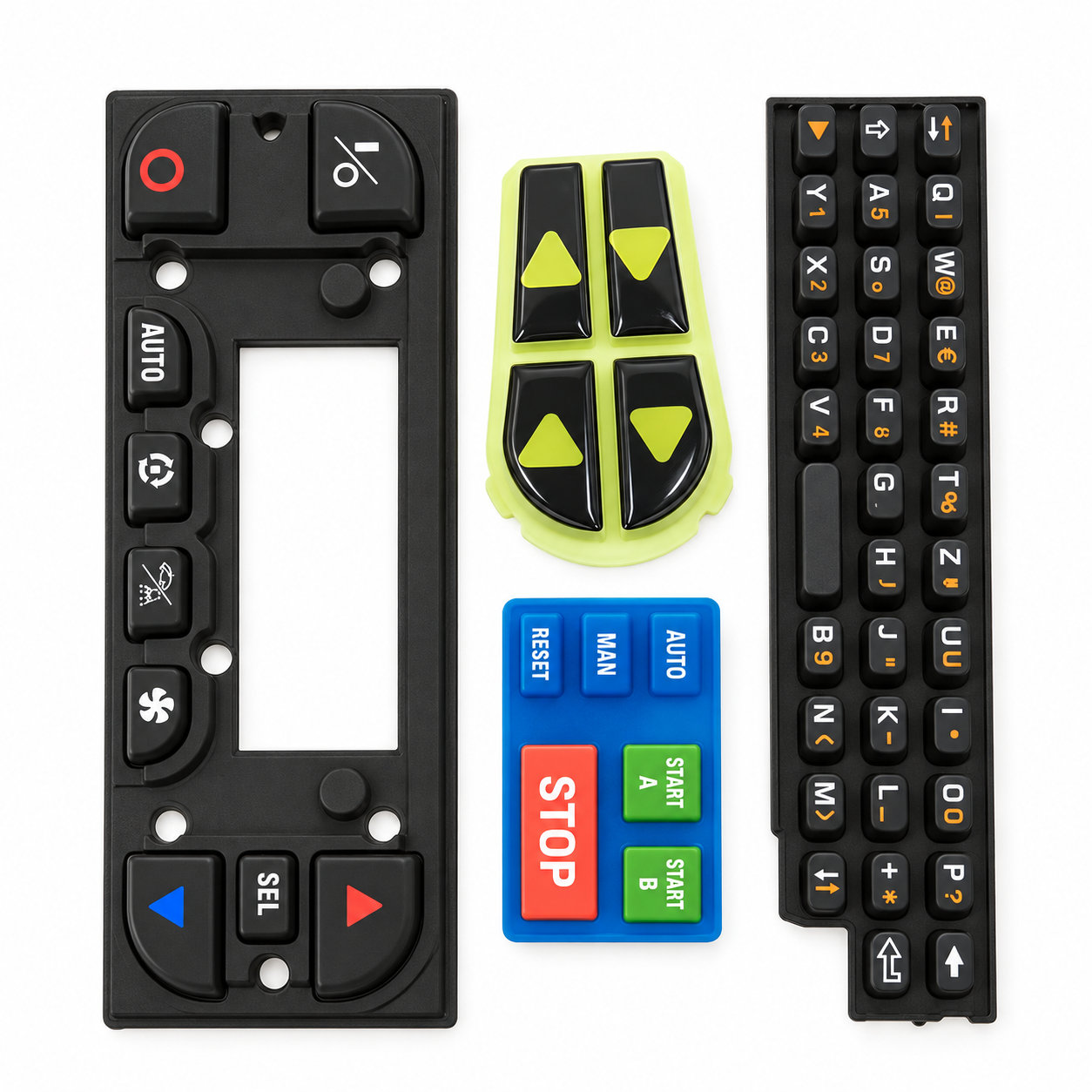
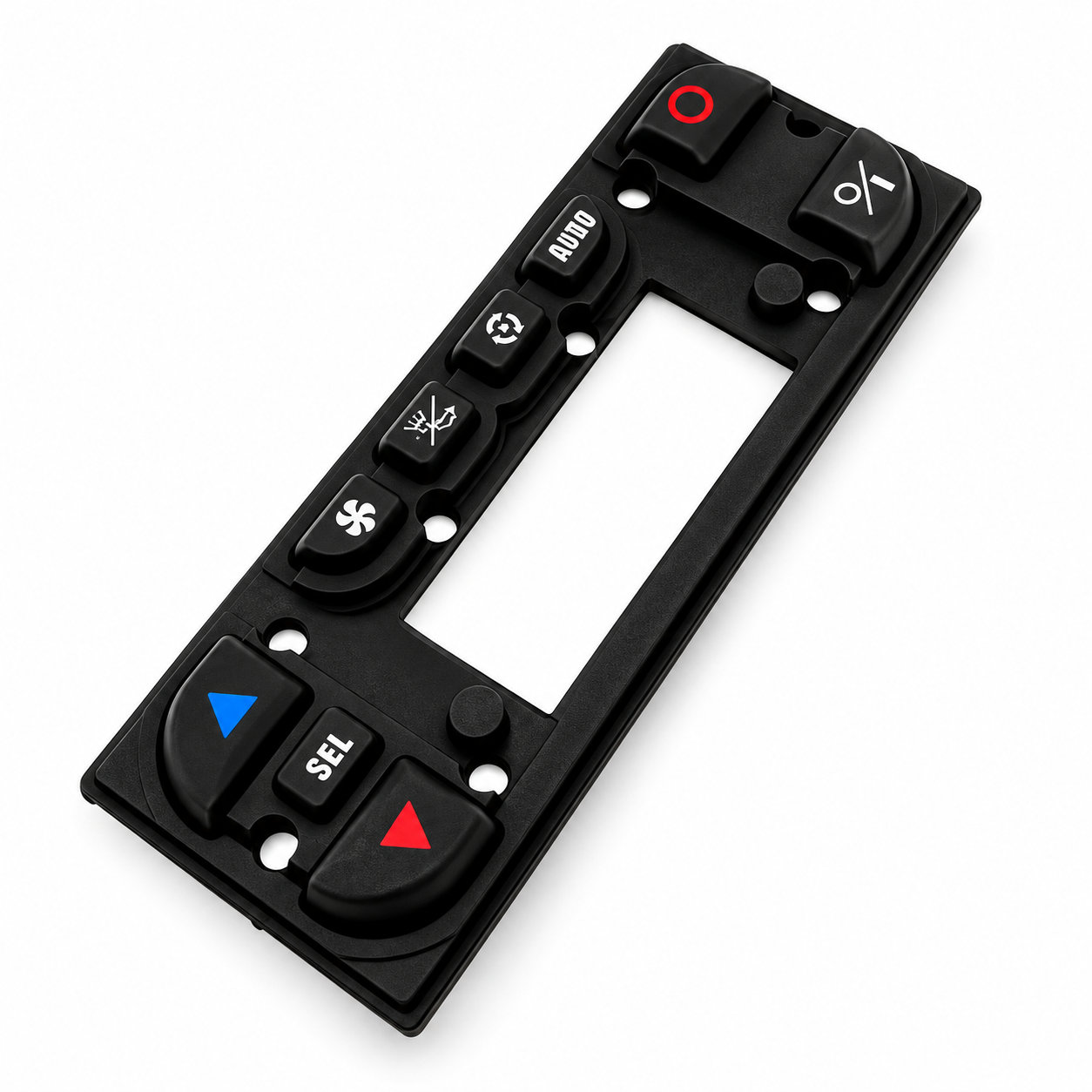
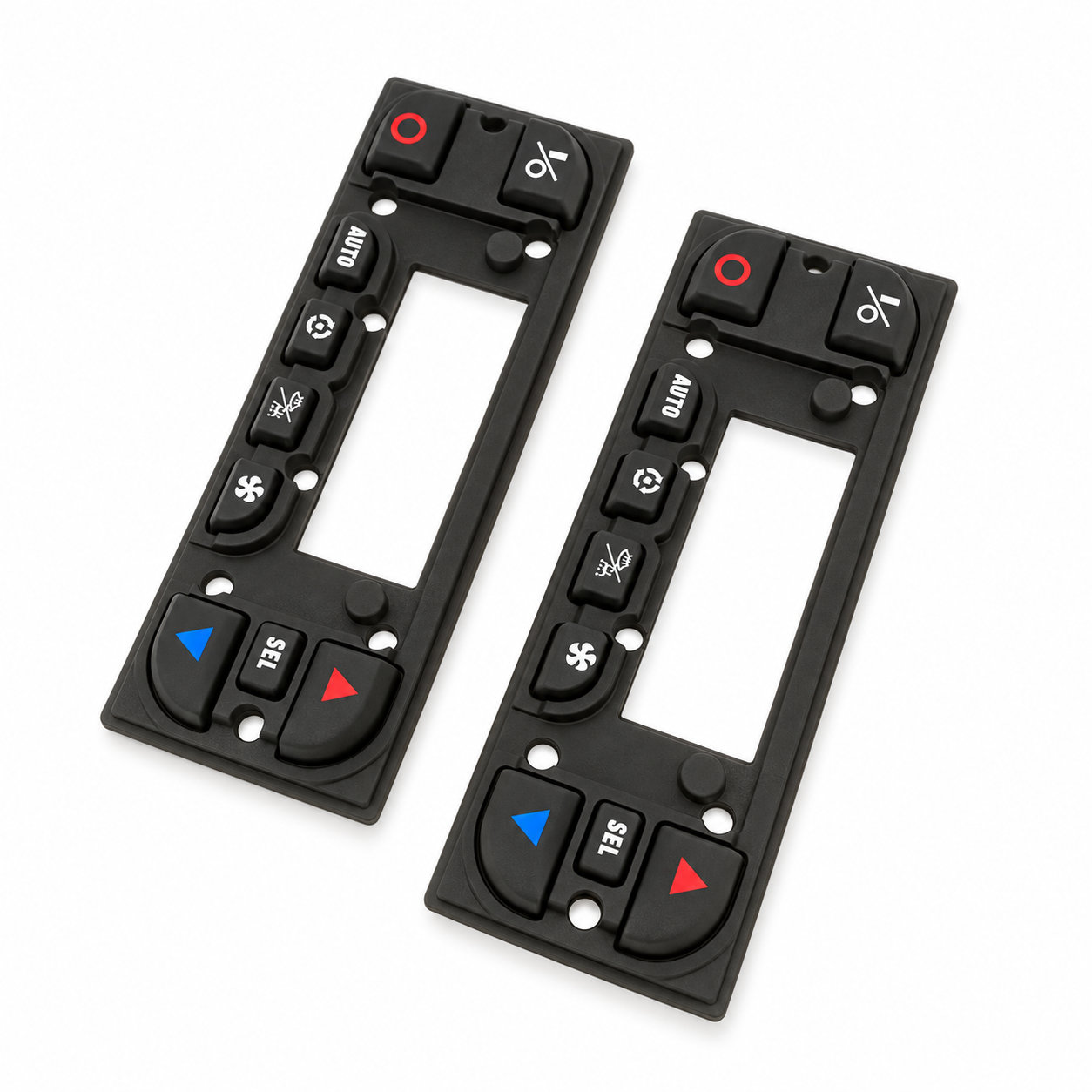
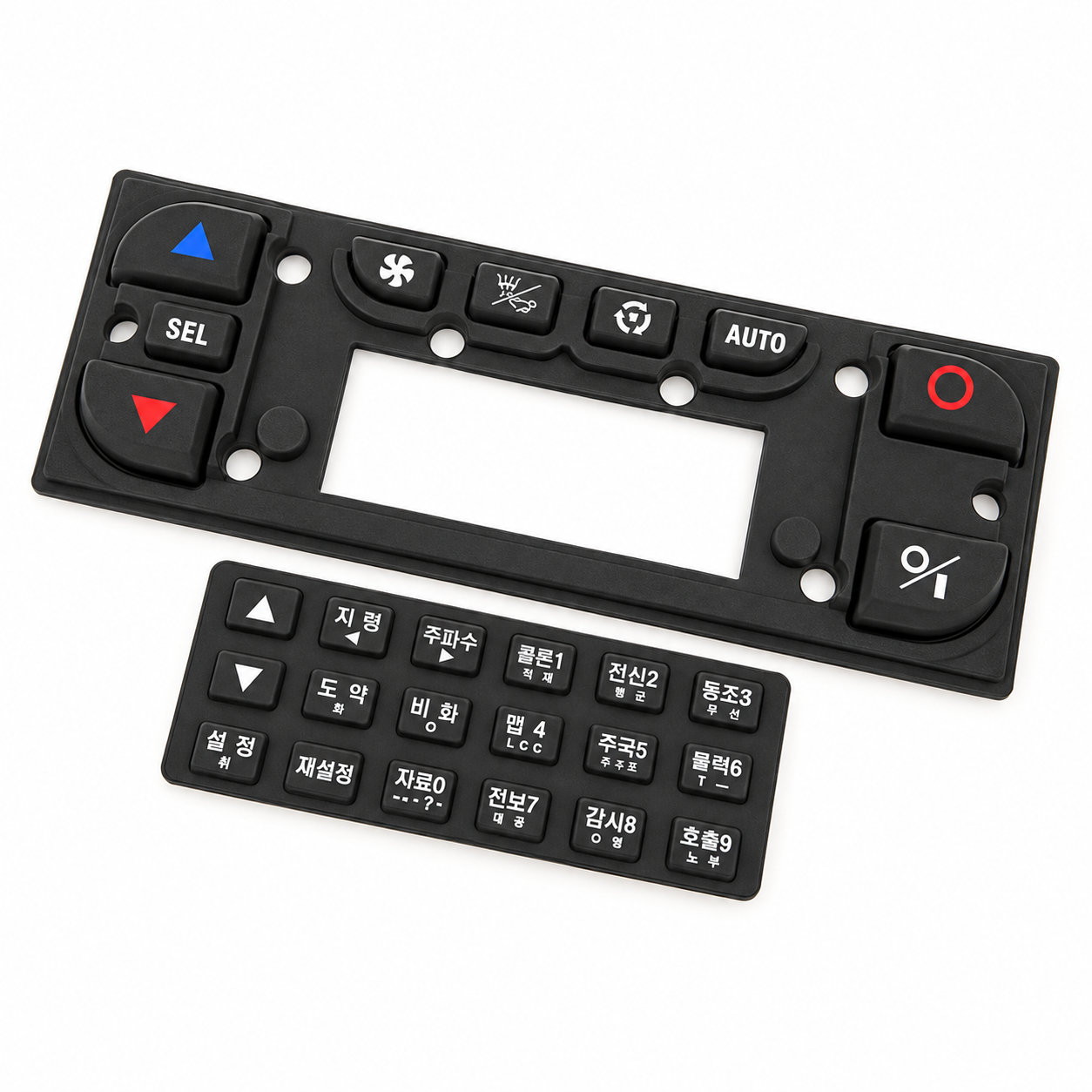
Custom manufacturing example · Silicone buttons/silicone keypad/switch buttons for Automobile
CUSTOM RUBBER & SILICONE MANUFACTURING
A custom component for your assembly.
Define the mating surfaces, dimensions and working conditions. ETOL manufactures the part to the agreed design and material.
Share the part, its application and your estimated quantity.
Selected for the contact, temperature and movement
Define the visible surfaces and intended color
Develop holes, lips and walls around the mating parts
Match the attachment and installation method
A silicone keypad for an automobile control panel needs enough button movement to operate the associated switches without interference from the trim. Silicone can provide a flexible molded interface, but the final travel is determined by the whole assembly, including support below the button and clearance around its visible top.
Check the board-to-panel spacing and the features that locate the button sheet. If the sheet is compressed or stretched into position when the housing closes, controls may feel different after fastening than they did during an initial loose fit. The outside appearance can remain acceptable while the moving sections underneath are constrained.
Evaluate each control after the panel is fully secured, including presses from the directions users will actually approach. Confirm free return and absence of neighboring activation. Environmental suitability and marking durability should be established for the selected materials in the intended vehicle location. During service, investigate any change in feel after reassembly; correcting a trapped edge or mislocated sheet can be more relevant than applying greater operating force.
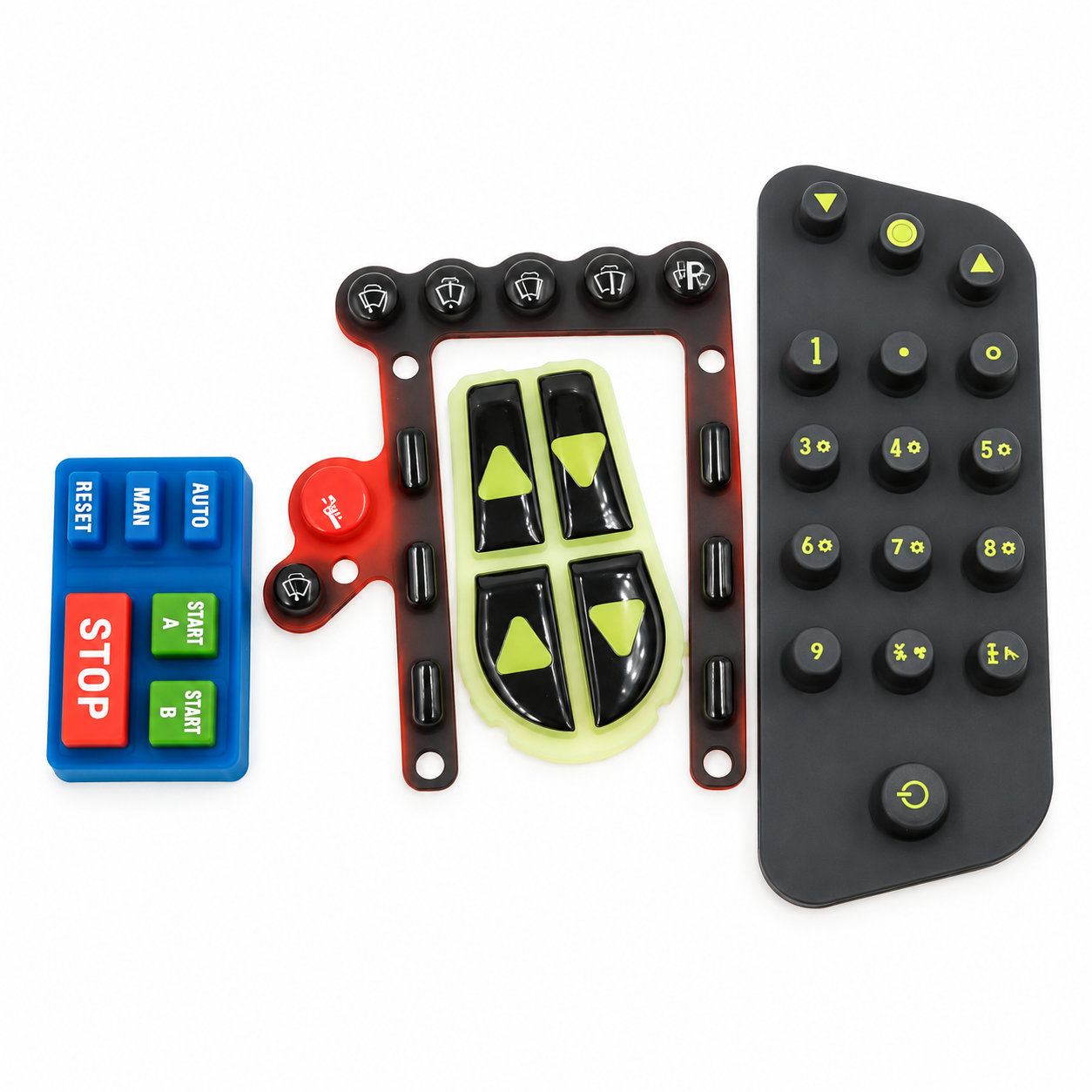
Photos illustrate structure or material only. Switch buttons for an automobile control panel need enough movement to operate their associated switching components without interference from the trim. ETOL directly manufactures custom-shaped silicone and rubber parts to your requirements.
Identify key dimensions, mating surfaces and quantity
Agree the compound and manufacturing approach
Review the fit and agreed requirements in the assembly
Manufacture and check against the approved requirements
Identify temperature, contact fluids and repeated movement.
Consider hardness together with wall thickness and support.
Check access, mating dimensions and the fitting sequence.
Yes. Show the receiving opening, contact surfaces and clearance limits. We can review the dimensions and retaining features around the intended fit.
Agree the critical dimensions, material, hardness, visible surfaces and sample requirements. Explain how the part is installed and which interfaces control its function.
A sample can help explain the structure. Compare it with the assembly because wear, swelling or compression may have changed its original dimensions.
The material, part geometry, tooling, quantity and finishing affect the quotation. Include the intended batch size and delivery destination when describing your requirements.
DISCUSS THIS COMPONENT
Share the fit, operating conditions and quantity with our manufacturing team.
EXPLORE RELATED DESIGNS
Explore similar part structures and applications for your next project.