Working conditions
Identify temperature, contact fluids and repeated movement.

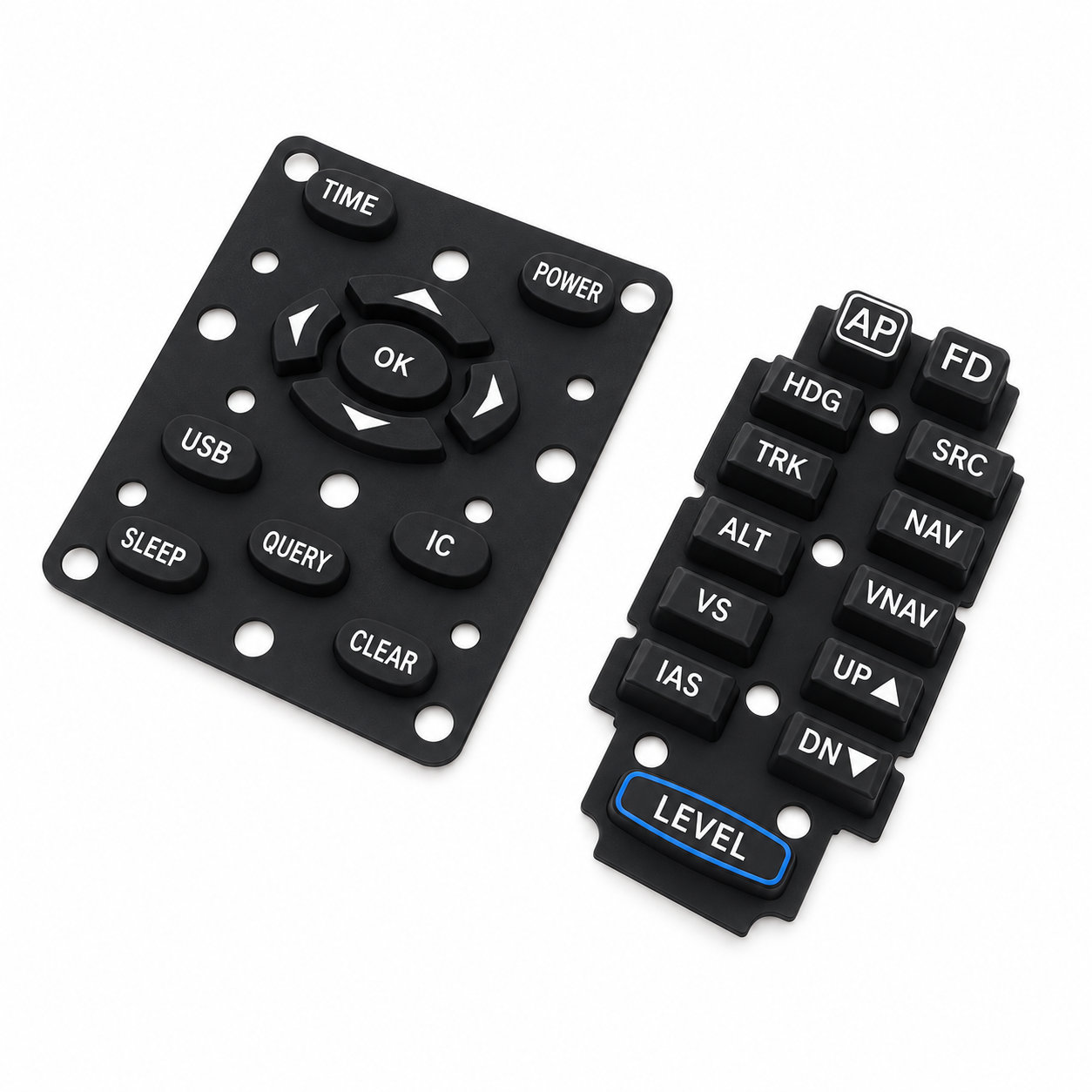
Custom manufacturing example · Custom made silicone rubber access control keypad
CUSTOM RUBBER & SILICONE MANUFACTURING
A custom component for your assembly.
Define the mating surfaces, dimensions and working conditions. ETOL manufactures the part to the agreed design and material.
Share the part, its application and your estimated quantity.

Selected for the contact, temperature and movement
Define the visible surfaces and intended color
Develop holes, lips and walls around the mating parts
Match the attachment and installation method
A custom silicone rubber access control keypad provides the pressing surface for an electronic entry interface. Its key spacing, shape and visible identification should support deliberate input and complete release between presses. The electronic system determines the access function, while the molded pad must fit that system's housing and switching arrangement.
Test representative entry sequences on the assembled control, including repeated use of the same position and movement between neighboring keys. Check whether a finger can find the intended target without holding an adjacent button partly down. Keep any confirmation or correction function recognizable within the available layout. During fitting, align the pad naturally with its locating features and make sure the bezel does not cover an essential part of a label. After servicing, inspect key heights and repeat the operating sequence instead of checking only one button. Clean residue from the exposed gaps without using sharp objects against the flexible edges. A torn web or key that fails to return should be corrected before ordinary input becomes unreliable.
Photos illustrate structure or material only. The electronic system determines the access function, while the molded pad must fit that system's housing and switching arrangement. ETOL directly manufactures custom-shaped silicone and rubber parts to your requirements.
Identify key dimensions, mating surfaces and quantity
Agree the compound and manufacturing approach
Review the fit and agreed requirements in the assembly
Manufacture and check against the approved requirements
Identify temperature, contact fluids and repeated movement.
Consider hardness together with wall thickness and support.
Check access, mating dimensions and the fitting sequence.
Yes. Show the receiving opening, contact surfaces and clearance limits. We can review the dimensions and retaining features around the intended fit.
Agree the critical dimensions, material, hardness, visible surfaces and sample requirements. Explain how the part is installed and which interfaces control its function.
A sample can help explain the structure. Compare it with the assembly because wear, swelling or compression may have changed its original dimensions.
The material, part geometry, tooling, quantity and finishing affect the quotation. Include the intended batch size and delivery destination when describing your requirements.
DISCUSS THIS COMPONENT
Share the fit, operating conditions and quantity with our manufacturing team.
EXPLORE RELATED DESIGNS
Explore similar part structures and applications for your next project.