Working conditions
Identify temperature, contact fluids and repeated movement.

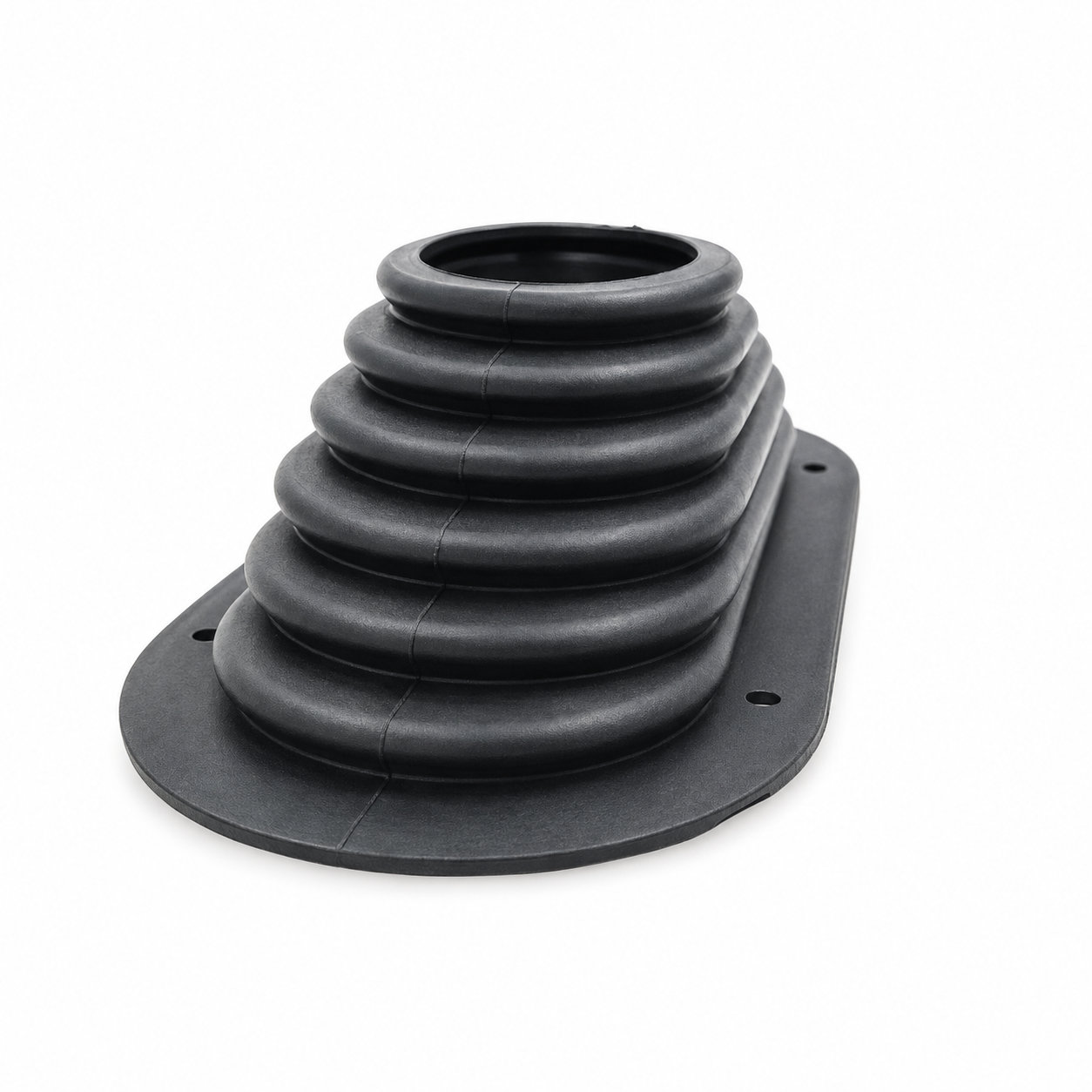
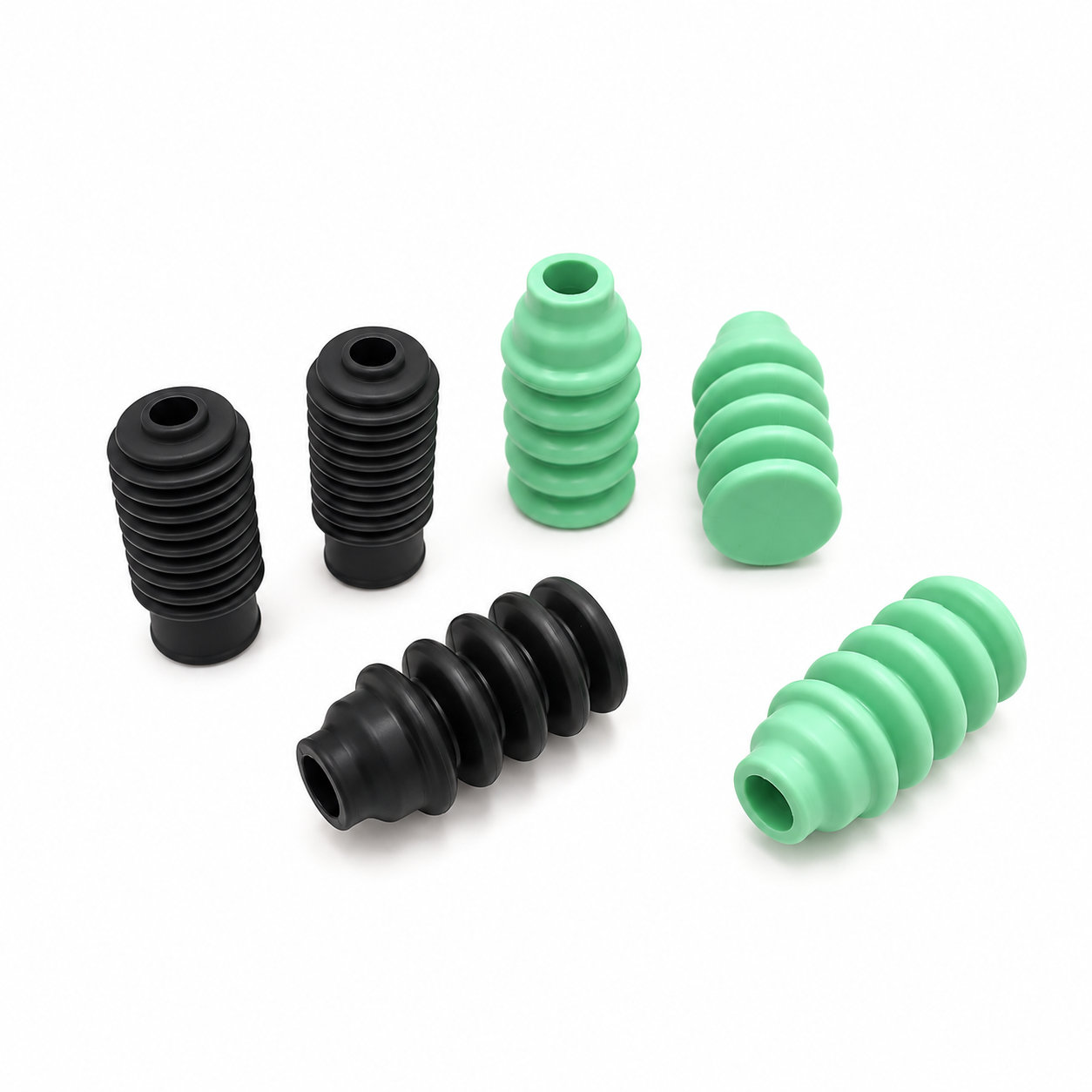
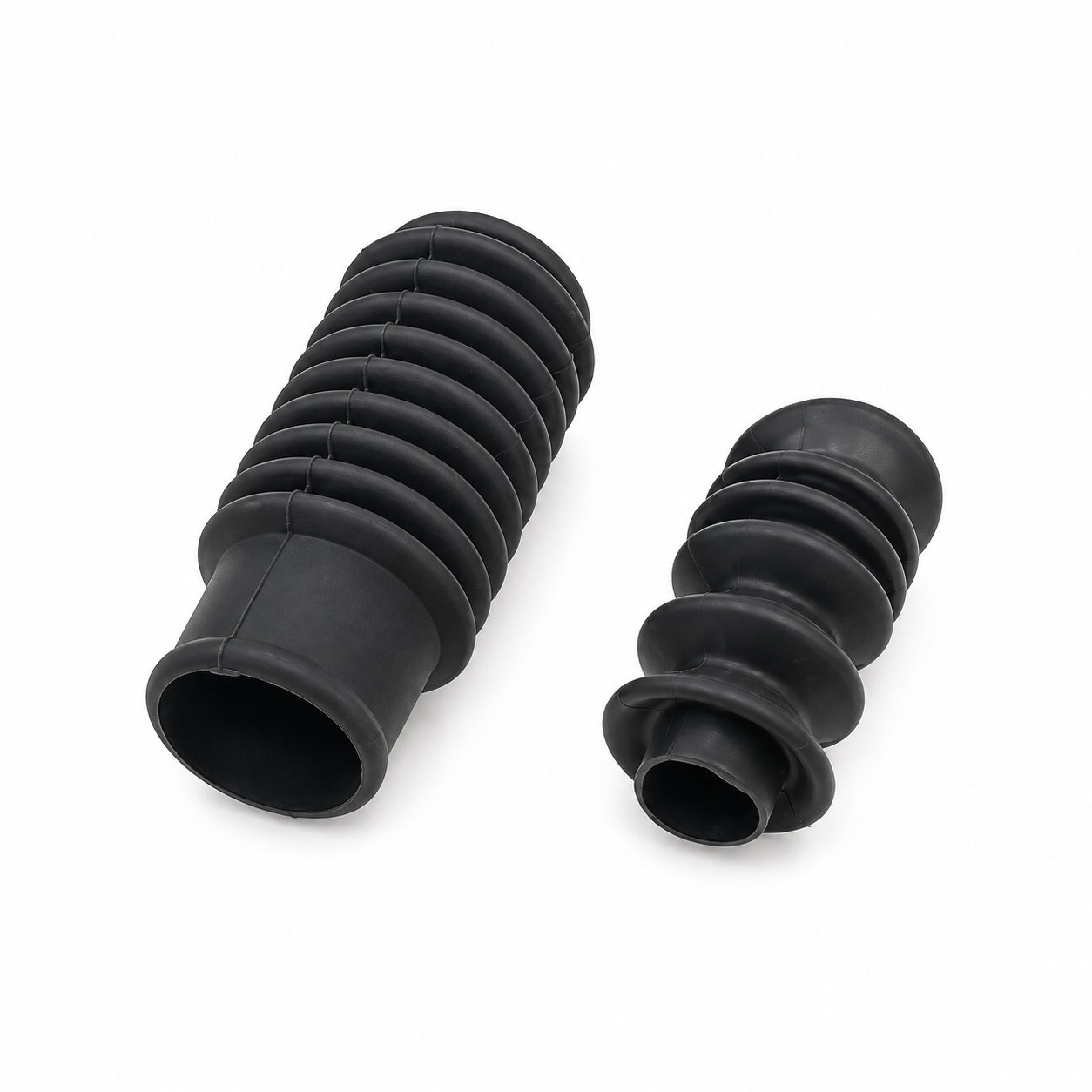
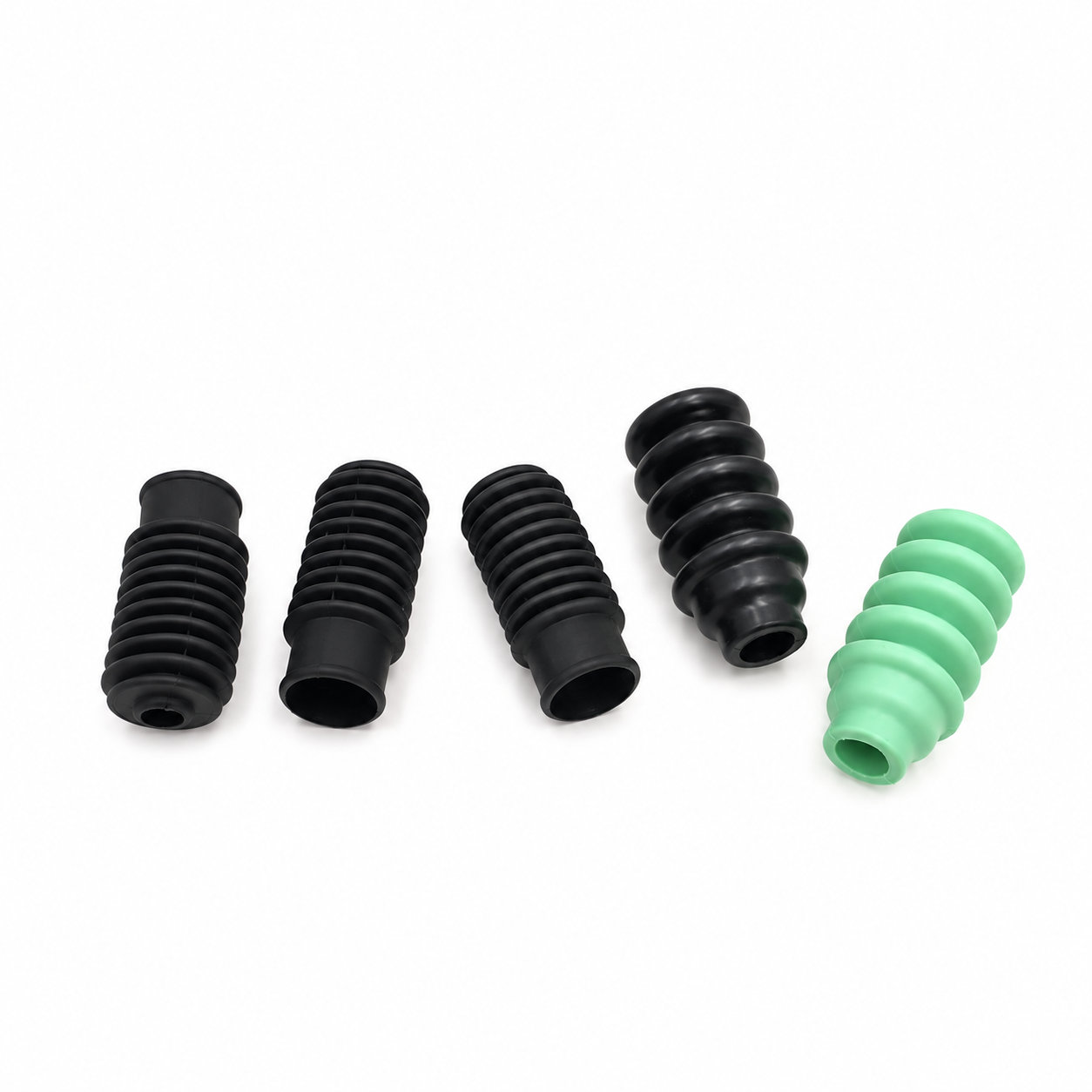
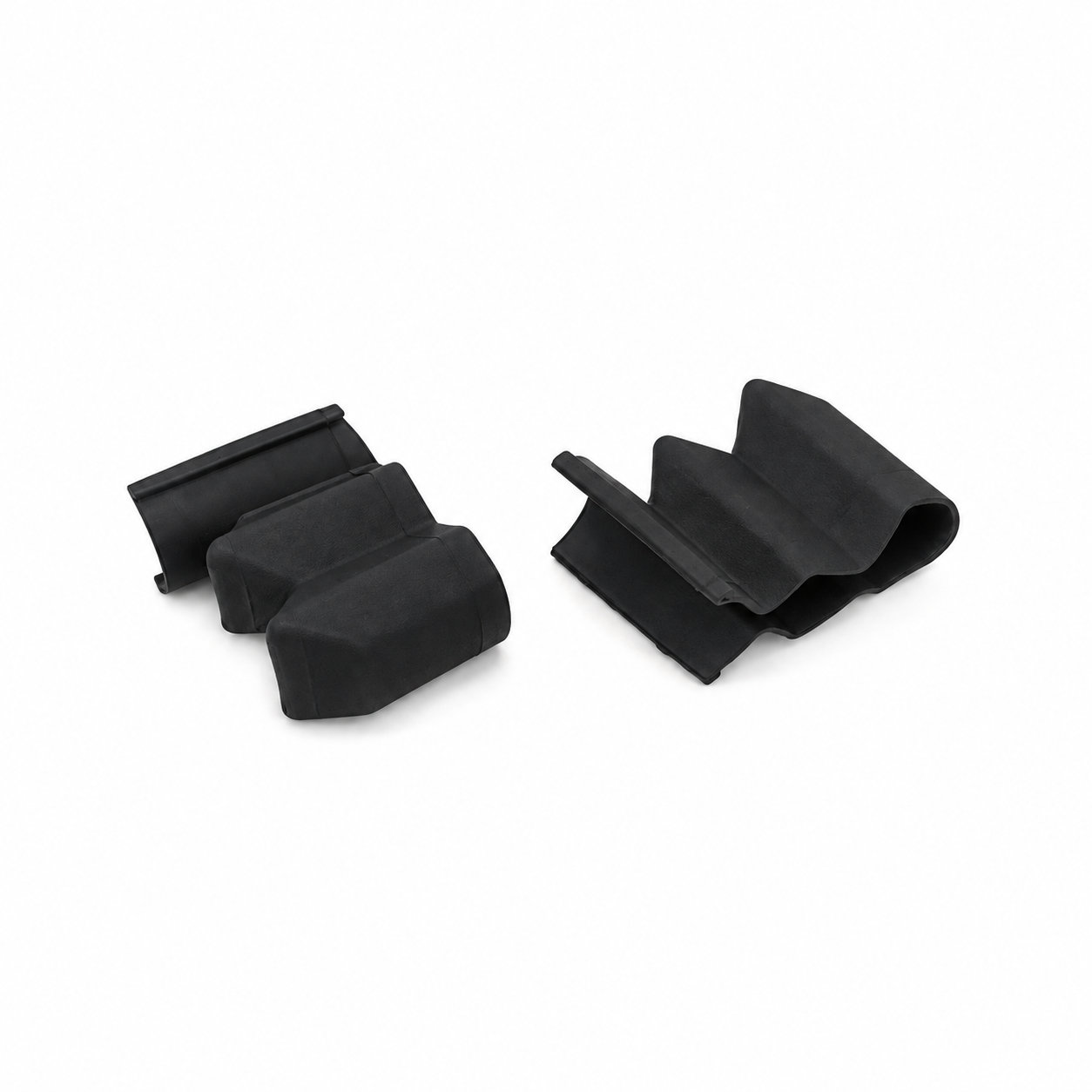
Custom manufacturing example · Auto parts CV joint dust cover boot and rubber shaft boot
CUSTOM RUBBER & SILICONE MANUFACTURING
A custom component for your assembly.
Define the mating surfaces, dimensions and working conditions. ETOL manufactures the part to the agreed design and material.
Share the part, its application and your estimated quantity.

Selected for the contact, temperature and movement
Define the visible surfaces and intended color
Develop holes, lips and walls around the mating parts
Match the attachment and installation method
A CV joint dust cover boot forms the flexible enclosure between the joint housing and shaft. Its two attachment regions and folded body are customized for the particular joint arrangement. The rubber formulation must suit the joint lubricant and surrounding service conditions, while the geometry must follow the required articulation.
The larger housing end and smaller shaft end each need a defined seating profile. Their diameters, engagement lengths and retaining arrangements establish how the cover stays located. A boot that fits over both components is only the starting point: the space between those seats changes as the joint moves, and the folded body needs room to follow that change.
Inspect the boot through the relevant shaft angles and axial positions of the intended assembly. Folds on one side can approach each other as those on the opposite side open. Check that the wall does not become trapped against the housing or rub on adjacent components. At the same time, the end regions should remain seated without being pulled out of alignment. These checks belong to the complete joint arrangement, not just a free boot on a bench.
During assembly, keep the joint area clean and avoid dragging the rubber over sharp edges. Fit the specified retaining hardware in its intended location, with the body free from an initial twist. The boot should retain the required internal arrangement without interfering with the joint's normal motion.
For maintenance, look for lubricant around the attachment areas, cuts in the wall and wear where folds contact. Inspect the joint itself when a damaged cover has allowed contamination into the enclosed area. Replacing the cover restores the enclosure only when its mating seats, hardware and associated assembly are also in suitable condition.
Photos illustrate structure or material only. A CV joint dust cover boot forms the flexible enclosure between the joint housing and shaft. ETOL directly manufactures custom-shaped silicone and rubber parts to your requirements.
Identify key dimensions, mating surfaces and quantity
Agree the compound and manufacturing approach
Review the fit and agreed requirements in the assembly
Manufacture and check against the approved requirements
Identify temperature, contact fluids and repeated movement.
Consider hardness together with wall thickness and support.
Check access, mating dimensions and the fitting sequence.
Yes. Show the receiving opening, contact surfaces and clearance limits. We can review the dimensions and retaining features around the intended fit.
Agree the critical dimensions, material, hardness, visible surfaces and sample requirements. Explain how the part is installed and which interfaces control its function.
A sample can help explain the structure. Compare it with the assembly because wear, swelling or compression may have changed its original dimensions.
The material, part geometry, tooling, quantity and finishing affect the quotation. Include the intended batch size and delivery destination when describing your requirements.
DISCUSS THIS COMPONENT
Share the fit, operating conditions and quantity with our manufacturing team.
EXPLORE RELATED DESIGNS
Explore similar part structures and applications for your next project.