Working conditions
Identify temperature, contact fluids and repeated movement.

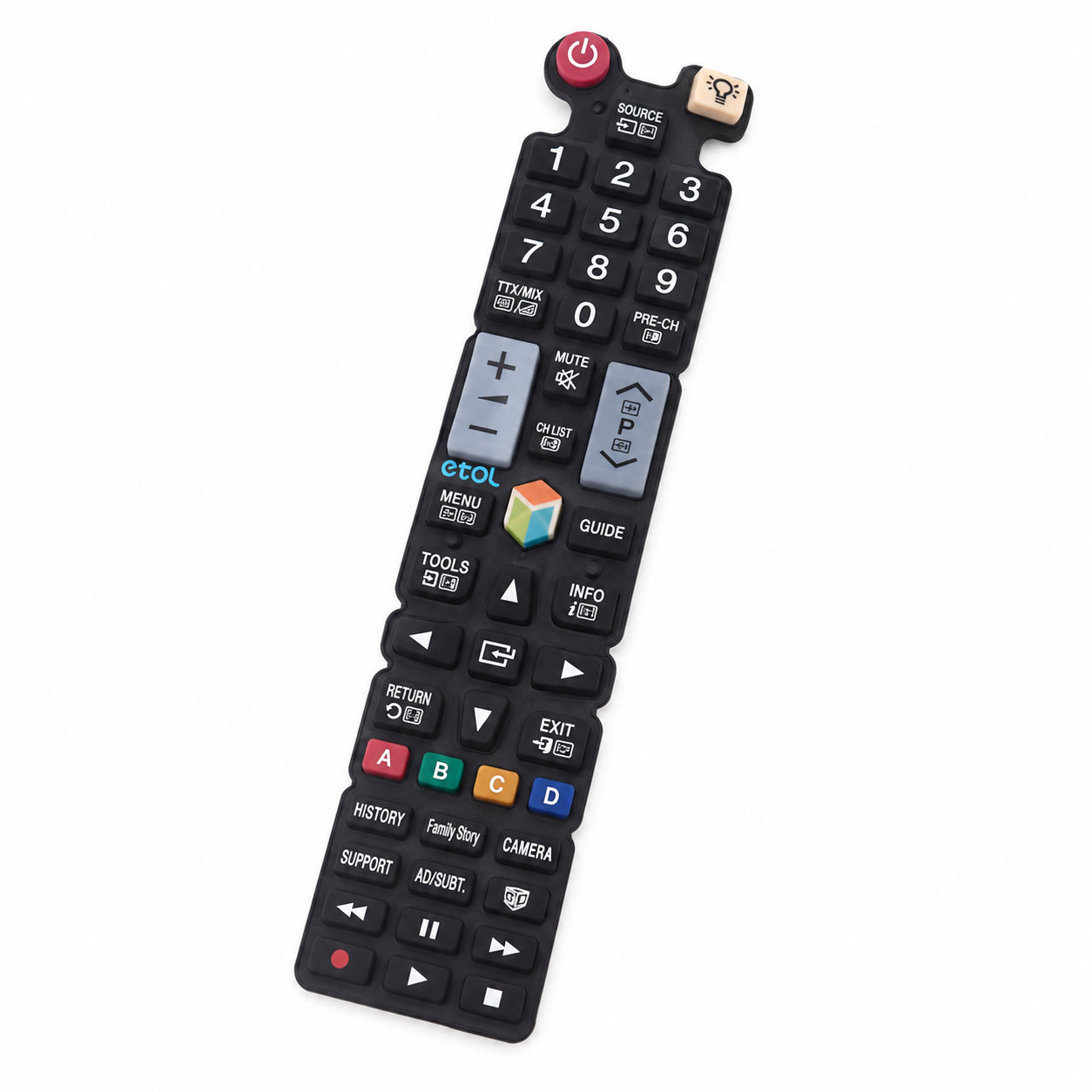
Custom manufacturing example · Silicone Push Button Rubber Keypads for Remote
CUSTOM RUBBER & SILICONE MANUFACTURING
A custom component for your assembly.
Define the mating surfaces, dimensions and working conditions. ETOL manufactures the part to the agreed design and material.
Share the part, its application and your estimated quantity.

Selected for the contact, temperature and movement
Define the visible surfaces and intended color
Develop holes, lips and walls around the mating parts
Match the attachment and installation method
Rubber keypads for remote interfaces should place frequently used controls within practical reach of the holding hand. Silicone push buttons can be molded into a custom arrangement, but the enclosure shape and thumb approach determine whether that arrangement remains comfortable during repeated use.
Evaluate the spacing and exposed height with the remote held in its normal orientation. A control close to the edge may need more attention to clearance than a central one, and a larger button should operate when pressed at the points the thumb actually reaches. The board contact positions and support underneath must follow the intended layout.
Use realistic command sequences in the assembled housing, checking whether the user needs to shift grip or accidentally touches another key. Confirm that every control releases freely after an angled press. During care, remove residue around the button boundaries without scraping the legends or forcing material into the gaps. If the sheet is removed for service, restore its locating features carefully so that handheld operation remains consistent across the layout.
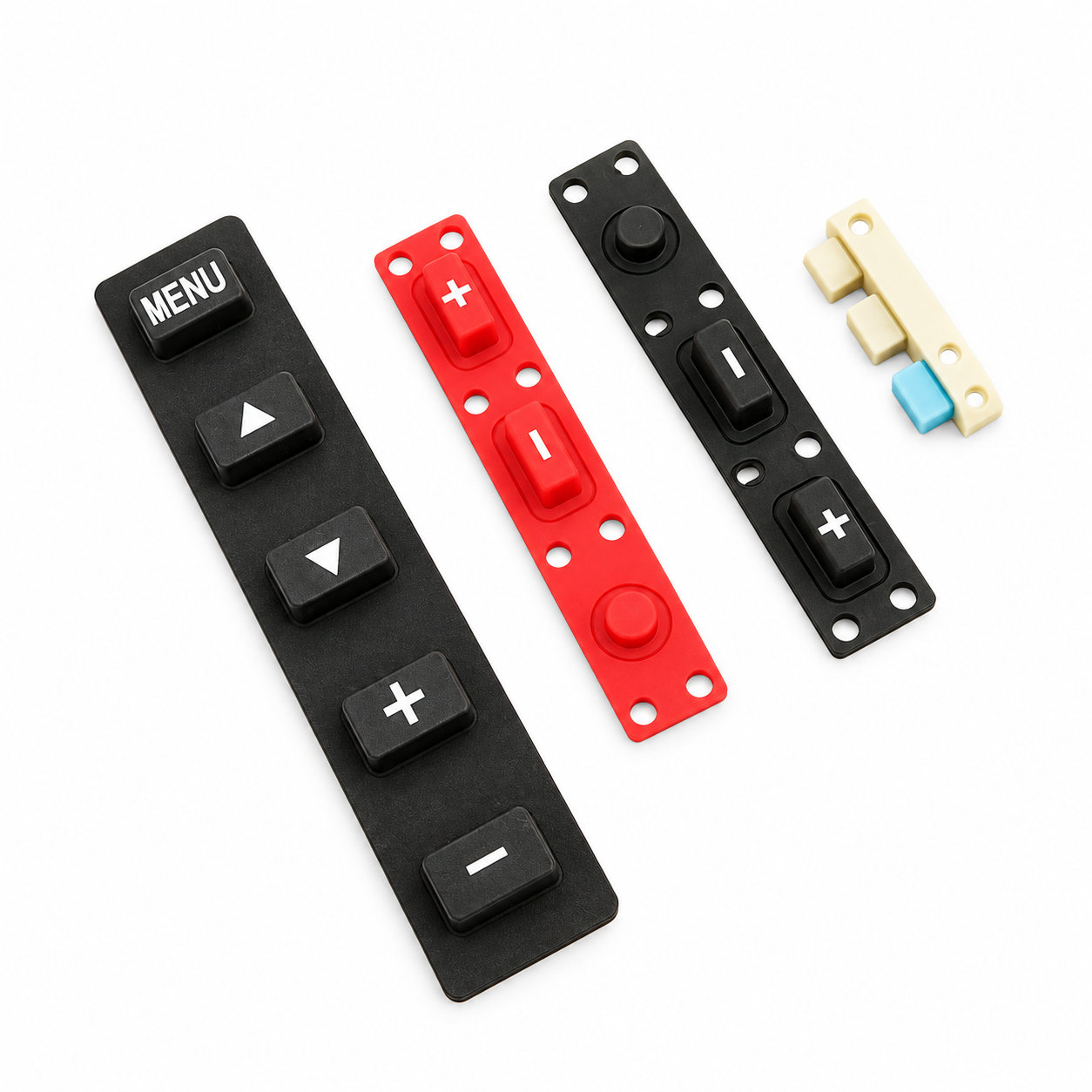
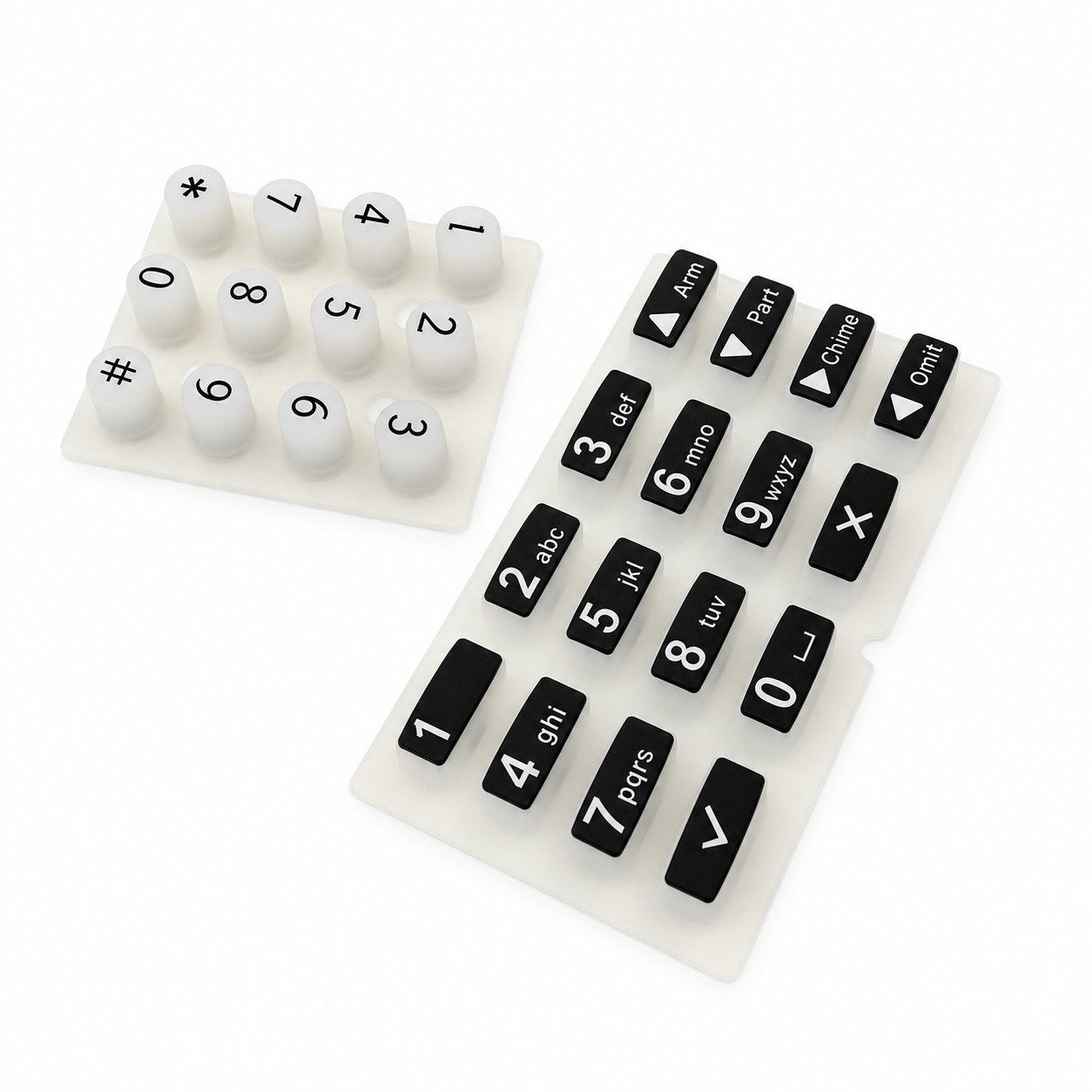
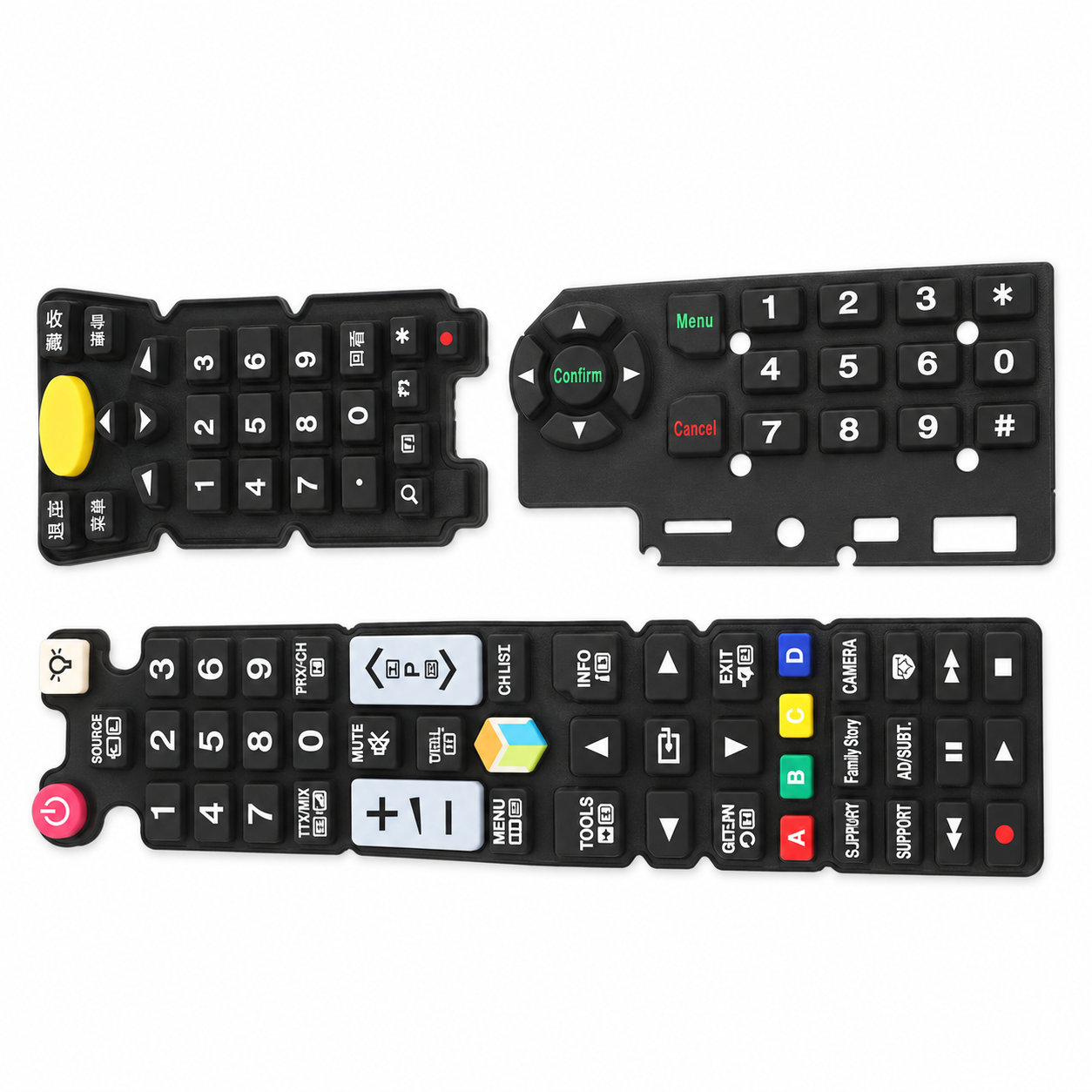
Photos illustrate structure or material only. The contact positions beneath a remote keypad must follow the thumb-access layout as well as the enclosure support. ETOL directly manufactures custom-shaped silicone and rubber parts to your requirements.
Identify key dimensions, mating surfaces and quantity
Agree the compound and manufacturing approach
Review the fit and agreed requirements in the assembly
Manufacture and check against the approved requirements
Identify temperature, contact fluids and repeated movement.
Consider hardness together with wall thickness and support.
Check access, mating dimensions and the fitting sequence.
Yes. Show the receiving opening, contact surfaces and clearance limits. We can review the dimensions and retaining features around the intended fit.
Agree the critical dimensions, material, hardness, visible surfaces and sample requirements. Explain how the part is installed and which interfaces control its function.
A sample can help explain the structure. Compare it with the assembly because wear, swelling or compression may have changed its original dimensions.
The material, part geometry, tooling, quantity and finishing affect the quotation. Include the intended batch size and delivery destination when describing your requirements.
DISCUSS THIS COMPONENT
Share the fit, operating conditions and quantity with our manufacturing team.
EXPLORE RELATED DESIGNS
Explore similar part structures and applications for your next project.