Working conditions
Identify temperature, contact fluids and repeated movement.

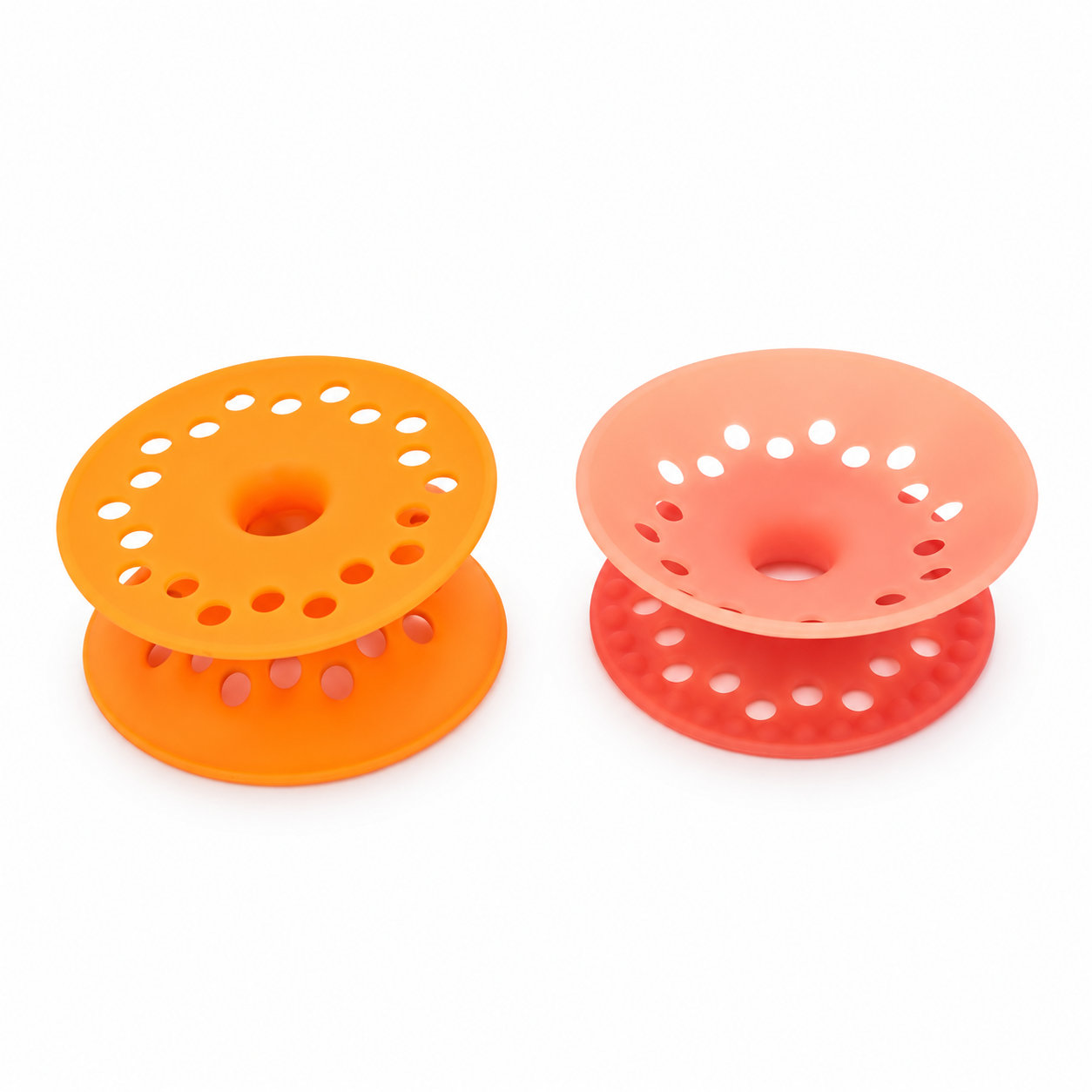
Custom manufacturing example · Soft Silicone Hair Curler Roller
CUSTOM RUBBER & SILICONE MANUFACTURING
A custom component for your assembly.
Define the mating surfaces, dimensions and working conditions. ETOL manufactures the part to the agreed design and material.
Share the part, its application and your estimated quantity.
Selected for the contact, temperature and movement
Define the visible surfaces and intended color
Develop holes, lips and walls around the mating parts
Match the attachment and installation method
The Soft Silicone Hair Curler is a flexible roller for shaping sections of hair. Its lightweight silicone construction is washable and intended for repeated use, making cleaning and careful storage part of its everyday care. The result will depend on the hair section, winding technique and individual hair texture.
Work with a section that can be wrapped neatly around the roller without loose ends becoming caught. Keep the winding controlled rather than pulling tightly at the roots. If the curler feels uncomfortable, release it and reduce the tension instead of leaving it in place under strain. Different section sizes can be tried to find a curl shape that suits the desired style.
For removal, unwind the hair gradually. Pulling the roller straight out of a wrapped section can snag strands, particularly where the ends overlap. Avoid stretching the silicone around tangled hair; release the tangle carefully first.
Rinse the roller as needed and let it dry before storing it. Check for torn edges before reuse, and store clean rollers where they will not be crushed beneath heavier accessories.
Photos illustrate structure or material only. Different section sizes can be tried to find a curl shape that suits the desired style. ETOL directly manufactures custom-shaped silicone and rubber parts to your requirements.
Identify key dimensions, mating surfaces and quantity
Agree the compound and manufacturing approach
Review the fit and agreed requirements in the assembly
Manufacture and check against the approved requirements
Identify temperature, contact fluids and repeated movement.
Consider hardness together with wall thickness and support.
Check access, mating dimensions and the fitting sequence.
Yes. Show the receiving opening, contact surfaces and clearance limits. We can review the dimensions and retaining features around the intended fit.
Agree the critical dimensions, material, hardness, visible surfaces and sample requirements. Explain how the part is installed and which interfaces control its function.
A sample can help explain the structure. Compare it with the assembly because wear, swelling or compression may have changed its original dimensions.
The material, part geometry, tooling, quantity and finishing affect the quotation. Include the intended batch size and delivery destination when describing your requirements.
DISCUSS THIS COMPONENT
Share the fit, operating conditions and quantity with our manufacturing team.
EXPLORE RELATED DESIGNS
Explore similar part structures and applications for your next project.