Working conditions
Identify temperature, contact fluids and repeated movement.

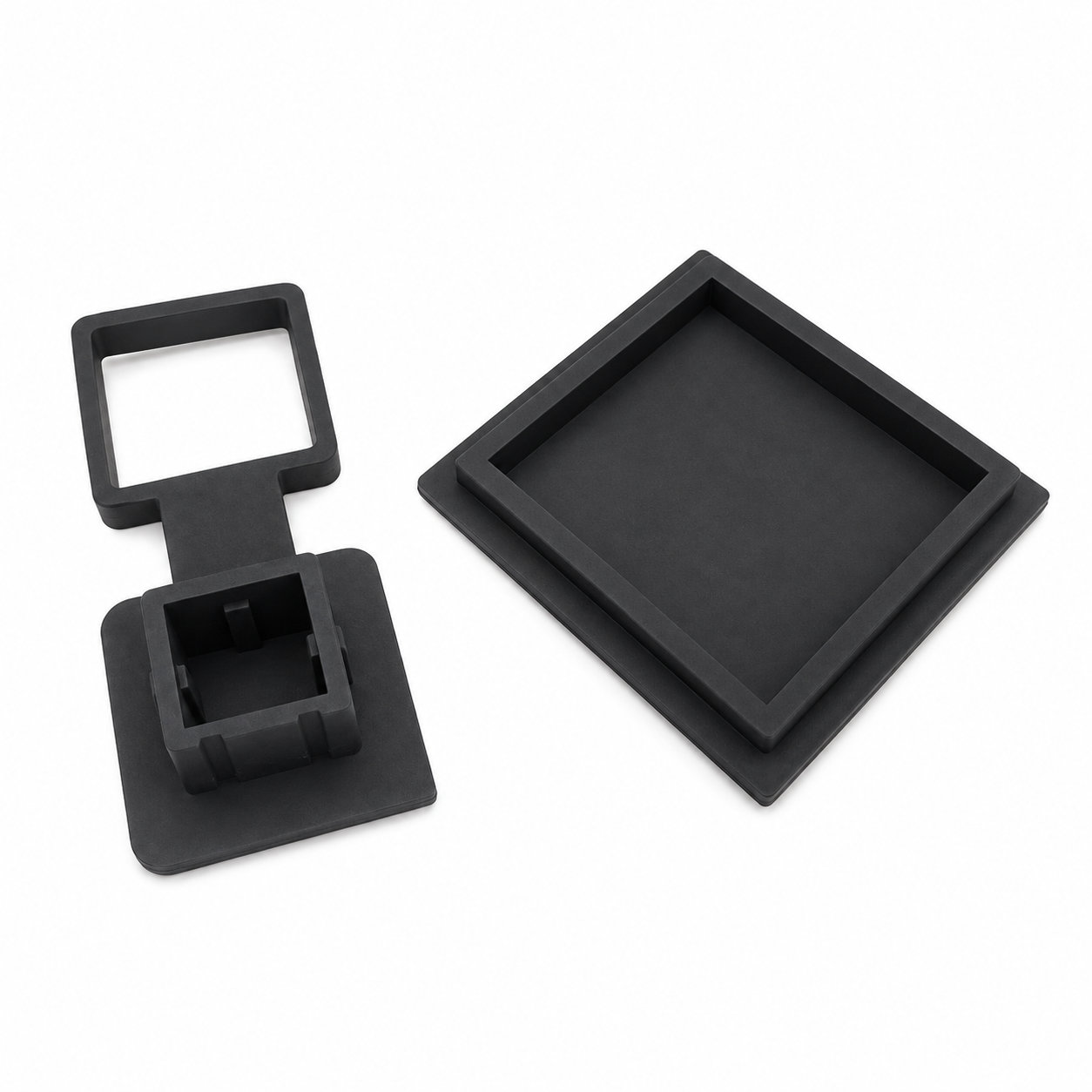
Custom manufacturing example · Molded square protective rubber cover caps
CUSTOM RUBBER & SILICONE MANUFACTURING
A custom component for your assembly.
Define the mating surfaces, dimensions and working conditions. ETOL manufactures the part to the agreed design and material.
Share the part, its application and your estimated quantity.
Selected for the contact, temperature and movement
Define the visible surfaces and intended color
Develop holes, lips and walls around the mating parts
Match the attachment and installation method
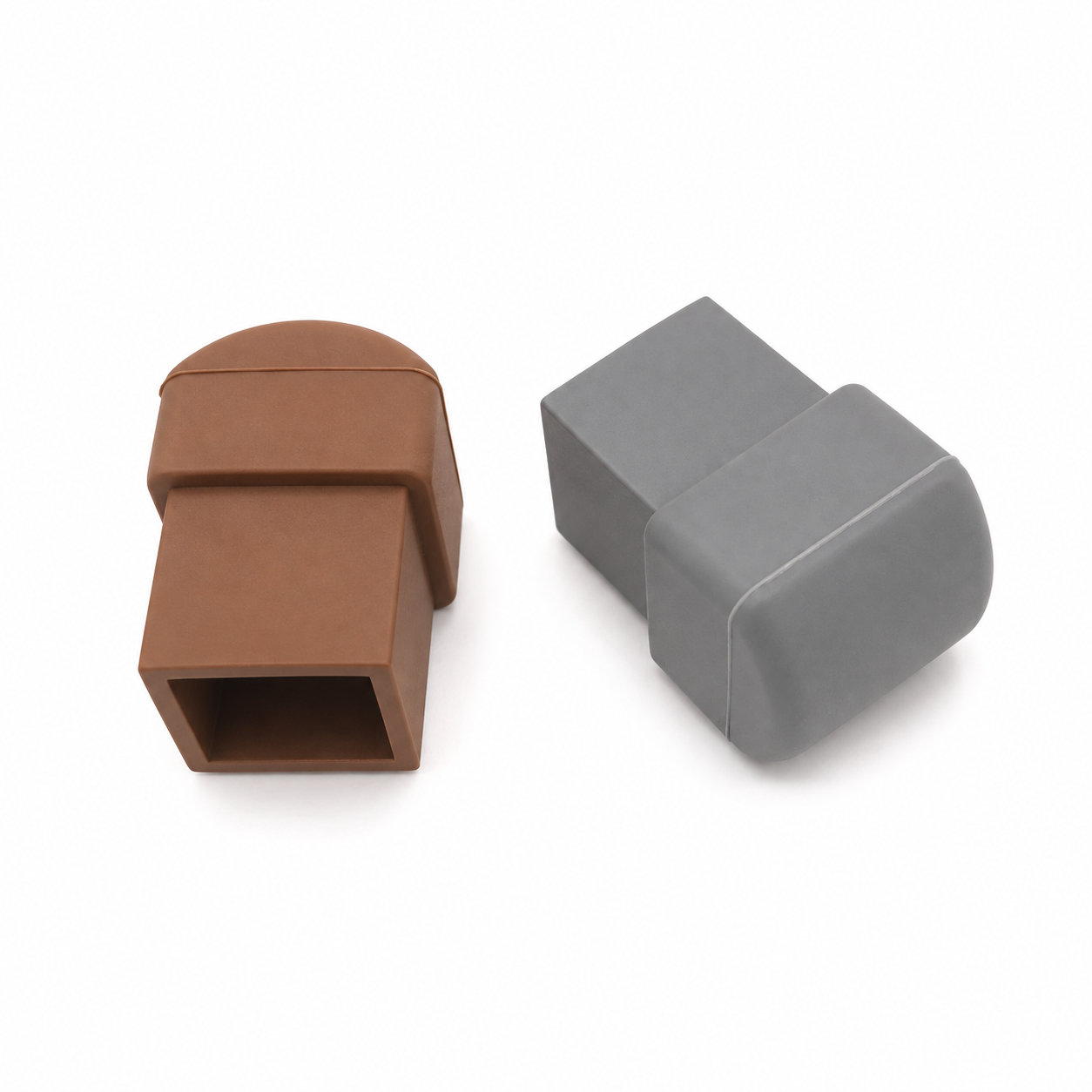
A square protective rubber cover fits over a component to provide a flexible outer covering. The square outline creates four corners that need to align with the part underneath; if one corner catches during fitting, the cover can look seated on three sides while remaining stretched on the fourth.
The product can be customized in dimensions, material, hardness and color, with molded branding available. Include the corner radii, any projecting details and the intended depth when defining the fit. Those details determine whether the cover can settle into shape without an excessive pulling action.
Begin installation with the cover oriented correctly, then work around the perimeter. Avoid stretching one edge across the entire component while the opposite side is already held tightly. After seating, check for inward folds at the corners and any pressure on controls or connectors beneath the cover.
For regular cleaning, remove grit from the inside as well as the visible surface. Particles trapped between the rubber and the component can mark the finish during handling. Let the cover return to its molded form before refitting it, and inspect the opening if repeated removal has produced a tear or permanent distortion.
Photos illustrate structure or material appearance only. Begin installation with the cover oriented correctly, then work around the perimeter. ETOL directly manufactures custom-shaped silicone and rubber parts to your requirements.
Identify key dimensions, mating surfaces and quantity
Agree the compound and manufacturing approach
Review the fit and agreed requirements in the assembly
Manufacture and check against the approved requirements
Identify temperature, contact fluids and repeated movement.
Consider hardness together with wall thickness and support.
Check access, mating dimensions and the fitting sequence.
Yes. Show the receiving opening, contact surfaces and clearance limits. We can review the dimensions and retaining features around the intended fit.
Agree the critical dimensions, material, hardness, visible surfaces and sample requirements. Explain how the part is installed and which interfaces control its function.
A sample can help explain the structure. Compare it with the assembly because wear, swelling or compression may have changed its original dimensions.
The material, part geometry, tooling, quantity and finishing affect the quotation. Include the intended batch size and delivery destination when describing your requirements.
DISCUSS THIS COMPONENT
Share the fit, operating conditions and quantity with our manufacturing team.
EXPLORE RELATED DESIGNS
Explore similar part structures and applications for your next project.