Working conditions
Identify temperature, contact fluids and repeated movement.

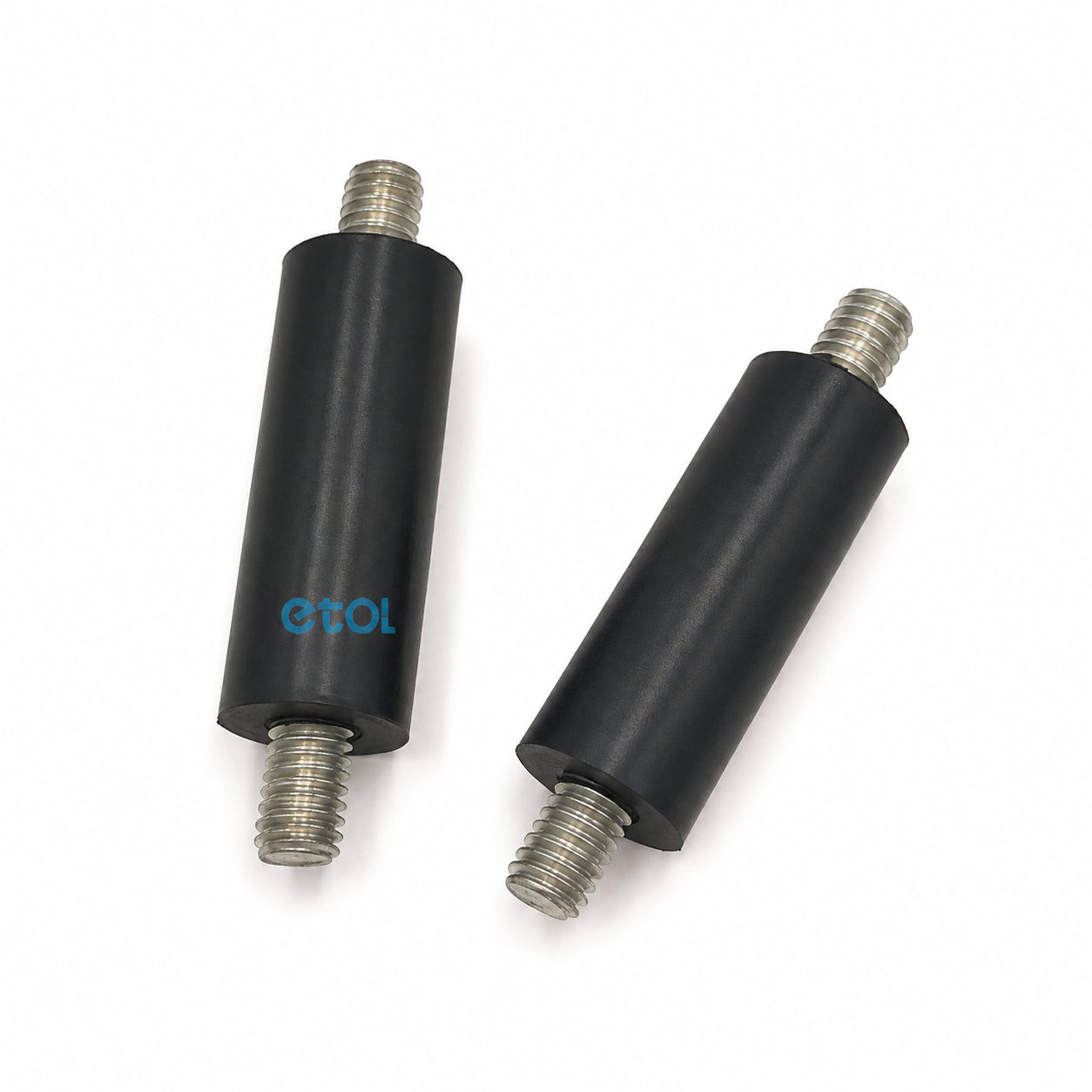
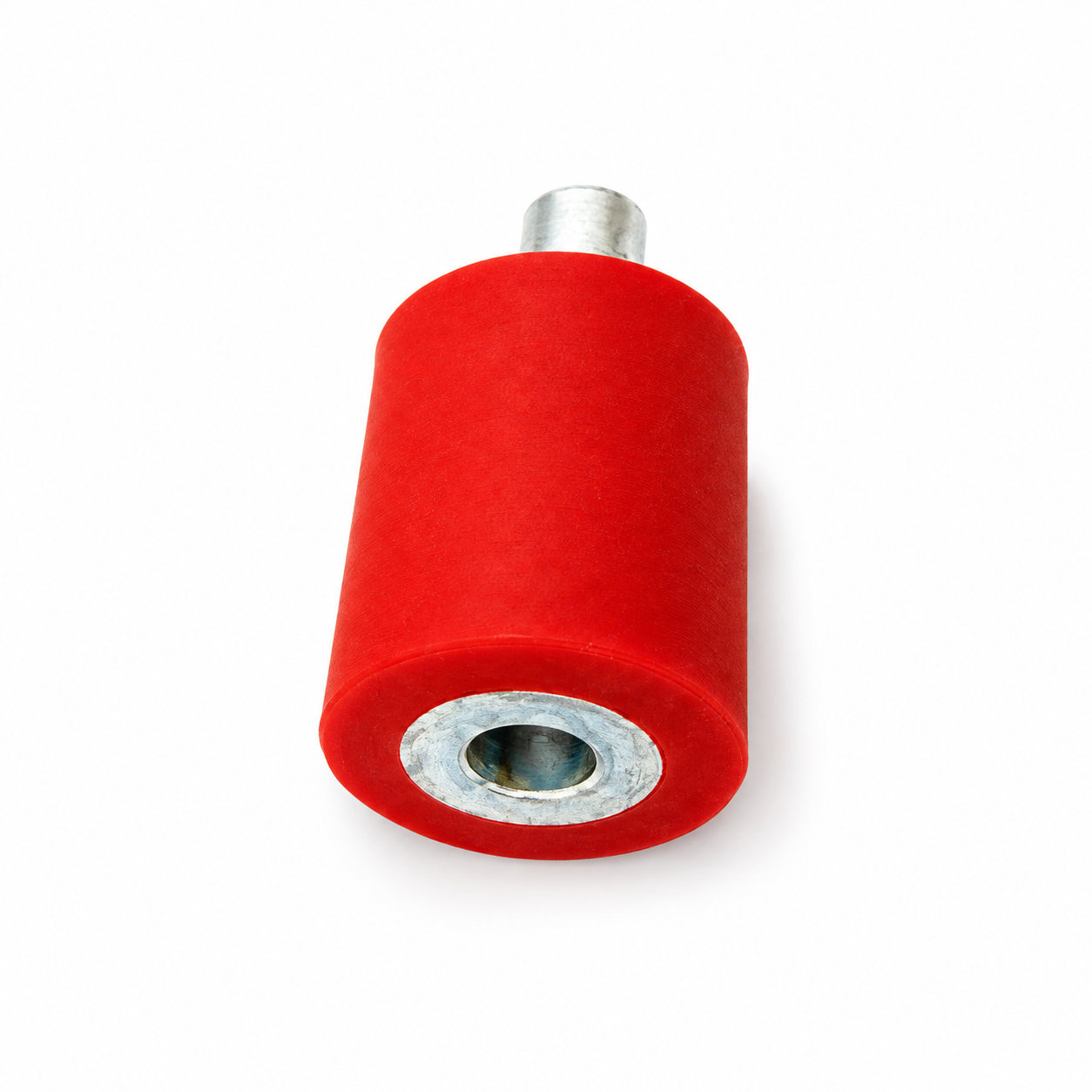
Custom manufacturing example · rubber silent block silicone rubber vibration damper
CUSTOM RUBBER & SILICONE MANUFACTURING
A custom component for your assembly.
Define the mating surfaces, dimensions and working conditions. ETOL manufactures the part to the agreed design and material.
Share the part, its application and your estimated quantity.

Selected for the contact, temperature and movement
Define the visible surfaces and intended color
Develop holes, lips and walls around the mating parts
Match the attachment and installation method
A rubber silent block introduces a flexible section into a mounting connection. Its flexible body needs to work with the surrounding mounting arrangement to achieve the intended vibration-control function. Movement and noise can also travel through neighboring brackets, pipes, cables, or direct contact between other rigid parts.
Review those surrounding paths when positioning the block. The supported component needs room to move as intended without pulling a connected line tight or touching the frame. The block's geometry and attachment should suit the direction of loading, including any offset that creates rotation rather than simple compression.
Evaluate the assembled system during its normal operating cycle. If vibration remains, examine the complete installation instead of assuming that increasing the size or softness of the rubber will resolve it. Check whether the block is already heavily distorted at rest and whether nearby clearances change during operation. Routine inspection should include both rubber condition and the connected components, since a relocated cable clamp or tightened rigid connection can alter the original isolation arrangement.
Photos illustrate structure or material appearance only. Movement and noise can also travel through neighboring brackets, pipes, cables, or direct contact between other rigid parts. ETOL directly manufactures custom-shaped silicone and rubber parts to your requirements.
FIND THE RIGHT FIT
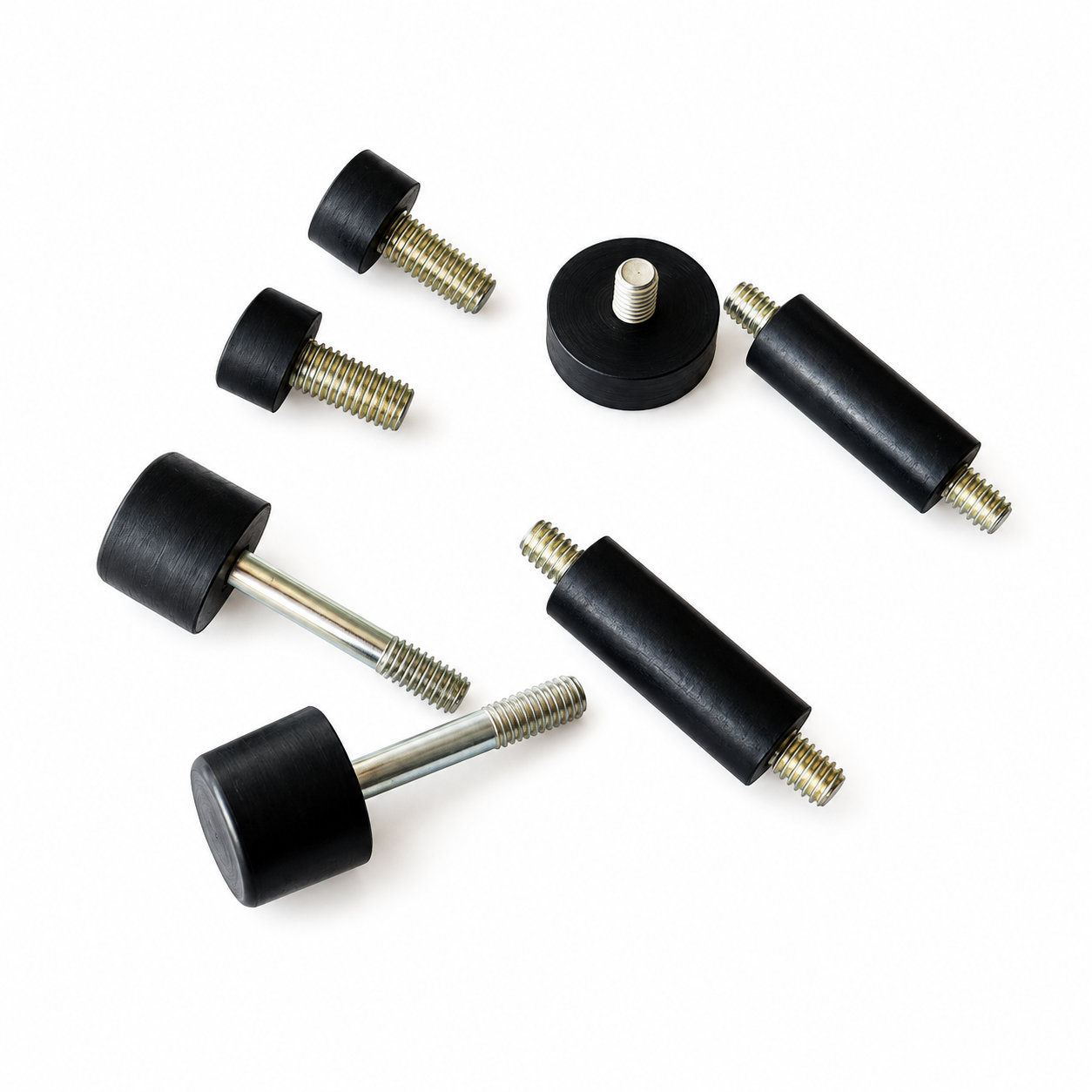
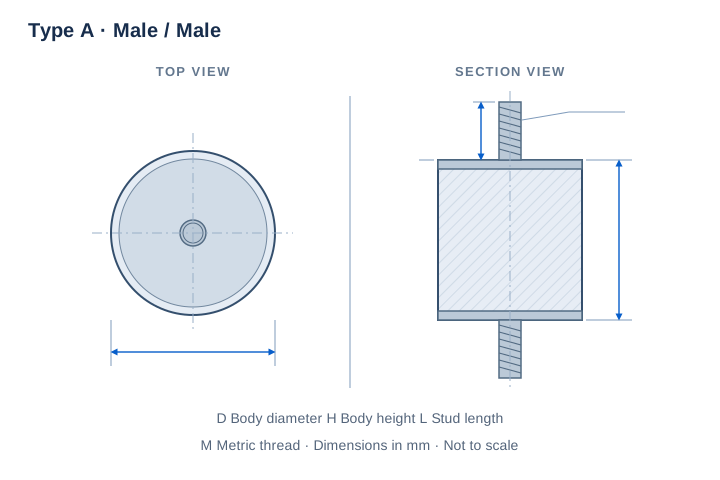
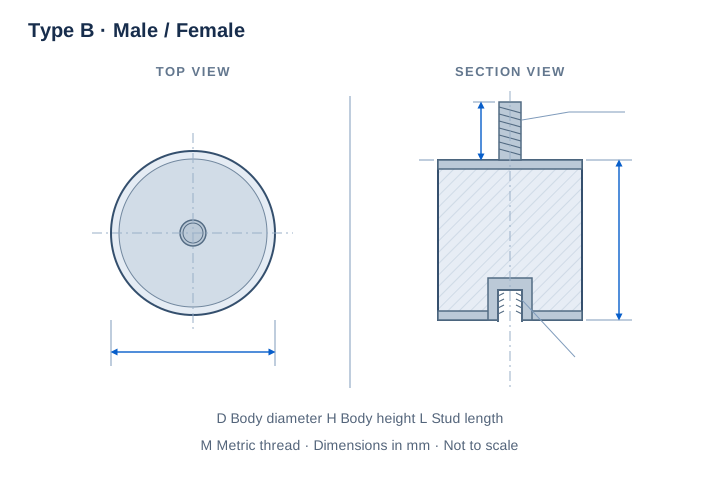
Choose a connection type, then compare body dimensions and metric threads. D, H and L are in millimeters; H excludes projecting studs. The M designation identifies the metric thread.
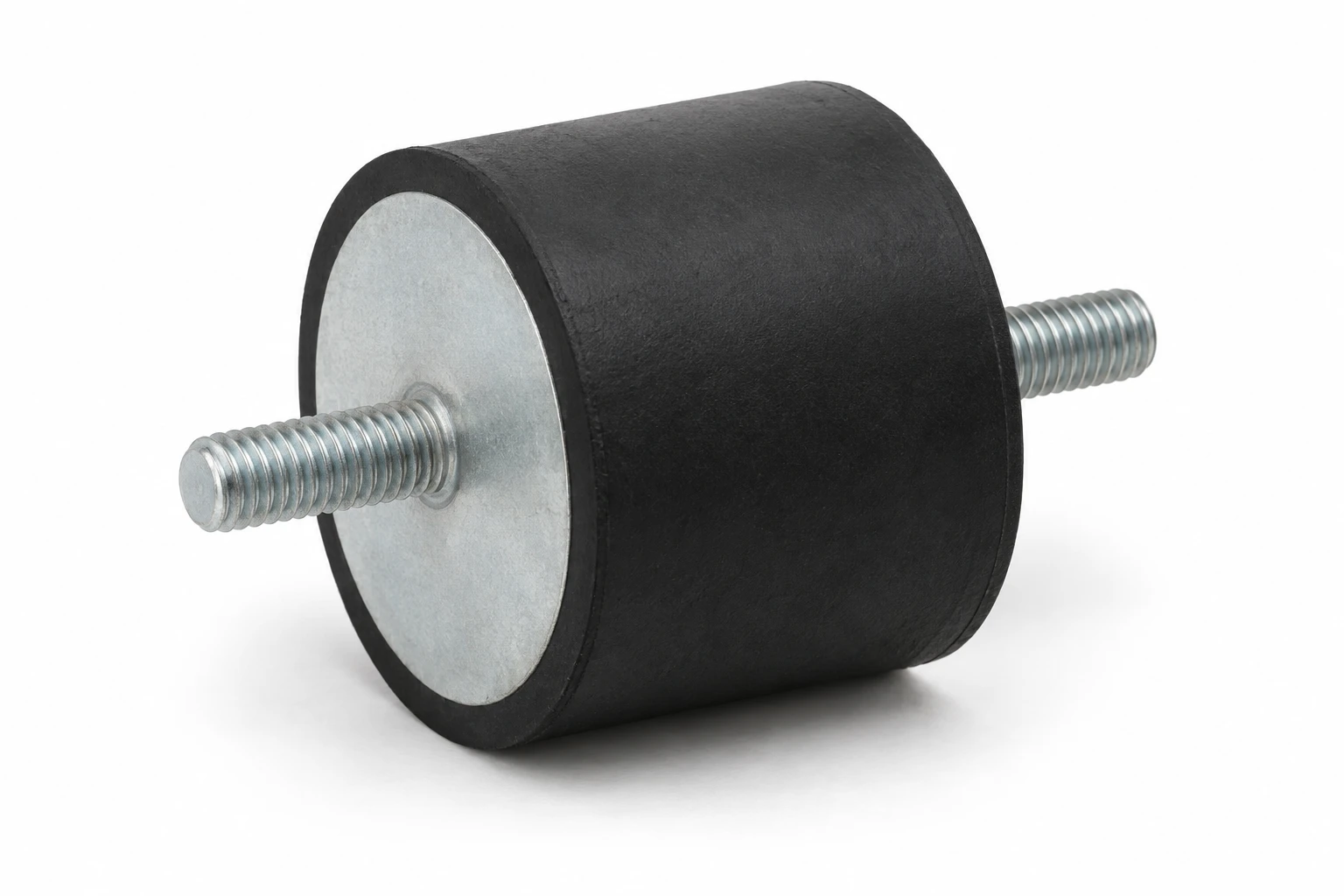
157 sizes with a male stud at each end. Compare body diameter D, body height H, thread size and projecting stud length L.
| P/N | D | H | Thread | L | Unit |
|---|---|---|---|---|---|
| AVMM-88M36 | 8 | 8 | M3 | 6 | mm |
| AVMM-88M38 | 8 | 8 | M3 | 8 | mm |
| AVMM-88M310 | 8 | 8 | M3 | 10 | mm |
| AVMM-810M38 | 8 | 10 | M3 | 8 | mm |
| AVMM-108M36 | 10 | 8 | M3 | 6 | mm |
| AVMM-108M310 | 10 | 8 | M3 | 10 | mm |
| AVMM-108M46 | 10 | 8 | M4 | 6 | mm |
| AVMM-108M410 | 10 | 8 | M4 | 10 | mm |
| AVMM-1010M38 | 10 | 10 | M3 | 8 | mm |
| AVMM-1010M46 | 10 | 10 | M4 | 6 | mm |
| AVMM-1010M410 | 10 | 10 | M4 | 10 | mm |
| AVMM-1015M36 | 10 | 15 | M3 | 6 | mm |
| AVMM-1015M46 | 10 | 15 | M4 | 6 | mm |
| AVMM-1015M410 | 10 | 15 | M4 | 10 | mm |
| AVMM-158M410 | 15 | 8 | M4 | 10 | mm |
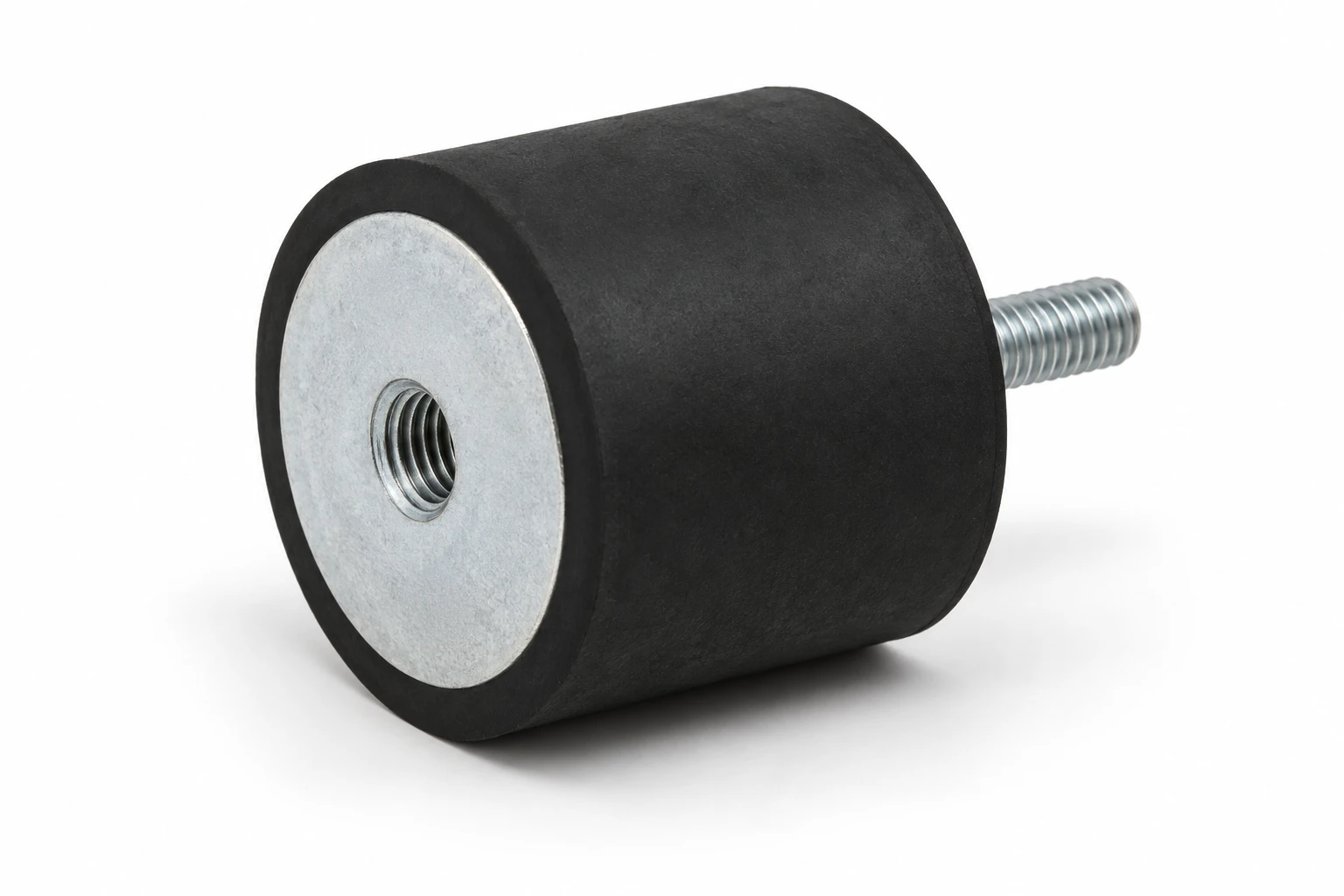
175 sizes combining one male stud and one female insert. Use D and H for the body envelope and L for the exposed stud.
| P/N | D | H | Thread | L | Unit |
|---|---|---|---|---|---|
| AVMF-88M36 | 8 | 8 | M3 | 6 | mm |
| AVMF-88M38 | 8 | 8 | M3 | 8 | mm |
| AVMF-88M310 | 8 | 8 | M3 | 10 | mm |
| AVMF-108M46 | 10 | 8 | M4 | 6 | mm |
| AVMF-108M410 | 10 | 8 | M4 | 10 | mm |
| AVMF-1010M36 | 10 | 10 | M3 | 6 | mm |
| AVMF-1010M38 | 10 | 10 | M3 | 8 | mm |
| AVMF-1010M310 | 10 | 10 | M3 | 10 | mm |
| AVMF-1010M46 | 10 | 10 | M4 | 6 | mm |
| AVMF-1010M410 | 10 | 10 | M4 | 10 | mm |
| AVMF-1015M36 | 10 | 15 | M3 | 6 | mm |
| AVMF-1015M310 | 10 | 15 | M3 | 10 | mm |
| AVMF-1015M46 | 10 | 15 | M4 | 6 | mm |
| AVMF-1015M410 | 10 | 15 | M4 | 10 | mm |
| AVMF-158M410 | 15 | 8 | M4 | 10 | mm |
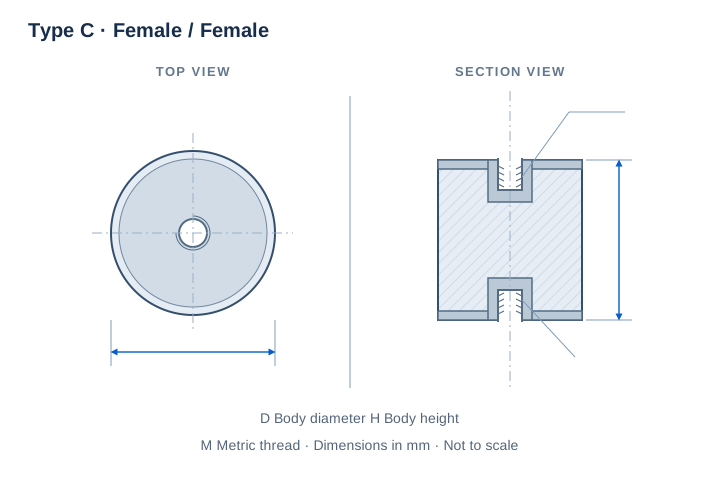
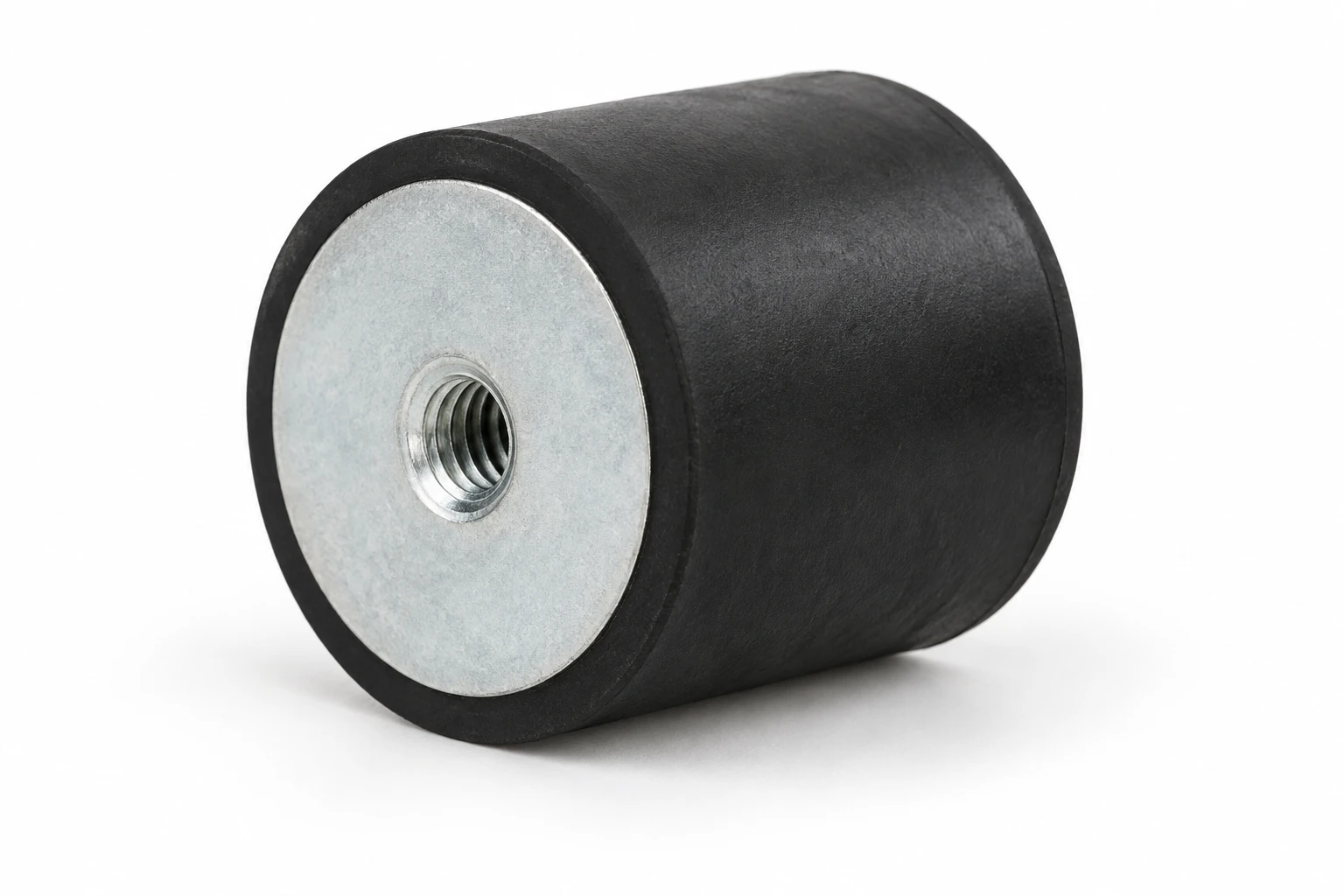
89 sizes with female threads at both ends. Match body diameter D, body height H and the metric thread size.
| P/N | D | H | Thread | Unit |
|---|---|---|---|---|
| AVFF-88M3 | 8 | 8 | M3 | mm |
| AVFF-1010M3 | 10 | 10 | M3 | mm |
| AVFF-1010M4 | 10 | 10 | M4 | mm |
| AVFF-1015M3 | 10 | 15 | M3 | mm |
| AVFF-1015M4 | 10 | 15 | M4 | mm |
| AVFF-1515M4 | 15 | 15 | M4 | mm |
| AVFF-1515M5 | 15 | 15 | M5 | mm |
| AVFF-1520M4 | 15 | 20 | M4 | mm |
| AVFF-1520M5 | 15 | 20 | M5 | mm |
| AVFF-1530M4 | 15 | 30 | M4 | mm |
| AVFF-1530M5 | 15 | 30 | M5 | mm |
| AVFF-2015M6 | 20 | 15 | M6 | mm |
| AVFF-2020M5 | 20 | 20 | M5 | mm |
| AVFF-2020M6 | 20 | 20 | M6 | mm |
| AVFF-2025M6 | 20 | 25 | M6 | mm |
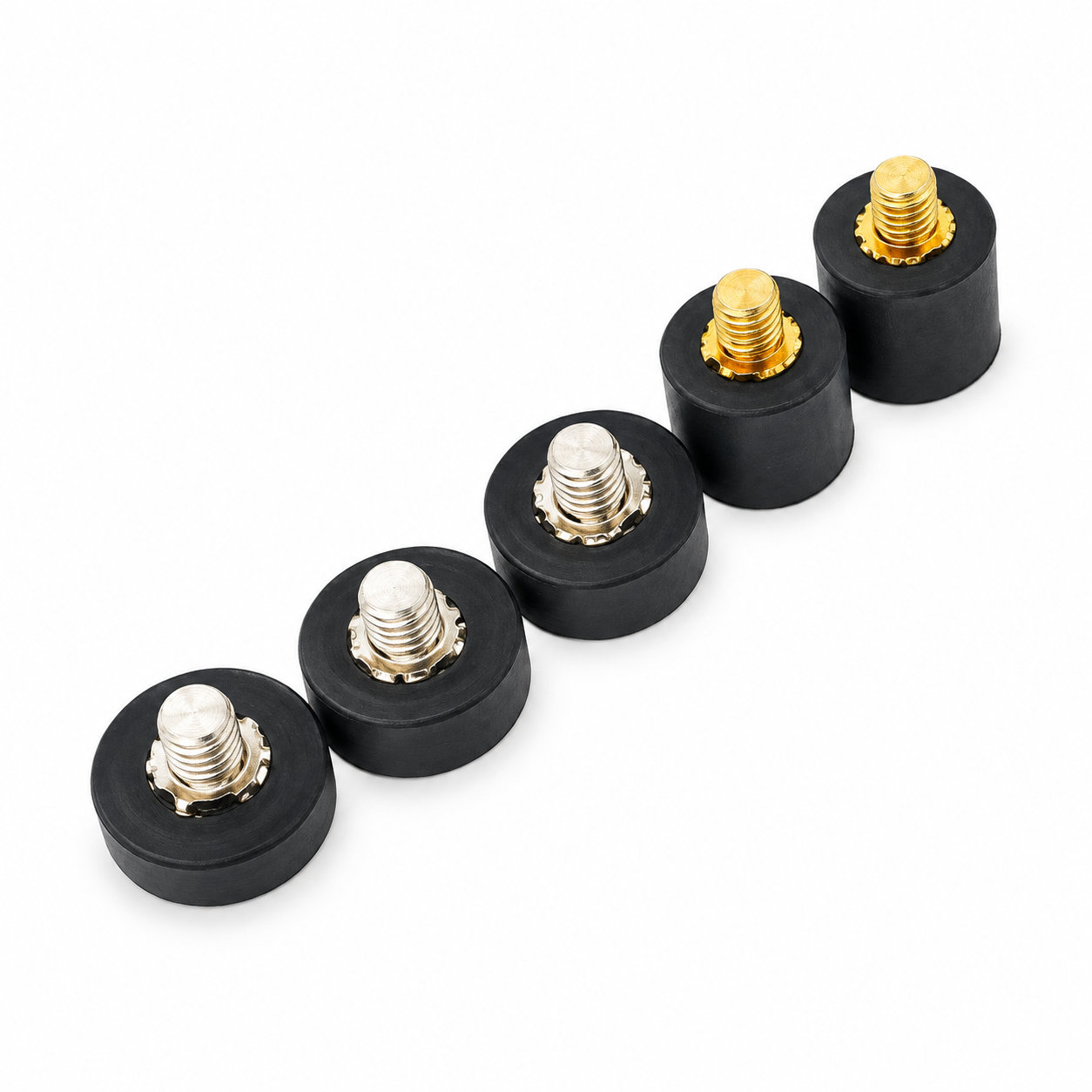
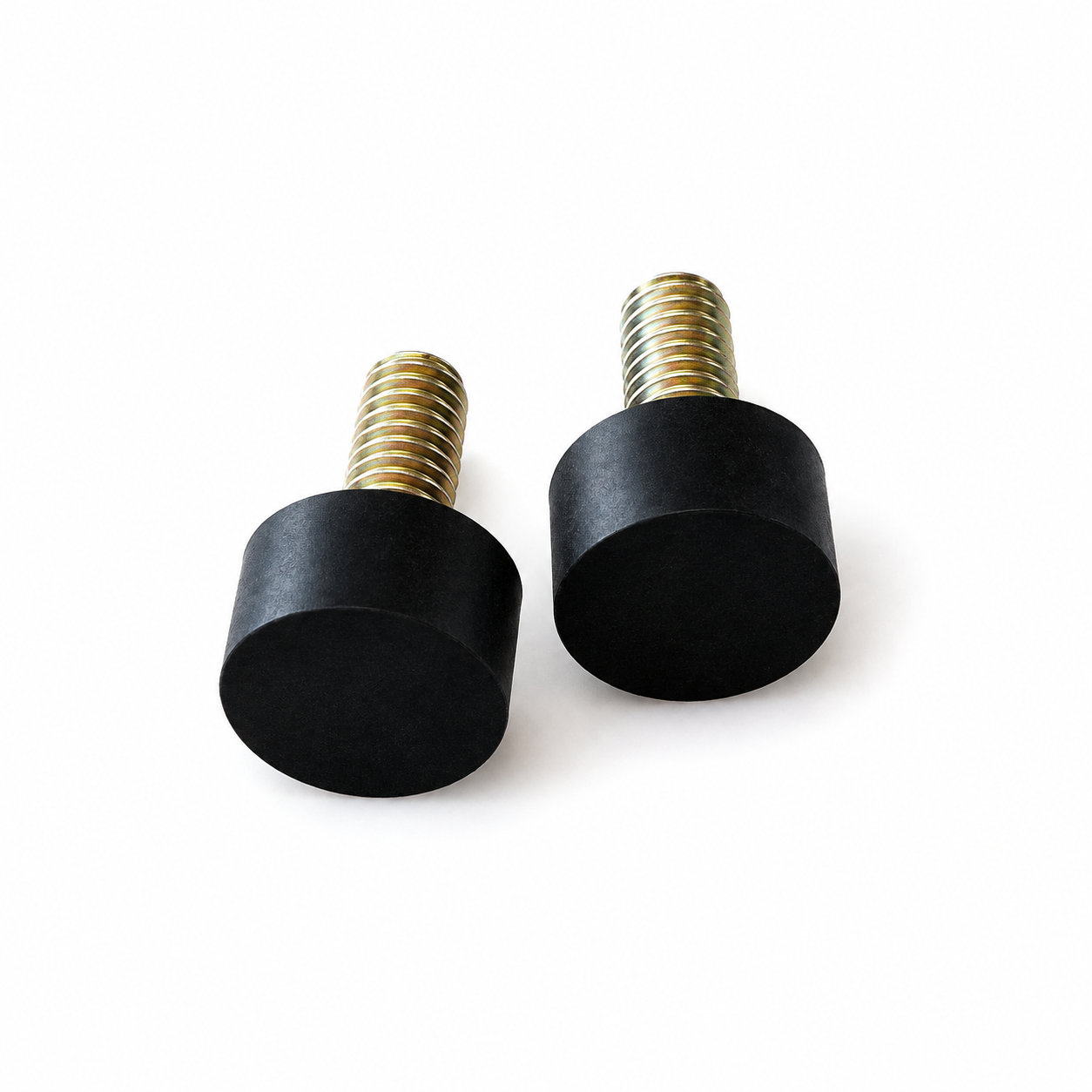
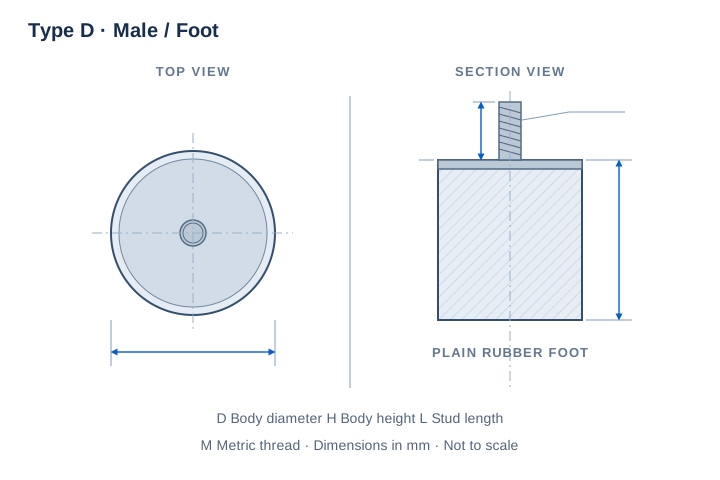
137 sizes with a single male stud and a plain rubber foot. Check D for the footprint, H for body height and L for stud projection.
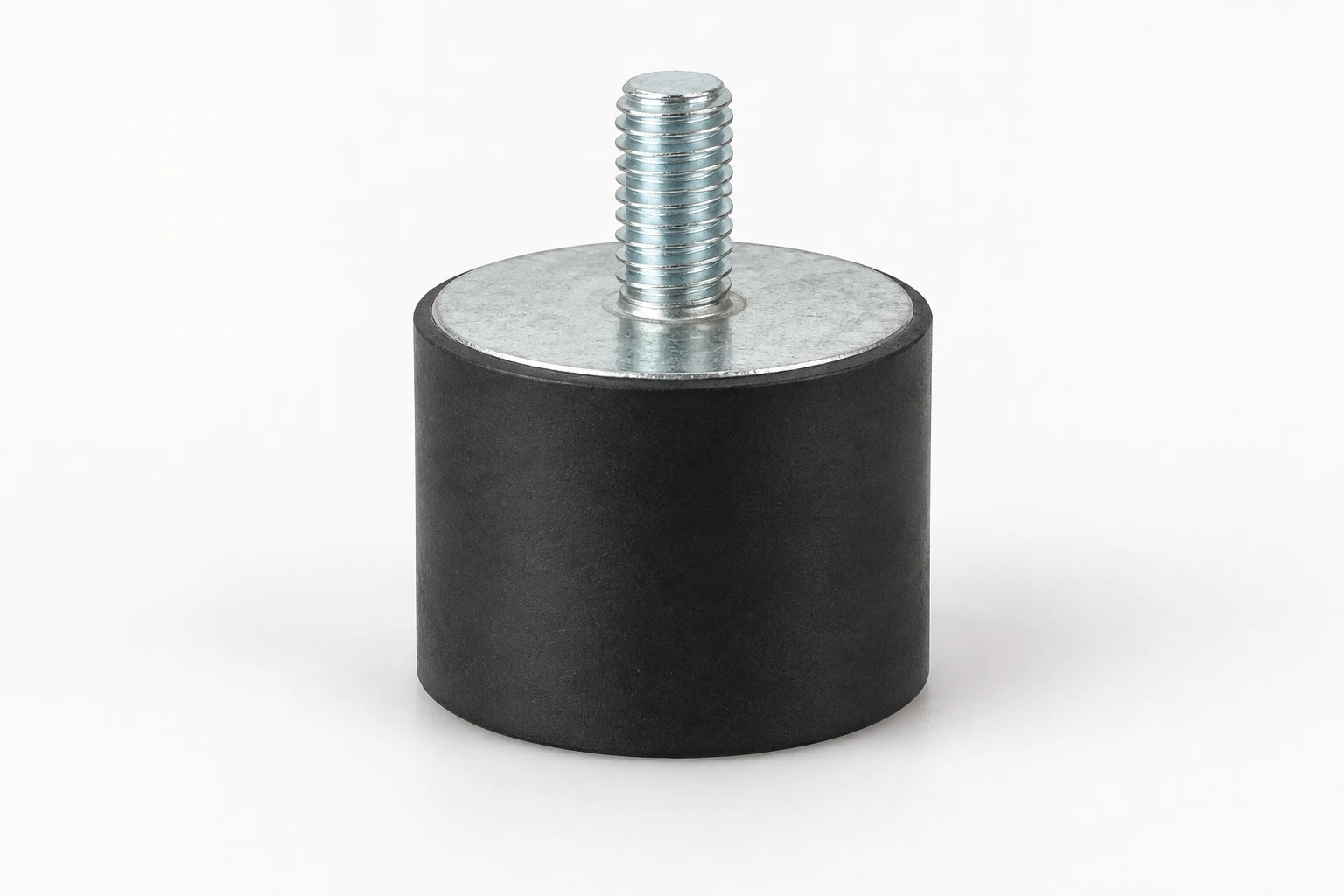
| P/N | D | H | Thread | L | Unit |
|---|---|---|---|---|---|
| AVSM-88M36 | 8 | 8 | M3 | 6 | mm |
| AVSM-88M310 | 8 | 8 | M3 | 10 | mm |
| AVSM-108M46 | 10 | 8 | M4 | 6 | mm |
| AVSM-108M410 | 10 | 8 | M4 | 10 | mm |
| AVSM-1010M310 | 10 | 10 | M3 | 10 | mm |
| AVSM-1010M46 | 10 | 10 | M4 | 6 | mm |
| AVSM-1010M410 | 10 | 10 | M4 | 10 | mm |
| AVSM-1015M310 | 10 | 15 | M3 | 10 | mm |
| AVSM-1015M46 | 10 | 15 | M4 | 6 | mm |
| AVSM-1015M410 | 10 | 15 | M4 | 10 | mm |
| AVSM-158M410 | 15 | 8 | M4 | 10 | mm |
| AVSM-158M415 | 15 | 8 | M4 | 15 | mm |
| AVSM-158M510 | 15 | 8 | M5 | 10 | mm |
| AVSM-1510M410 | 15 | 10 | M4 | 10 | mm |
| AVSM-1510M415 | 15 | 10 | M4 | 15 | mm |
80 sizes with a female top insert and a plain rubber foot. Compare diameter D, height H and the recessed thread size.
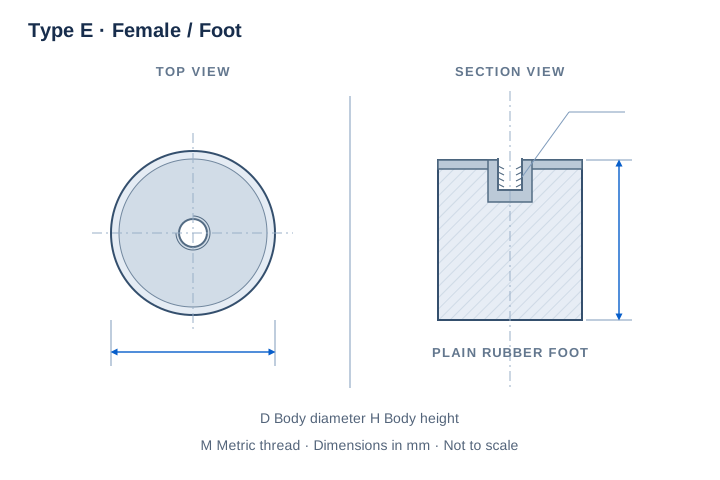
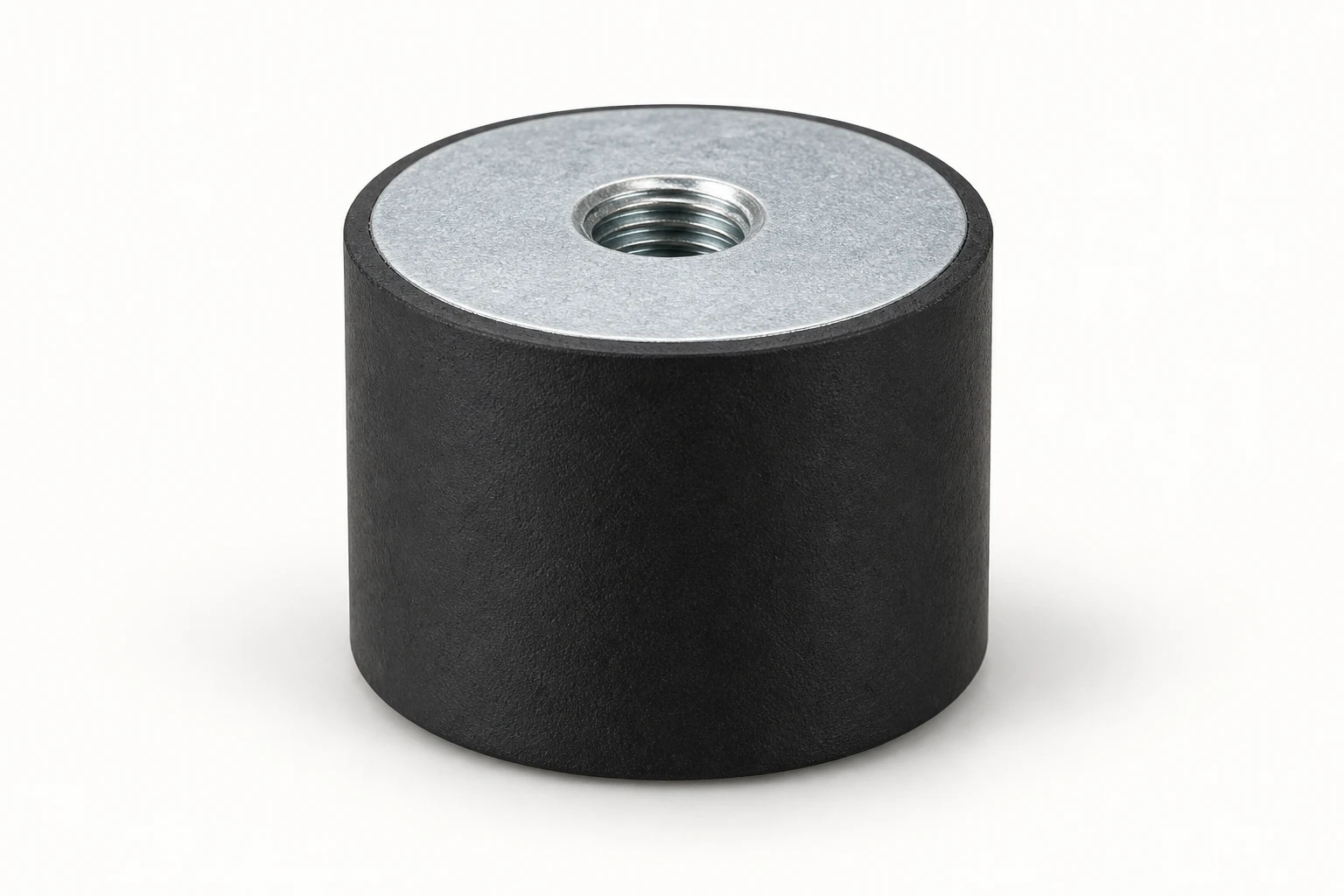
| P/N | D | H | Thread | Unit |
|---|---|---|---|---|
| AVSF-88M3 | 8 | 8 | M3 | mm |
| AVSF-108M3 | 10 | 8 | M3 | mm |
| AVSF-108M4 | 10 | 8 | M4 | mm |
| AVSF-1010M3 | 10 | 10 | M3 | mm |
| AVSF-1010M4 | 10 | 10 | M4 | mm |
| AVSF-1015M3 | 10 | 15 | M3 | mm |
| AVSF-1015M4 | 10 | 15 | M4 | mm |
| AVSF-158M4 | 15 | 8 | M4 | mm |
| AVSF-1510M4 | 15 | 10 | M4 | mm |
| AVSF-1510M5 | 15 | 10 | M5 | mm |
| AVSF-1515M4 | 15 | 15 | M4 | mm |
| AVSF-1515M5 | 15 | 15 | M5 | mm |
| AVSF-1520M4 | 15 | 20 | M4 | mm |
| AVSF-1520M5 | 15 | 20 | M5 | mm |
| AVSF-1530M4 | 15 | 30 | M4 | mm |
Can't find the right size? Contact us for custom dimensions tailored to your requirements.
Identify key dimensions, mating surfaces and quantity
Agree the compound and manufacturing approach
Review the fit and agreed requirements in the assembly
Manufacture and check against the approved requirements
Identify temperature, contact fluids and repeated movement.
Consider hardness together with wall thickness and support.
Check access, mating dimensions and the fitting sequence.
Yes. Show the receiving opening, contact surfaces and clearance limits. We can review the dimensions and retaining features around the intended fit.
Agree the critical dimensions, material, hardness, visible surfaces and sample requirements. Explain how the part is installed and which interfaces control its function.
A sample can help explain the structure. Compare it with the assembly because wear, swelling or compression may have changed its original dimensions.
The material, part geometry, tooling, quantity and finishing affect the quotation. Include the intended batch size and delivery destination when describing your requirements.
DISCUSS THIS COMPONENT
Share the fit, operating conditions and quantity with our manufacturing team.
EXPLORE RELATED DESIGNS
Explore similar part structures and applications for your next project.